Most “failed” puppy playpens were the wrong height, wrong panel count, or a latch a toddler could open with one finger. The pen did not mysteriously stop working—the puppy outgrew the purchase assumptions in eight weeks.
This exercise pen buying guide answers how tall should a puppy playpen be, how many panels you actually need, which latches hold, and how to lay out bed versus potty zones indoors. Buy for the dog they'll be in 4 months, not the 10-pound puppy in the crate photo.
For product shortlists, see our best puppy playpens for 2026. For the material fight, read the metal vs fabric chew and escape comparison. For when a pen should not replace a crate, use playpen vs crate for house-training.
Height math by breed and age
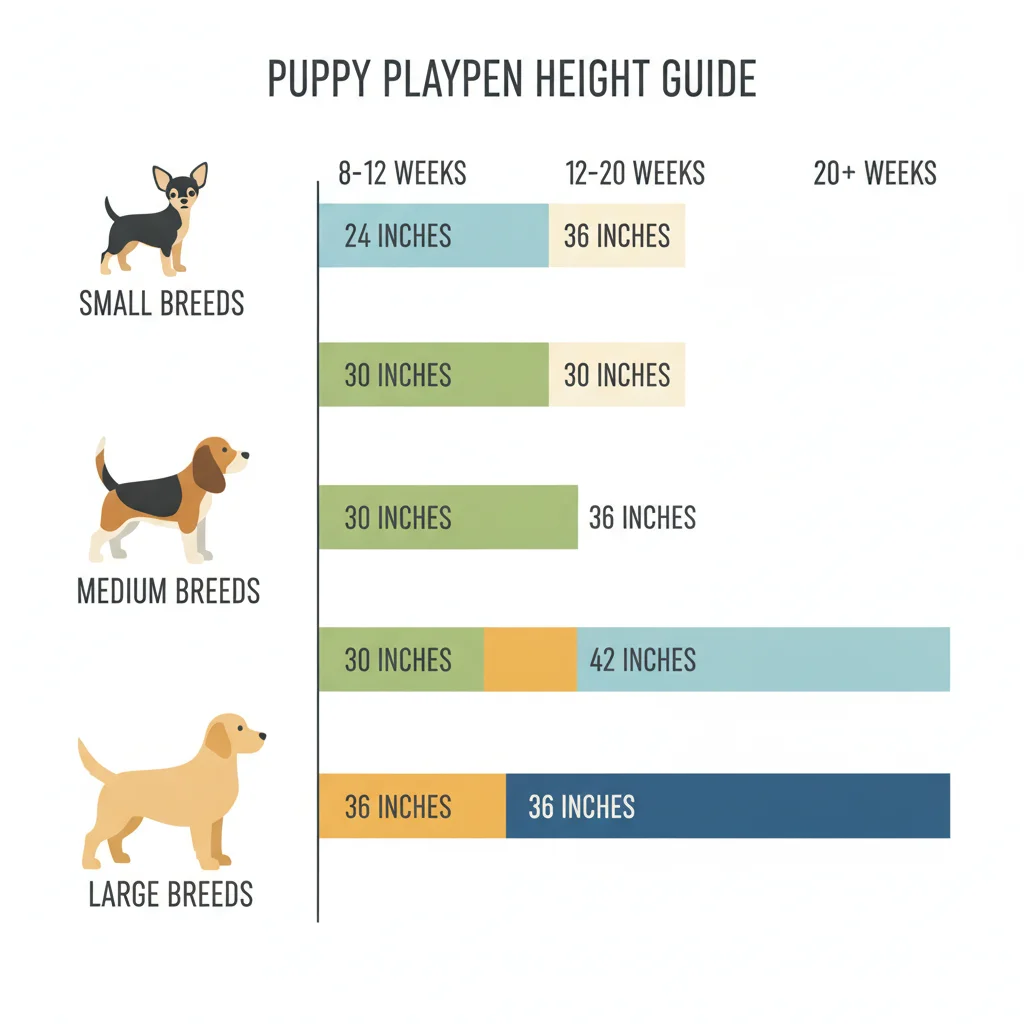
Puppy playpen height is the first filter, not the brand name on the box. Jump and climb risk rises faster than weight charts suggest, especially once rear legs can plant and push.
A useful working rule: choose a panel height that still looks excessive today. If you can picture the adolescent clearing the rim in a week of growth, size up now.
Jump and climb risk
Jumpers clear short walls in one hop. Climbers treat wire spacing like ladder rungs. Both patterns show up earlier in athletic mixes, herding breeds, and high-drive terriers than in calm toy breeds.
Watch body language before the first escape. Pawing at the top rail, stacking toys as steps, and launching from a bed toward the gate are rehearsal moves—not cute quirks.
- Under ~24–30" fails first on jumpers and climbers
- Wire gaps that fit a paw become climb holds
- Beds and raised bowls placed against the wall create launch pads
Growth curve planning
Ask how tall should a puppy playpen be against expected adult athleticism, not the eight-week shipping weight. Medium and large breeds often need 30–42 inches once adolescent legs arrive. Toy breeds may stay comfortable in shorter kits longer—if chewing stays mild.
Recheck after every growth spurt. A pen that worked at 12 weeks can become a jungle gym at 16. A puppy playpen size chart only works if you plan jump height and panel count together—not height alone.
- Estimate adult size and energy, not current cute photos
- Prefer taller panels when you are between two heights
- Furnish the interior so the space feels secure, not empty and climbable
When 24-inch pens fail
Short pens sell well because they photograph neatly around tiny puppies. They fail when the dog’s chest clears the rail or when a roommate leaves a chair as a step. Collapse and tip risk rise when a growing dog rams a short, light frame.
If you already own a 24-inch kit, treat it as a supervised toddler fence—not unsupervised alone-time containment—once jumping starts. Upgrading height is cheaper than repairing chewed baseboards after a successful vault.
Also watch “indoor only” soft yards marketed with adult-dog photos. Marketing height is often measured to the top of a decorative arch, not the climbable wall the puppy actually faces. Read the panel height in inches on the spec sheet, then re-measure with a tape after unboxing.
Buy for the dog they'll be in 4 months, not the 10-pound puppy in the crate photo.
| Breed / build cue | Typical starting height | Upgrade trigger |
|---|---|---|
| Toy / low-drive | 24–30" | Pawing the top rail or stacking toys |
| Medium athletic mix | 30–36" | Chest-level clearances or corner launches |
| Large / high-drive | 36–42" | Any climb rehearsal or tip wobble |
| Heavy chewer any size | Height + metal panels | Fabric shredding or bent plastic latches |
Panels, footprint, and room layout
How many panels dog playpen shoppers need depends on jobs inside the footprint, not a universal “eight is enough” myth. Eight panels often make a starter rectangle; more panels buy potty and sleep separation without crowding.
An expandable dog playpen earns its keep when the apartment layout changes—hallway gating one week, living-room octagon the next. Rigid one-size cubes lose when your only open floor is an L-shape.
Rectangle vs octagon
Rectangles hug walls and protect walkways. Octagons give center-room play with fewer sharp corners for a ramming puppy. Long, narrow rectangles work for apartment hallways when you need a safe corridor, not a play arena.
Measure door swings and furniture paths before assembly. A beautiful octagon that blocks the only exit is a daily frustration, not a training win.
- Rectangle: wall-hugging, easier potty-pad edge placement
- Octagon: more open play, needs clear center space
- L-shape / multi-panel: gates rooms without claiming the whole floor
Potty vs sleep zones
Indoor exercise pen house training setup success needs visual separation: bed and water on one side, potty pad or turf on the other, toys in the middle. Empty pens teach pacing; furnished pens teach settling.
Keep the potty zone farthest from the bed so the puppy does not sleep in accidents. Refresh pads on a schedule—not only when smell becomes obvious—so the “bathroom” cue stays clean.
- Place bed against the calmest wall, away from foot traffic
- Anchor water so bowls cannot become climb steps
- Leave a clear aisle so the dog can turn without stepping on the pad every time
Door swing clearance
Gate placement matters as much as panel count. If the door opens into a high-traffic path, people will prop it open “just for a second,” and the latch never gets a fair chance. Prefer a swing that opens into the pen or into a dead corner.
In apartments, plan noise and floor protection with the footprint. Rubber tips, washable mats under the whole pen, and avoiding metal-on-hardwood drags prevent neighbor complaints and scratched vinyl.
A good puppy playpen for apartment footprint leaves a human walkway. If guests must climb into the pen to reach the couch, the setup will not last a month.
When you add panels later, re-check gate location. Expanding a rectangle often moves the door into a worse traffic lane. Keep the gate where humans naturally enter, and keep the potty zone on the opposite wall so guests are not stepping on pads.
Latches, gates, and collapse safety
Playpen latch safety is where listicles go quiet and escape stories begin. Soft yards fail at zippers and Velcro; metal pens fail at thin hooks, loose pins, and gates that lift with a nose.
Playpen latch safety fails when roommates, kids, or a nose-lift can open the gate in one motion. Test for that before you trust unsupervised naps.
Double-latch checks
Prefer gates that need two actions—slide then drop, lift then twist—or that resist casual pressure from inside. Decorative plastic toggles look fine in product photos and flex open under a 20-pound body slam.
After assembly, run a puppy simulation: bump the gate with your knee, push from inside, and try opening with one finger. Document connector drift; loose pins create climbable gaps between panels.
- Open and close the gate 20 times on day one
- Shake every panel joint—wobble predicts escape routes
- Confirm spare latch parts exist before you need them at 10 p.m.
Collapse incident patterns
Collapse usually follows one of three patterns: a puppy rams a weakly pinned corner, a fabric wall folds when chewed at a seam, or someone folds the pen partially and leaves a hinge mid-collapse. Partial folds are especially dangerous around kids and curious dogs.
Fully open and lock every connector before use. Never leave a “temporary” half-assembled pen as overnight containment. If a kit requires constant re-tightening, treat that as a product failure, not a user skill gap.
Kid and roommate fail modes
Human error beats puppy genius more often than owners admit. Roommates prop gates. Kids “help” by unclipping. Delivery people step over short walls. Design the latch so accidental opening is hard—and put a sticky note on the gate until habits form.
For households with children, choose latches that are obvious when unlocked. Silent failures—gates that look shut but are not—create the worst surprises.
If you cannot explain how the latch locks in one sentence, assume a determined adolescent will invent a bypass before you invent a fix.
Material tradeoffs before you checkout
Metal vs fabric puppy playpen is not a fashion debate. It is a prediction about chewing, jumping, and how long unsupervised windows will last. Plastic panel cubes sit in between: lighter than steel, tougher than mesh, often weaker at latches.
Metal exercise pens win for the best playpen for biting puppies starting point because bars resist shredding. Fabric yards win for short, supervised apartment windows and travel when chewing is mild.
| Material | Best for | Fails when | Floor / travel notes |
|---|---|---|---|
| Metal ex-pen | Chewers, jumpers, multi-month use | Slick floors without mats; poorly pinned gates | Heavier; fold-flat travel possible |
| Fabric play yard | Short supervised sessions, mild mouths | Determined chewing, zipper failures | Light and portable; protect floors from accidents |
| Plastic panel | Indoor visibility, lighter builds | Warped clips, climbable footholds | Quieter than metal; check UV/outdoor claims |
Metal vs fabric vs plastic
Choose metal if unsupervised naps, heavy mouthing, or athletic growth are already showing. Choose fabric only if you will stay in the room, chewing is light, and you accept a short product life. Plastic can work for calm indoor setups if latches are robust and panels do not create ladder-like footholds.
Do not buy “outdoor ready” marketing without staking hardware, shade, and a supervision plan. Pens are containment aids, not unsupervised yard substitutes.
Floor protection
Metal feet scratch hardwood and telegraph noise to downstairs neighbors. Put a continuous mat under the full footprint, not tiny pads under each foot. Wipe accidents promptly—urine under mats becomes a smell problem that no latch can fix.
Avoid dragging assembled pens. Fold, lift, and re-set. That habit alone extends floor life and panel alignment.
Travel vs permanent setup
Travel kits prioritize fold-flat weight. Permanent apartment setups prioritize height, latch quality, and zone layout. Trying to force one cheap soft yard to do both jobs is how people end up with two failed purchases.
If you travel monthly, keep a compact soft or lighter metal kit for trips and a taller metal system at home. Split budgets beat compromise products that fail in both contexts.
Budget tiers that actually last
Price correlates loosely with latch quality and panel height options—not with Instagram aesthetics. Under-$60 kits often cut corners on connectors. Mid-tier metal panel sets usually hit the durability sweet spot for new puppy households.
Spend up when your dog is already escaping, chewing through mesh, or growing into a large athletic adult. Save money on color kits and “furniture look” frames that cannot be restaked or expanded.
| Budget band | What you usually get | Honest fit |
|---|---|---|
| Under $60 | Short panels, plastic latches, soft yards | Supervised only; expect early upgrade |
| $60–$120 | Usable metal kits, better height choices | Most apartment house-training setups |
| $120+ | Taller panels, modular expansion, better gates | Escape artists, large breeds, long-term use |
Under $60 risks
Cheap kits teach expensive lessons: bent latches, chewed mesh, and a puppy who learned that walls are optional. If budget is tight, prioritize height and latch over cute covers. A plain tall metal pen beats a themed soft palace.
Read return policies before first overnight use. First-week escapes are common when height was wishful thinking.
Sweet spot specs
Most new owners do well with a mid-height to tall metal or modular kit, eight or more panels, a mat under the full footprint, and a gate that needs more than a casual lift. That combination covers growth, house-training zones, and roommate errors better than brand loyalty.
- Height matched to expected athleticism
- Enough panels for bed + potty separation
- Latch that survives a one-hand “puppy slam” test
- Floor mat and spare connector pins
When to spend up
Spend up for known escape artists, multi-dog homes, or outdoor staking needs. Also spend up if you refuse to buy twice—large-breed growth curves punish under-buying more than small-breed curves do.
Outdoor kits deserve their own budget line for stakes, ground anchors, and shade—not a hope that indoor feet will hold on grass. Unsupervised yard use is outside this guide’s safe scope; pens still need eyes on the dog.
If your shortlist is still confused after height and latch checks, return to the product roundup of best puppy playpens for 2026 and filter by those two specs first.
Frequently Asked Questions
What height playpen do I need for a puppy?
Match adult expected athletic ability more than current puppy size—short pens get jumped once legs lengthen. Many athletic or medium-plus breeds need 30–42 inches; recheck after every growth spurt.
How many panels do I need?
Eight is common for a starter rectangle; add panels when you need a potty zone plus bed without crowding. Expandable kits let you lengthen a hallway run or widen an octagon as the dog grows.
Do playpens damage floors?
Use mats under feet and avoid dragging metal panels; protect vinyl and hardwood from scratches and accidents. Rubber tips and a washable base mat cut noise complaints in apartments.
Are fabric play yards safe for chewers?
Usually only for short, supervised sessions. Determined chewers shred mesh and zippers; metal exercise pens hold up better when mouthing and escape attempts escalate.
Can a playpen replace a crate?
Not for every job. Pens give room for potty/play zones; crates suit nap and alone-time containment. Many house-training plans use both at different parts of the day.
Your Next Step
Measure expected jump height, count the zones you need inside the pen, and test the latch like a mischievous roommate will. Buy once for the four-month dog, then furnish bed, water, and potty so the footprint teaches calm—not chaos.
Next, compare materials in the metal vs fabric chew and escape comparison, or decide containment jobs with playpen vs crate for house-training.
Related reading on our sister sites: Litter-Robot Review After Months (2026)