You bought a soft “puppy palace,” and two weeks later the latch is bent, the mesh is chewed, and your shoes are again fair game. That failure is usually a sizing and materials problem—not a training personality flaw.
This listicle names the best puppy playpen setups we would actually buy in 2026 by job: metal ex-pens for growth and chewing, soft yards for short apartment windows, and expandable panels when the footprint has to change with the dog. The best puppy playpen is the one that still contains them after three months of growth and chewing—not the cute soft yard that fails in week two.
We score height, latches, chew risk, and indoor house-training layouts—not a dump of every adult dog pen on Amazon. For panel math and latch failure modes, use our puppy playpen height and latch buying guide. For the material fight in depth, see the metal vs fabric chew and escape comparison. For when a pen should not replace a crate, read playpen vs crate for house-training.
How we scored puppy playpens
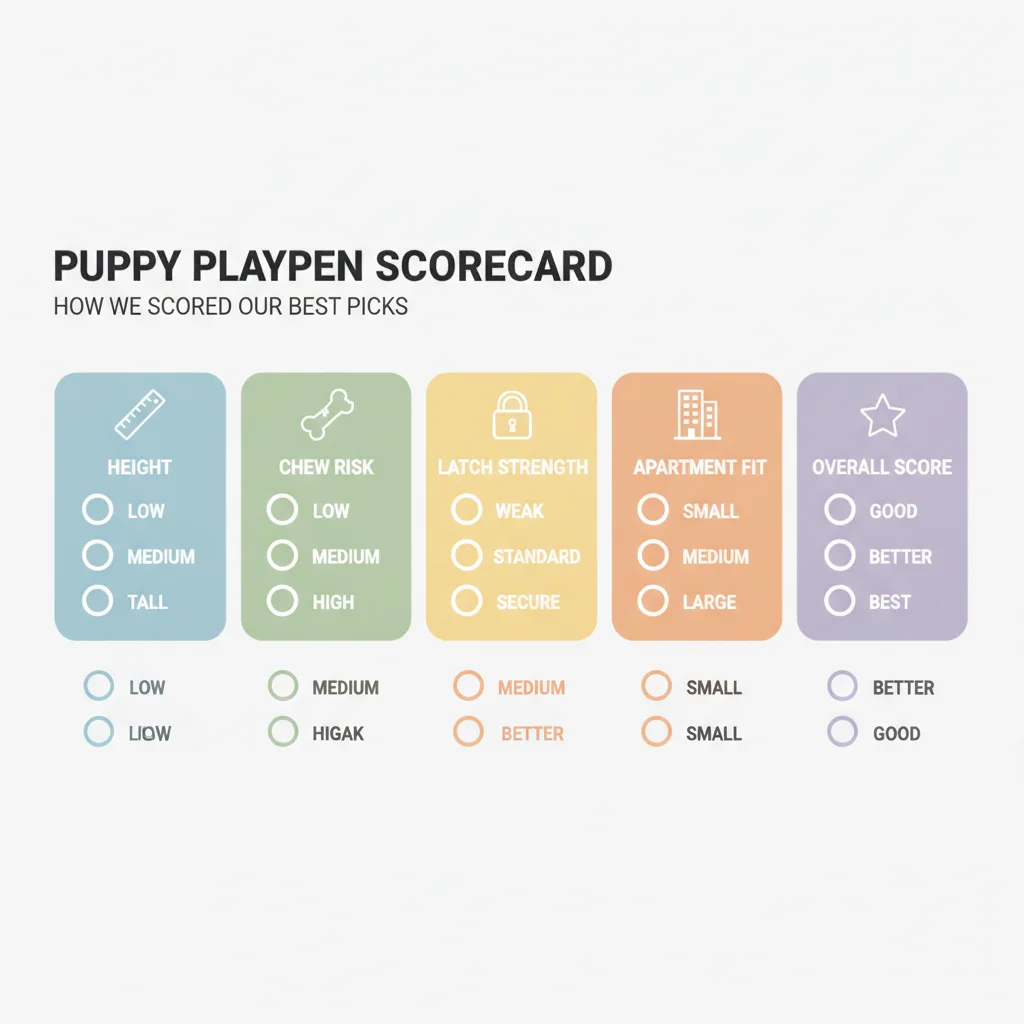
Most “best of” roundups rank by aesthetics and star counts. We ranked by what breaks first in real puppy homes: under-height panels, plastic latches that flex open, fabric walls that become chew toys, and empty pens that teach chaos instead of calm.
A good best dog exercise pen for puppies answer is stage-aware. An eight-week toy breed and a five-month athletic mix are different containment problems. Growth curves matter more than brand loyalty.
Height vs breed growth
Ask how tall should a puppy playpen be before you ask which color looks cute in the living room. As a working rule, choose a panel height that still looks excessive today. Athletic and medium-plus breeds often need 30–42 inches once they can plant rear feet and vault.
Recheck after every growth spurt. A pen that worked at 12 weeks can become a jungle gym at 16. Climbing is a skill puppies invent overnight—especially when the reward on the other side is your couch.
- Short panels (under ~24–30") fail first on jumpers and climbers
- Tall panels without secure feet still tip if the dog rams corners
- Wire spacing must not invite paw-through climbing holds
Chew and latch durability
Chewers do not “respect” fabric mesh. They treat it like enrichment. Metal bars and metal-on-metal or robust slide latches usually outlast zippers, Velcro, and thin plastic clips.
Test the gate with one hand while imagining a 25-pound body hitting it sideways. If the latch opens with casual pressure, it will open under puppy chaos. Collapse-prone hinges are a safety issue, not a minor annoyance.
- Open and close the gate 20 times in the store photos or at home unboxing
- Shake connected panels—gaps and wobble predict escape routes
- Look for spare latch parts or replaceable connectors before you need them
Indoor layout flexibility
Indoor puppy playpen layouts work when bed, water, and potty zones are separated—not when the pen is an empty square with one chewed toy. House-training succeeds when the pen is a small apartment with clear rooms, not a boredom cage.
We favored pens that reshape: octagon for center-room play, long rectangle against a wall, or L-shapes gating a hallway. Rigid one-size cubes lose points if they cannot adapt to apartment geometry.
Portability and floor protection
Apartment shoppers need fold-flat travel and floor-safe feet. Rubber tips, washable mats underneath, and a footprint that does not permanently claim the only living-room path matter as much as brand names.
Portability without durability is a false win. If the pen is easy to move because it is flimsy, you will move it to the trash in month two.
Best overall metal exercise pen
For most new puppy households, a mid-height to tall metal puppy playpen / exercise-pen kit is the default buy. MidWest-style panel ex-pens and similar metal sets remain the category workhorses because they survive chewing better than soft yards and reconfigure when your floor plan changes.
A metal dog exercise pen for puppies wins when chew pressure and jump height keep rising; fabric yards win only for short, supervised apartment windows. That is the core pick logic for 2026, not a brand feud for its own sake.
| Need | Metal ex-pen answer | Why it wins | Watch-outs |
|---|---|---|---|
| Heavy chewer / escape artist | Metal panels + secure gate latch | Bars resist mesh shredding | Heavier; needs floor pads |
| Growing medium/large breed | 30–42" panel options | Headroom for jump risk | Overkill for tiny lap breeds early on |
| Apartment house-training | Reconfigurable octagon/rectangle | Zones for bed vs potty pad | Must plan mat/noise |
| Travel between rooms | Fold-flat panel kits | Moves without full rebuild | Pinch points on folds |
Who it fits
Choose metal if your puppy already mouth-tests everything, if you expect an athletic adolescent phase, or if unsupervised naps happen in the pen while you shower or take a call. It is also the better best playpen for biting puppies starting point because fabric edges invite shredding.
Toy breeds with gentle chewing can still use metal; they simply may not need the tallest panels on day one. Buying one adjustable kit beats buying a soft yard now and a metal pen in six weeks.
- Best for: chewers, jumpers, multi-month containment
- Also fits: apartment owners who want one system through adolescence
- Less ideal: ultra-light travel-only weekends with mild chewers
Panel height options
Shop height first, brand second. Listing titles bury the inch number; cart filters do not. If the product photo shows a small adult dog clearing the rim in your imagination, size up.
Pair height with footing. Tall panels on slick floors still tip if the dog launches at a corner. Non-slip mats under the entire footprint reduce both noise complaints and tip risk.
If you are between sizes, prefer the taller kit and use interior furnishings (bed, low toys) so the space still feels secure rather than cavernous. Empty tall pens can encourage pacing; furnished tall pens encourage settling.
Latch quirks to check
Gate latches are the failure point that product photos gloss over. Prefer designs where a puppy cannot nose-lift a simple hook. Dual-action or slide-and-drop styles usually beat decorative plastic toggles.
After assembly, do a “puppy simulation”: bump the gate with your knee, push from inside, and try opening with one finger. Document any drift in panel connectors—loose pins create climbable gaps.
If you cannot explain how the latch locks in one sentence, assume a determined adolescent will invent a bypass before you invent a fix.
Best soft / fabric play yard
Soft yards earn a place when weight, storage, and temporary zoning matter more than six-month chew survival. They are often the impulse buy for a puppy playpen for apartment weekend—and that is fine if you treat them as short-session tools.
They are not the default best indoor puppy playpen for heavy mouths. Mesh walls and zipper doors fail on a predictable timeline once teething intensifies.
Apartment use cases
Use fabric when you need a quick play zone while you cook, when guests arrive, or when you travel to a relative’s house and cannot haul eight metal panels. Fold-flat soft yards shine for supervised “room within a room” moments.
Place them on washable rugs. Fabric bottoms and side walls collect accidents; removable, wipeable liners save your deposit more than any marketing claim about “indoor outdoor” use.
- Supervised play while you work nearby
- Travel and hotel containment with a calm puppy
- Secondary zone inside a larger puppy-proofed room
Chew risk honesty
If your puppy already destroys plush toys, a soft yard is enrichment you did not mean to buy. Expect chewed seams, collapsed walls, and a sudden freedom sprint into the kitchen.
Owners who “only leave them for five minutes” discover that five minutes is enough. Soft yards demand presence. Metal pens forgive more (not unlimited) absence because the structure itself resists casual destruction.
IRIS-style plastic-panel or hybrid soft systems sometimes sit between pure fabric and full metal. Judge them by chew surfaces and latch type, not by Instagram colorways. An iris playpen vs midwest exercise pen decision usually lands MidWest-class metal for durability and IRIS-like systems for lighter indoor aesthetics—if chewing stays mild.
When to upgrade to metal
Upgrade the day you see mesh holes, zipper teeth marks, or a near-escape over a sagging wall. Do not wait for a successful escape that ends at the trash can or a street-facing door.
Keep the soft yard as a travel accessory after you switch. Dual inventory is cheaper than one emergency vet visit caused by an unsupervised fabric failure.
- Hole in mesh or bent zipper = retire as primary pen
- Puppy bracing paws on the rim = height/material mismatch
- You stop trusting the latch = buy metal this week, not “next paycheck maybe”
Best expandable / modular pick
The best expandable puppy playpen is usually a modular metal or hard-panel kit you can grow from four to eight-plus panels. Expandability matters when the puppy’s safe free-roam area should enlarge with trust—not when you want an infinite play arena on day one.
Start smaller for house-training density, then expand once potty habits stabilize. A huge empty pen early can encourage potty accidents far from the designated pad because the “outside” cue is diluted.
| Pick class | Best for | Escape risk | Price tier (typical) |
|---|---|---|---|
| Metal ex-pen (tall) | Overall / chewers | Low–medium | Mid |
| Soft fabric yard | Short supervised sessions | High if chewed | Low–mid |
| Modular expandable panels | Growing footprints | Depends on latch/height | Mid–high |
| Too-short “cute” pens | Photo props | High | Any (false savings) |
Growing footprints
Buy panels with compatible connectors from the same system. Mixing random brands creates unstable joints. Keep two spare panels if your living situation might change—new apartment, shared hallway, or outdoor patio staking later.
An expandable dog playpen also helps multi-dog homes that need temporary dividers. Split a large footprint into two zones during introductions or mealtime chaos.
Gate placement
Put the gate where humans enter naturally, not where the puppy learns to body-slam the latch all day. Corner gates get more accidental bumps from furniture traffic; mid-wall gates are often cleaner.
Never place the gate facing an open stair or street-side door without a secondary baby gate behind it. One latch failure should not equal a full-home escape route.
Multi-room configs
Modular kits can wall off a kitchen entrance or create a hallway airlock. That is often smarter than a free-standing octagon in the middle of a tiny studio.
For an exercise pen house training setup, try a long rectangle: bed and water on one end, potty pad on the other, toys in the middle. The puppy learns to travel to the pad instead of soiling the bed.
- Studio: wall-line rectangle preserving a walkway
- House: octagon in a quiet room for nap blocks
- Patio (supervised): staked panels with shade and water—never as invisible fencing
What we'd skip (and why)
Skipping bad pens saves more money than coupon-hunting a fragile one. These failure patterns show up constantly in returns, forums, and the soft-yard-to-metal upgrade cycle.
Too-short panels
Anything that looks “just tall enough” for today’s puppy is already late for next month. Short pens train jumping practice. They also invite paws-on-rim climbing that turns the top rail into a launch pad.
If the listing brags about portability but hides height in the fine print, assume marketing is optimizing for clicks, not containment.
Flimsy latches
Decorative plastic clips, single-hook gates, and Velcro “doors” are not security. They are suggestions. A soft puppy play yard with a zipper the puppy can worry open is an unsupervised liability.
Also skip pens that collapse into a flat pack when bumped. Collapse injuries and escape events are worse than a heavier pen you assemble once and trust.
Outdoor-only claims without staking
Outdoor exercise pens that photograph in sunny yards often omit stakes, shade, and supervision. Unsupervised outdoor pens are not a substitute for fencing. Wildlife, weather, and digging under panels all beat optimism.
If you use panels outside, stake every joint, provide water and shade, stay present, and bring the puppy in when you leave. A pen is a temporary boundary, not a backyard.
Buy for the puppy you will have in 90 days—taller, stronger, smarter about latches—not the sleepy eight-week-old in the product photo.
Frequently Asked Questions
How tall should a puppy playpen be?
Tall enough that your breed can't jump or climb as they grow—often 30–42 inches for athletic or medium+ breeds; recheck height every growth spurt.
Is a metal ex-pen better than a fabric play yard?
Metal usually wins for heavy chewers and escape artists; fabric is lighter and apartment-friendly but fails faster under determined chewing.
Can I use a playpen instead of a crate?
Pens give more room for potty zones and play; crates suit nap/alone containment. Many trainers use both for different parts of the day.
Are outdoor exercise pens safe unsupervised?
No—stake them, add shade/water, and supervise. Pens are containment aids, not a substitute for fencing or presence.
What's the best indoor puppy playpen for apartments?
Start with a fold-flat metal or modular panel set that fits your floor plan and protects flooring; soft yards are fine for short supervised sessions if chewing is mild.
Your next step
Pick metal as the default best puppy playpen if chewing or jumping is already showing. Use soft yards only as supervised, portable helpers. Choose expandable panels when your floor plan and training plan will grow together.
Measure height against the 90-day puppy, set bed/water/potty zones on day one, and stress-test the latch before you trust a shower-length absence. Do that, and containment becomes training infrastructure—not a weekly replacement purchase.
Related reading on our sister sites: Best Orthopedic Dog Bed for