How we scored washable pads (leaks, odor, wash cycles)
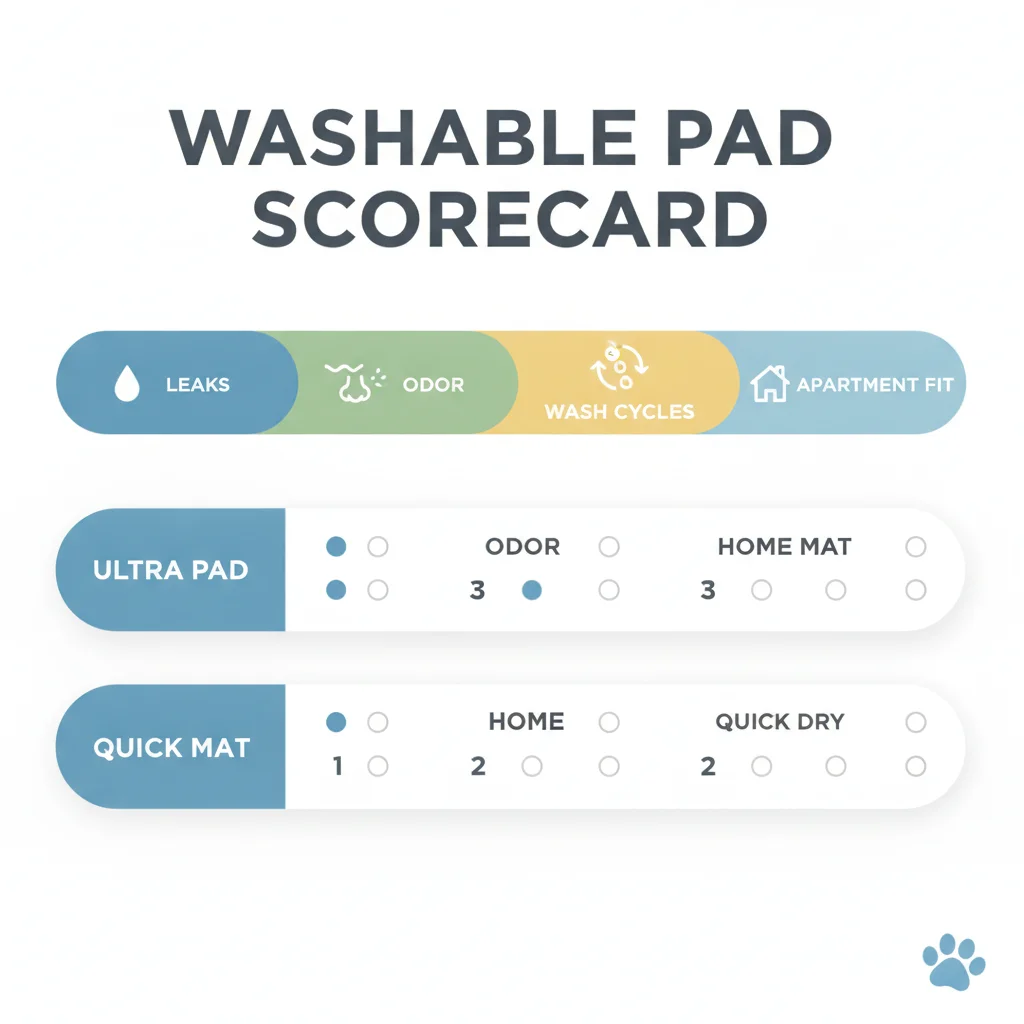
Shoppers comparing the best washable dog pee pads usually care less about first-day fluff claims and more about what happens after a month of laundry: edge leaks on hardwood, lingering ammonia smell, and whether the pad still grips after shrinking. That laundry-cycle reality is the gap most affiliate listicles skip.
We scored reusable pads the way apartment and multi-dog homes actually fail: volume dumps near the seam, overnight holds for seniors, and odor after 10–20 home washes with enzyme detergent. First-week absorbency alone did not win the ranking.
- Edge-leak control: Does urine wick past the quilted border onto the floor?
- Odor after repeated washes: Acceptable scent after cold-to-warm cycles, or permanent ammonia?
- Grip and shrinkage: Does the pad bunch on tile or pull away from a tray?
- Dry time: Ready for the next shift in hours, or still damp overnight?
Wash-cycle odor and edge leaks matter more than first-week absorbency claims on affiliate listicles.
For the architecture choice—flat layered pads versus a tray or holder system—see our deeper comparison of best puppy playpens for fenced potty corners. This listicle ranks the pads and systems you would actually rebuy after laundry, not a disposable-heavy puppy pad roundup.
1. Best overall washable pee pads for most homes
For most single-dog houses and many apartments, a mid-weight quilted washable pad with a waterproof backing and a grippy underside is the safest default. You get enough capacity for typical bathroom hits without the bulk of a tray system, and you can rotate two or three pads through the washer without rearranging furniture.
Look for multi-layer construction (absorbent top, middle soak layer, sealed waterproof bottom), stitched edges that do not peel after a dozen washes, and a size that matches the dog’s aim—not just the crate footprint. Gorilla Grip–style quilted pads and similar multi-pack sets usually land here when the dog already targets a pad and you need laundry durability more than a framed potty station.
Who this pick fits
- One dog, light-to-moderate overnight volume
- Owners who can wash every 1–2 days
- Homes where a flat pad already “works” but disposables are getting expensive
- People who want a portable pad for travel or playpen corners
Leak and odor notes from real laundry cycles
Best-overall pads fail less at center absorbency than at the border. If the dog prefers the edge—or the pad creeps on hardwood—urine finds the seam. After washes, cheap pads often keep absorbing while smelling sour; better packs stay closer to “clean fabric” when you wash promptly and skip softener.
We re-checked pads after repeated home laundry instead of ranking the fluffiest unboxing photo. A pad that looks plush on day one and smells like a litter box on day twenty is not a win—even if it still soaks a cup of water in a kitchen demo.
- Stitched borders that stay flat after washing leak less than glued hems that curl
- Dark top fabrics hide stains but do not reduce odor if the core stays damp
- Machine washability claims mean little if the waterproof layer delaminates
Tradeoffs vs tray systems
Flat pads win on price, travel, and flexible placement. They lose when the dog consistently misses the edge or when you need a fixed indoor potty that looks intentional in a small living room. If edge misses are your main complaint, jump to the tray section before buying a thicker flat pad—thickness rarely fixes aim.
Monthly cost math still favors washables once you clear break-even versus disposables; our puppy playpen sizing guide walks the ledger for apartment and puppy households.
2. Best for apartments and multi-pad setups
Apartment living changes the product problem. You rarely need one “hero” pad; you need a rotation: one on the floor, one in the wash, one drying. Small footprints also punish odor—there is nowhere for ammonia to hide—so wash cadence and pad count matter as much as brand names.
Apartment-focused picks emphasize hard-floor grip, sizes that fit a designated corner without dominating the room, and packs sold in 2–4 counts so you are not waiting on a single damp pad. Rocket & Rex–class washable pads and similar multi-packs often shine here when the marketing focus is reusable training in tight spaces rather than kennel aesthetics alone.
Apartment owners usually need a rotation of 2–3 pads plus a wash cadence—not one thick pad alone.
Size and grip on hard floors
Tile and vinyl expose every slip. A pad that bunches becomes a trip hazard and an edge-leak machine. Prefer rubberized or silicone-dot backs over slick vinyl bottoms. If the pad still creeps, add a non-slip underlay or move to a shallow holder—do not tape the corners with duct tape that shreds in the wash.
Match size to the dog’s landing zone. A small pad under a large puppy invites misses; an oversized pad in a studio becomes a laundry boulder. Medium (roughly 18×24 to 24×36 inches, depending on brand) covers most apartment dogs without swallowing the hallway.
Stack, rotate, and dry without killing airflow
- Keep at least two clean pads ready before the active pad is soaked.
- Rinse solids in the tub or utility sink, then wash warm with enzyme detergent.
- Tumble low or hang; do not stack wet pads in a closed hamper overnight.
- Return the driest pad to the same corner so location training stays consistent.
Same-day laundry delays are normal in apartment buildings with shared machines. That is why a three-pad rotation beats one premium pad. For layout ideas and apartment-specific sizing, use our best puppy playpens for apartment layouts.
Odor control in small spaces
Odor after washing is the make-or-break metric for studios. Wash promptly; dried-in urine bonds to fibers. Avoid fabric softener and dryer sheets—they coat the absorbent layer and trap smell. If a pad still smells after a correct wash, retire it; “more detergent” rarely fixes a failed waterproof laminate.
Pair the pad corner with good ventilation and a wipeable floor underlay. Washable pads reduce trash bags full of disposables, but they do not replace cleaning the floor under a chronic edge leak.
If neighbors share a hallway smell path, treat the pad like a kitchen sponge: swap early, wash hot enough for enzyme detergents to work, and never leave a soaked pad rolled in a plastic bag “until weekend laundry.” That bag becomes a sealed odor bomb.
- Enzyme pre-treat visible wet spots when you cannot wash immediately
- Wash pads separately from towels so softener residue does not transfer
- Air-dry fully before stacking; damp stacks reheat smell in closets
3. Best with trays or holders for less edge mess
When the dog’s aim is the problem—not the pad’s center absorbency—a tray or holder system beats buying ever-thicker flat pads. The raised lip catches overspray, keeps the pad centered, and gives a clear “this is the potty” boundary that some puppies learn faster than a floppy rectangle on the floor.
Best systems combine a washable or replaceable insert with a wipeable frame. Some use dedicated washable inserts; others accept standard reusable pads cut or sized to the tray. Cleaning the tray weekly matters as much as washing the pad—urine under the insert creates the smell people blame on the fabric.
Tray/holder systems reduce edge misses that flat washable pads leave on hard floors.
When a holder beats a flat pad
- Hard floors with visible edge rings after every accident
- Puppies that circle the pad and finish on the border
- Senior dogs that squat wide or dribble while standing
- Homes that need one fixed indoor potty location for guests and cleaning routines
Compatibility and cleaning
Confirm whether the tray needs proprietary inserts or accepts third-party washable pads. Proprietary systems can score high on fit and leak control but lock you into replacement pricing. Open trays that hold common pad sizes give more laundry flexibility.
Wipe the tray with an enzyme cleaner whenever you swap pads. If urine pools under a warped insert, no fabric upgrade will smell fresh. Check legs or feet for scratches on floors; cheap plastic trays can skid unless you add grip pads.
Cost of the full system
Price the tray plus at least two inserts or pads, not the frame alone. A $30 holder with one insert is incomplete; laundry rotation still applies. Over a year, a solid tray system often costs less than daily disposables and less frustration than replacing ruined rugs—but only if the dog accepts the station. If you are still deciding architecture, revisit metal vs fabric playpen chew test before locking a brand.
Factor cleaning time. Trays add a wipe-down step, but they save mopping under floating pads. For busy apartments, that trade is often worth it. For crate-adjacent training where you move the pad daily, a flat multi-pack remains simpler until aim stabilizes.
- Buy the frame once; budget two washable inserts minimum
- Confirm insert size before ordering third-party pads
- Keep a disposable pack for travel so the tray stays home
- Retire warped trays that no longer seat the pad flat
4. Quick picks by dog size, puppy vs senior, and budget
Use this shortlist when you already know the lifestyle constraint. Product names rotate on Amazon shelves; buy on the criteria below rather than a single SKU screenshot.
| Use case | What to prioritize | Skip if… |
|---|---|---|
| Puppy house-training | Multi-pack, medium size, fast dry time | You refuse laundry more than 3×/week |
| Apartment / hard floors | Strong grip + 2–3 pad rotation | You only buy one thick pad |
| Senior / incontinence | Higher capacity, tray optional, odor after wash | Pad must also survive outdoor mud trips |
| Budget starter | Basic quilted multi-pack, test odor at wash 10 | You need tray aesthetics day one |
| Premium / low odor | Better laminates, known wash durability | You travel weekly with no laundry access |
Puppy training shortlist
Puppies need consistency more than maximum thickness. Choose a size that fills the training corner, keep the pad in the same spot, and rotate laundry so the scent cue stays on a clean pad—not a soaked one. Pair pad work with confinement tools when needed; our playpen vs crate house-training guide helps when the issue is roaming, not pad brand.
Best washable puppy training pads in this use case are multi-packs you can wash on a schedule. Disposables still help for travel and the first chaotic weeks; switch volume to washables once the dog hits the pad reliably.
Senior and incontinence shortlist
Seniors often need higher capacity and less movement of the station. A tray reduces edge misses when posture is wide or shaky. Prioritize odor after washing—urine from incontinence sits longer—and avoid softener forever. Washable dog pads for incontinence should feel easy to lift without dripping; waterproof backs that curl after shrinking get retired early.
If nighttime volume overwhelms a single pad, use two overlapping pads or a tray with a high-capacity insert rather than hoping a “xl marketing claim” holds eight hours.
Budget vs premium—and when Gorilla Grip–style vs Rocket & Rex–style pads differ
Budget multi-packs are fine for a 30-day trial. Retire them if odor sticks after correct washing or if edges delaminate. Premium packs earn the upcharge when wash-cycle odor and grip stay acceptable past the first month.
Gorilla Grip vs Rocket and Rex pee pads style comparisons usually come down to pack size, grip feel, and how the pad behaves after shrinkage—not a universal winner. Test the criteria above on your floor and washer; return policies matter more than forum loyalty.
- Budget: entry quilted packs; verify waterproof layer after wash 5–10
- Mid: stronger grip + better seams for apartments
- System: tray + two inserts when edge misses dominate
- Keep disposables: travel, vet boarding, short training intensives
Reusable dog pee pads win when laundry is realistic. If you hate washing, disposables remain the honest choice—and that honesty saves more floors than a neglected washable pad left wet for three days.
Before you checkout, run a 60-second checklist: hard floors or carpet, laundry access this week, puppy vs senior volume, and whether edge misses already ruined a rug. Those four answers pick flat pack, apartment multi-pack, or tray system faster than reading another feature list.
- Hard floors + edge misses: tray or holder first
- Reliable aim + shared laundry: 3-pad flat rotation
- High overnight volume: capacity + optional second pad layer
- Travel-heavy lifestyle: keep disposables in the go-bag
The best washable pee pad system is the one you will actually wash on schedule. Fancy quilting does not outrank a simple pack that stays in rotation.
Frequently Asked Questions
Do washable dog pee pads actually stop smelling after washing?
Good ones stay acceptable for many cycles if you wash promptly with a pet-safe enzyme detergent and avoid fabric softener. Cheap pads often hold odor after 10–20 washes even when they still absorb.
How many washable pee pads do I need?
Most households need at least two or three so one is always clean while another dries. Multi-dog or apartment setups often need more for same-day laundry delays.
Are washable pads better than disposable puppy pads?
They usually win on monthly cost and landfill waste after the break-even point, but only if leaks and odor stay acceptable. Disposables still win for travel and short house-training bursts.
Should I buy a tray or holder with washable pads?
Yes if your dog tends to hit the edge on hard floors or you need a fixed potty spot. Flat pads alone work better when the dog already targets the center and you can rotate laundry quickly.
How do I wash reusable dog pee pads without ruining them?
Rinse solids first, wash on warm with enzyme detergent, skip fabric softener and dryer sheets, then tumble low or air-dry. Softener coats fibers and traps urine smell even when the pad looks clean.
Related reading on our sister sites: Best Pet Camera for Multi-Dog