Apartment constraints that change the buying criteria
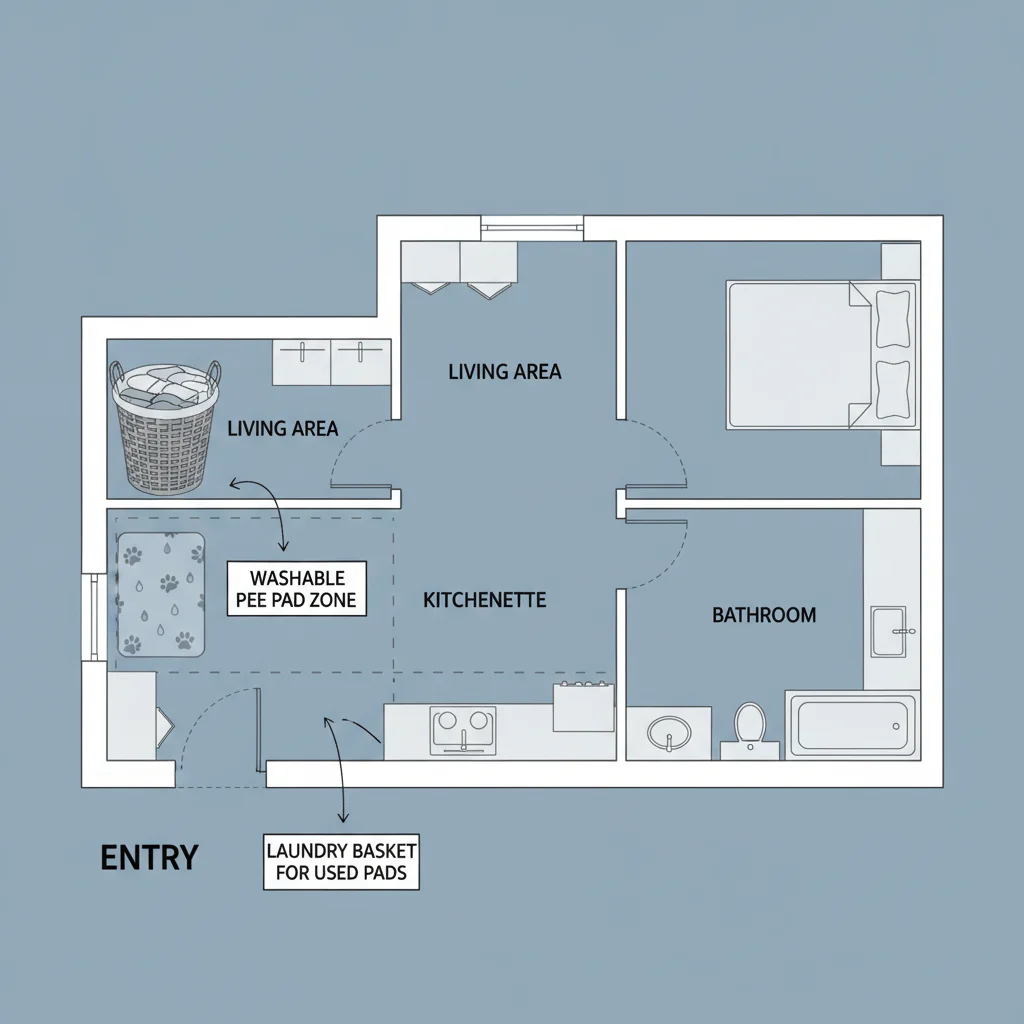
Shoppers hunting the best pee pads for apartments are not shopping for kennel aesthetics—they need a system that survives hard floors, thin walls, shared laundry delays, and neighbor noses. Brand-name fluff claims matter less than edge leaks you mop at 6 a.m. and ammonia that travels into the hallway.
This guide ranks washable pad and holder setups the way small-space living actually fails: grip on vinyl and hardwood, odor after repeated washes, and enough spare pads to rotate when the building machines are busy. Disposable-heavy puppy listicles skip those constraints; apartment owners cannot.
In apartments, odor after repeated washes and hard-floor edge leaks beat brand-name absorbency claims.
- Hard floors amplify misses — tile and vinyl show every edge ring a rug would hide.
- Shared laundry sets the pad count — one thick pad is useless if it stays damp for two days.
- Smell has nowhere to go — studios punish slow swaps harder than houses with spare rooms.
- Visual bulk matters — landlords, roommates, and guests see the entryway every day.
If you still need a brand shortlist scored on leak and laundry durability, start with our washable pee pad leak and odor ranking. If you are stuck between a flat layered pad and a tray station, use the architecture comparison of pee pad layers vs tray potty systems before locking a SKU.
What to prioritize: grip, edges, odor, and dry time
Apartment buying criteria compress into four tests. Fail any one and the “best” pad becomes a weekly mop job. Pass all four and even a mid-priced multi-pack outperforms a premium pad that bunches, smells, or never fully dries between shifts.
| Priority | Why apartments punish it | What to look for |
|---|---|---|
| Grip | Hard floors + dog spin = pad skating | Rubberized or silicone-dot backing; avoid slick vinyl bottoms |
| Edges | Visible rings on hardwood; thin-wall splash risk | Stitched borders that stay flat; shallow holder if aim is wide |
| Odor after washes | Small air volume; hallway smell path | Enzyme-friendly fabric; laminate that does not trap ammonia |
| Dry time | Shared laundry + no balcony = slow turnaround | Multi-pack rotation; hang-dry friendly thickness |
Non-slip backing that actually holds
Grip dots that look dense in product photos often flatten after ten washes. Test the active pad after laundry week two: if it creeps toward the fridge or bunches under a spin, you have an edge-leak machine, not a training aid. Prefer quilted washable pads with a grippy underside over “waterproof sheet” designs that slide on polished vinyl.
- Place the station where the dog already pauses—entry, balcony door, or crate-adjacent corner
- Do not tape corners with duct tape that shreds in the wash
- If grip still fails, add a shallow holder before buying a thicker flat pad
Thickness rarely fixes skating. A heavier core that still has a slick back just becomes a heavier skateboard.
Edge construction vs tray walls
Flat pads usually absorb fine in the center and lose at the quilted border. Urine wicks sideways, the pad creeps a few inches, and you mop a ring nobody photographed in the listing. A pee pad holder or low tray adds a lip that turns “almost on the pad” into “still contained”—especially useful for puppies that circle the border and seniors that squat wide.
Choose architecture on miss pattern, not marketing:
- Center hits, rare floor rings — stay on flat layers with strong grip.
- Border dumps and hardwood rings — add a holder or move to a tray system.
- Full misses beside the station — fix placement and training first; fabric upgrades will not invent aim.
Open trays that accept standard washable pads keep laundry flexible. Proprietary inserts can seal better but lock replacement pricing—budget two inserts minimum either way.
Wash and dry windows between shifts
You need enough pads to rotate through slow shared laundry—not just the thickest single pad.
Apartment laundry is the hidden product requirement. A building with weekend-only machines or a long wait list means your active pad must have backups ready. Three pads is the realistic floor: one on the floor, one washing, one drying. Four is safer if overnight volume is high or dryers are unreliable.
Wash warm with enzyme detergent, skip softener and dryer sheets, and dry fully before stacking. Softener coats absorbent fibers and traps smell—the classic reason owners say “washable pads always reek” after week three. Hang-dry on a rack when possible; stacked damp pads in a closed closet reheat ammonia overnight.
- Rinse solids in the tub before the machine load
- Wash pads separately from towels that carry softener residue
- Air-dry completely; damp cores smell like failure even when the top feels dry
Best systems for studios and one-bedrooms
Small footprints punish visual bulk and odor equally. The winning apartment dog potty system is usually a low-profile multi-pack plus a defined corner—not a giant faux-grass tray that dominates a studio. Low-profile systems win when landlords, roommates, and guests see the entryway every day.
Low-profile systems win when landlords, roommates, and guests see the entryway every day.
1. Best default: quilted multi-pack with hard-floor grip
For most single-dog studios and one-bedrooms, a mid-weight quilted washable pad sold in packs of two to four is the safest start. You get laundry rotation without rearranging furniture, and you can trial placement before committing to a framed station. Gorilla Grip–style quilted sets and similar multi-packs usually land here when the dog already targets a pad and you need laundry durability more than tray theater.
- Medium size (roughly 18×24 to 24×36 inches, brand-dependent) covers most apartment dogs without swallowing the hallway
- Dark tops hide stains; they do not reduce odor if the core stays damp
- Stitched borders that stay flat after washing leak less than glued hems that curl
Who it fits: one dog, light-to-moderate overnight volume, owners who can wash every 1–2 days, homes where a flat pad already “works” but disposables are getting expensive.
2. Best for edge messes: shallow holder + standard washable pads
When hardwood shows rings after every visit, upgrade architecture before thickness. A slim pee pad holder keeps the pad centered, catches overspray, and still looks intentional rather than like a temporary accident kit. Prefer holders that accept common washable pad sizes so you are not stuck buying proprietary sheets every month.
Tradeoffs: holders add a wipe-down step and a few inches of height. For busy apartments that trade is often worth it—less mopping under floating pads. Skip tall walls if seniors or toy breeds hesitate to step in; containment that the dog refuses is not containment.
- Wipe the holder with enzyme cleaner on every pad swap
- Check under the pad daily—hidden puddles are odor factories
- Retire warped frames that no longer seat the pad flat
3. Best for dogs that need a “yard” cue: compact tray with fabric or grass insert
Some dogs refuse fabric pads but accept a framed indoor potty with synthetic grass or a raised insert. Compact trays can work in one-bedrooms when you have a balcony-adjacent corner and commit to rinsing the tray bed—not just the top surface. Grass blades hold moisture; owners who only hose the top still get a sour base that travels through thin walls.
Fabric washable inserts behave more like pee pads: machine washable, faster to fully dry if thin enough, less “yard theater.” Choose grass only if the dog truly needs the cue; otherwise a fabric insert plus tray walls is easier laundry for shared machines.
- Grass trays: better turf cues; higher rinse discipline
- Fabric inserts: faster laundry; closer to standard washable pads
- Either system: scrub the tray bed weekly or ammonia returns within hours
4. Best overnight / senior backup: higher capacity + spare pad always dry
Senior incontinence and overnight volume change the math. Capacity and odor after washing outrank “training pad” marketing. Keep the station fixed so the dog does not hunt a new corner at 3 a.m., and keep one fully dry spare ready before the active pad is soaked. A tray optional upgrade helps if dribble patterns hit borders; a flat multi-pack still works when aim is reliable and laundry is prompt.
Pair the overnight station with a wipeable floor underlay. Washable pads reduce trash bags full of disposables, but they do not replace cleaning the floor under a chronic edge leak—especially on rented hardwood.
| Apartment scenario | Better default | Skip if… |
|---|---|---|
| Studio, dog aims well | Quilted 3-pack, strong grip | You refuse laundry more than 3×/week |
| Hardwood edge rings | Shallow holder + washable pads | You will not wipe the frame |
| Dog refuses fabric | Compact tray + grass/fabric insert | You skip tray-bed scrubbing |
| Senior overnight volume | Higher capacity + dry spare always ready | Pad must also survive outdoor mud trips |
| Roommates / landlord scrutiny | Low-profile flat or slim holder | You want a large faux-lawn centerpiece |
Multi-dog and high-volume apartment setups
Two dogs sharing one station stress every system. Flat layers need more surface and more pads in rotation so the second dog is not forced onto a wet edge. Trays need either a larger footprint or a second station—stacking volume into one small tray creates overflow that looks like “the tray failed” when the real issue is capacity.
Pad count and rotation math
Run the numbers before buying another thicker pad:
- One dog, shared laundry: 3 pads minimum
- Two dogs, same station: 4–6 pads, or two stations
- High overnight volume: add one spare beyond your normal rotation
Count visible floor rings after morning and evening peaks for one week. Note whether misses are edge, overshoot, or full misses beside the station. Edge rings → tray or better holder. Full misses beside the station → training/placement problem. Center soaking with no floor mess → stay on layers and fix laundry cadence.
When to size up or add a tray
Size up when two dogs cannot land without overlapping wet zones, or when a growing puppy’s stance exceeds the pad border. Do not size up so far that laundry becomes a single-item washer load that blocks roommate towels—oversized pads waste machine capacity and dominate small floor plans.
Add a tray when edge rings persist after grip upgrades and prompt swaps. A second smaller station often beats one giant pad in a narrow hallway: dogs learn “left pad / right pad” faster than fighting over a soaked center.
- Measure the dog’s rear stance, not the Amazon photo
- Confirm holder fit for third-party washable pads before ordering
- Budget cleaning time: trays save mopping but add wipe-downs
Odor escalation signs
Odor escalation in apartments is usually operational, not a mysterious brand failure:
- Soaked pad left overnight in a plastic bag “until laundry day”
- Softener coating that traps ammonia after every wash
- Urine under a warped insert or creeping pad nobody checks
- Tray bed ignored while only the top fabric gets rinsed
Treat the pad like a kitchen sponge: swap early, wash with enzyme detergent, dry fully, and retire pads that still smell after a correct cycle. More detergent rarely fixes a failed waterproof laminate. If neighbors share a hallway smell path, schedule swaps before peak human traffic—not after you notice the scent yourself.
For cost reality versus endless disposable packs, our washable vs disposable cost breakdown walks the monthly ledger for apartment households once you have a working rotation.
Shopping checklist and starter kits
Buy a kit, not a hero pad. Apartment success is rotation plus cleaning supplies plus a defined zone—not one thick rectangle that looks good in an unboxing video.
Minimum kit for one dog
- Three washable pads (or two pads + one holder-compatible insert set)
- Enzyme detergent dedicated to pet laundry
- Wipeable underlay or easy-mop floor under the station
- Optional shallow holder if hardwood already shows rings
- Small enzyme spray for spot pre-treat when you cannot wash immediately
Keep the station consistent. Moving the pad daily “to hide it from guests” resets training and spreads smell. Discreet and fixed beats decorative and wandering.
Enzyme detergent and spare pads
Enzyme detergent breaks down urine proteins that standard detergent leaves behind. Skip softener. If a pad still smells after a correct wash and full dry, retire it—continuing to use a failed laminate turns every load into hallway perfume. Keep at least one dry spare in a ventilated spot, never sealed in a damp stack.
- Swap promptly at the first heavy soak
- Pre-treat if laundry is delayed more than a few hours
- Wash warm, dry fully, return to the same corner
Avoid these common mistakes
- Buying one premium pad and hoping laundry is always free the same day
- Choosing oversized pads that dominate the hallway and choke the washer
- Ignoring under-pad checks on hardwood
- Using fabric softener “to make pads smell nice”
- Upgrading thickness when the real failure is edge aim or grip
- Skipping tray scrubbing while blaming the insert brand
Quick decision path: start with a grippy quilted 3-pack sized to the dog’s landing zone. Add a shallow holder if edge rings appear. Move to a compact tray only if the dog needs a framed cue or volume overwhelms flat layers. Revisit brand durability scores in the leak and odor ranking after the architecture choice is clear.
Frequently Asked Questions
What size pee pad is best for apartments?
Choose the smallest pad your dog can reliably hit, then add a holder if edges get messy. Oversized pads waste laundry capacity and dominate small floor plans.
How do I keep washable pads from smelling in a small apartment?
Swap promptly, wash with enzyme detergent, skip softener, and keep a dry spare ready. Open drying and a tray scrub schedule matter as much as the pad brand.
Can washable pads replace outdoor potty trips entirely?
Some apartment dogs use them as the main option, but most owners still schedule outdoor trips when possible. Pads work best as a reliable backup plus overnight system.
How many washable pee pads do I need for shared laundry?
Plan for three pads minimum: one active, one washing, one drying. Buildings with weekend-only machines often need a fourth so you are not stuck with a damp pad overnight.
Do I need a tray holder on hardwood apartment floors?
Not always. Strong-grip flat pads work if your dog aims center. Add a shallow holder when you see edge rings, pad creep, or wide stances that dump past the border.
Related reading on our sister sites: Best Self-Cleaning Litter Box for