Quick verdict by situation
Owners comparing reusable dog pee pads vs disposable usually want one number: which option costs less once laundry, odor failures, and trash bags enter the ledger. The honest answer depends on how many weeks you will use pads daily, how fast you wash, and whether you keep a dry spare ready—not on the price printed on a single pack.
Use this shortcut before you run the full math. Short puppy bursts favor disposables. Months of apartment or senior use favor a washable multi-pack—if the pads still smell acceptable after real wash cycles. Mixed travel and illness weeks favor a hybrid kit so you stop burning money on the wrong tool.
Break-even usually arrives in weeks for daily apartment use—if washable pads keep odor and leaks acceptable.
- House-training under ~3–4 weeks: disposables usually win on total spend and hassle.
- Apartment or condo daily use for months: washables win if you rotate three pads and wash promptly.
- Senior incontinence for months/years: washables win hardest—unless early odor failure forces constant replacements.
- Travel, guests, daycare, illness spikes: keep a disposable sleeve even when washables cover home routine.
| Situation | Default winner | Why |
|---|---|---|
| 2–3 week puppy crash course | Disposable | Upfront washable kit rarely pays back before outdoor focus |
| Studio/one-bed with shared laundry | Washable multi-pack | Monthly disposable burn plus trash volume climbs fast |
| Senior overnight dribble for a year+ | Washable + dry spare | Disposable packs become a fixed monthly bill |
| Road trips / family visits | Disposable sleeve | No washer access; washables stay home |
| Unreliable laundry cadence | Hybrid or disposable-first | Damp washables erase both savings and odor control |
If you already know washables fit your home but still need brand durability scores, use our washable pee pad leak and odor ranking. Architecture choices (flat layers vs tray) change laundry count and leak risk—see pee pad layers vs tray potty systems before locking a system.
Upfront cost vs monthly spend (worked examples)
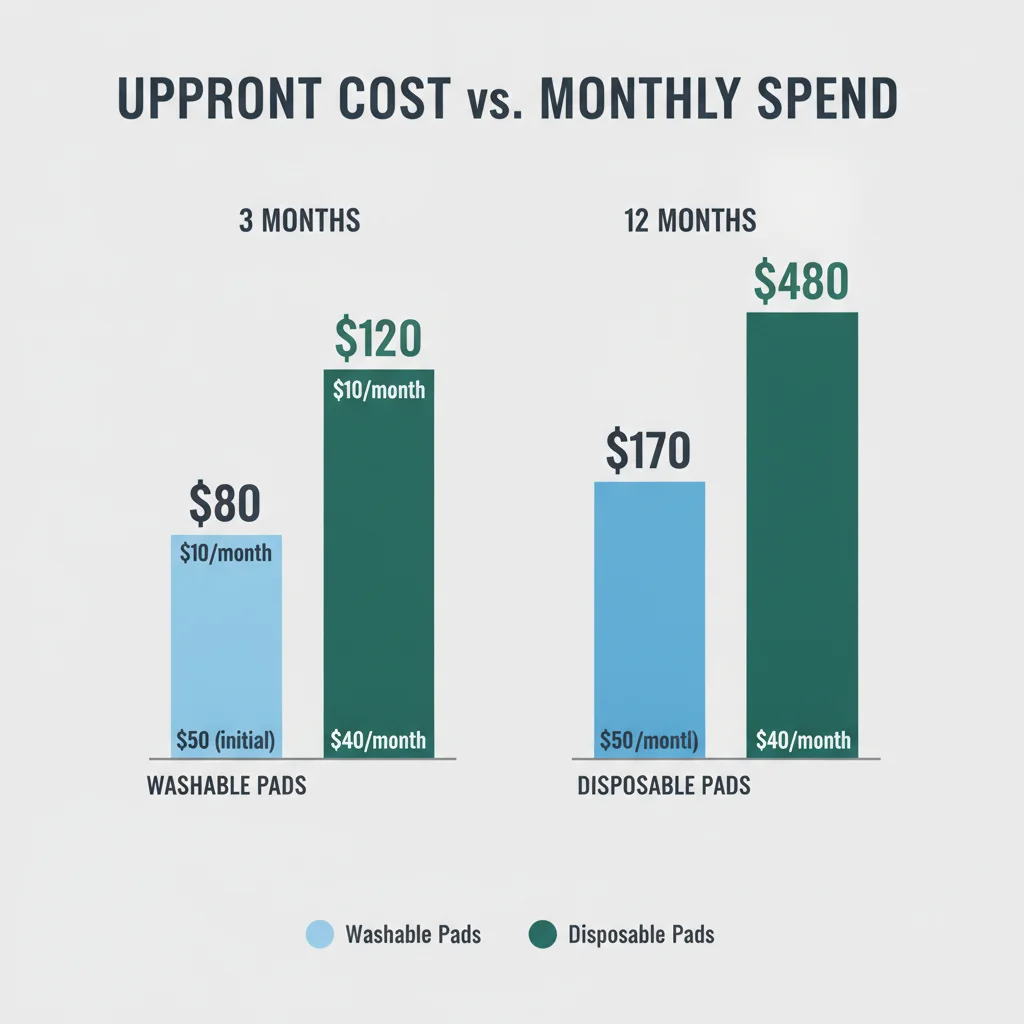
Price tags lie when you stop at day one. Disposables look cheap per pack and expensive per month. Washables look expensive as a starter kit and cheap once pads survive laundry. The worked examples below use mid-market 2026 street prices—not the cheapest no-name sheets or luxury faux-lawn trays.
Assumptions for a single-dog apartment
- Medium dog or large puppy: roughly 3–5 pad changes on heavy training days, 1–3 on maintenance days
- Disposable medium pads: about $0.25–$0.45 each when bought in bulk
- Washable quilted multi-pack: about $35–$60 for three pads
- Enzyme detergent share: about $3–$6 per month of pad-only loads
- Shared laundry machine fees (if any): $1.50–$3.00 per load, 6–10 loads/month
Your local prices will move, but the shape of the curve rarely does: disposables scale linearly with weeks of use; washables front-load cost and then flatten—until a pad fails and you buy replacements.
Scenario A — Peak puppy week, then taper
Week 1–2 of house-training can burn 25–40 disposable pads if you change at every soak. At $0.35 each, that is $9–$14 per week before trash bags. A $50 washable 3-pack still needs soap and dryer time, but you are not restocking cardboard packs twice a week.
If outdoor success arrives by week four and pads become overnight-only, disposables may finish cheaper overall because the expensive weeks are short. Buy washables here only if you expect months of indoor backup afterward (apartments without yard access, winter, seniors in the same home).
| Week band | Disposable burn (est.) | Washable path (est.) |
|---|---|---|
| Weeks 1–2 peak | $18–$28 | $45–$65 kit + first laundry loads |
| Weeks 3–4 taper | $10–$18 | Detergent + 2–4 loads |
| Months 2–3 overnight only | $12–$25/month | Mostly detergent; kit already paid |
Rule of thumb: if total pad-dependent weeks will stay under a month and laundry is painful, skip the washable kit. If pad use continues past six to eight weeks, the kit usually pays for itself even with machine fees.
Scenario B — Apartment maintenance for a year
One adult dog using a pad for overnight or workday misses at two pads/day average is ~60 disposables/month. At $0.30 each that is ~$18/month, or ~$216/year—plus storage space and trash. A $50 washable kit with $5 detergent and $15 laundry fees averages closer to $70 year one if pads last, then far less year two.
Disposable pads still win for travel, guests, and peak puppy accidents even when washables win monthly cost.
Push volume to four pads/day (incontinence or two dogs sharing one station) and disposables jump toward $35–$50/month. Washables still win on paper—but only with enough rotation pads so you are not forced into emergency disposable packs every week.
Break-even week estimates
- ~2–3 weeks of daily multi-pad use: washable kit often breaks even vs mid-tier disposables.
- ~4–6 weeks when laundry fees are high or you buy premium disposables.
- Never if washables fail by week three and you replace the whole set twice—then you paid kit price plus disposables.
Track your own break-even: multiply pads used per day × price per disposable × days. Compare that running total to kit price + detergent + machine fees. When disposable spend crosses kit cost, every surviving washable week is pure savings—until odor or leaks force a repurchase.
Hidden costs: laundry, odor failures, and replacements
The spreadsheet fails when owners ignore labor, smell, and early product death. Those three line items decide whether washables feel like thrift or a false economy.
Washer, dryer, and detergent reality
- Count machine fees and your time: a 40-minute load three times a week is not “free.”
- Enzyme detergent matters; softener coats fibers and traps ammonia—then you blame the pad brand.
- Incomplete drying creates overnight ammonia even when the surface feels dry.
- Washing pads with softener-laden towels recontaminates the next “clean” set.
Apartment buildings with weekend-only machines force a larger pad inventory. Three pads is the floor; four is safer when dryers fail or loads wait overnight. Buying only one “premium” pad to save money usually costs more because you buy disposables every time laundry slips.
Pads that fail after wash cycles
Failed washables that get tossed early erase the savings; durability after wash cycles is the real ROI variable.
Marketing wash counts of “300 washes” mean little if the waterproof laminate peels, the grip dots flatten, or odor remains after a correct enzyme cycle. When that happens, owners often:
- Buy a second washable set (doubling upfront cost)
- Return to disposables “just for now”
- Keep using a smelly pad and decide washables “don’t work”
Retire pads that still smell after a correct wash and full dry. Continuing to use a failed laminate turns every load into hallway perfume and destroys the ROI case for neighbors and roommates. Durability evidence beats another untested multipack—start with brands that survive laundry in our leak and odor tests.
Trash volume, storage, and floor damage
- Disposable trash: tall kitchen bags fill weekly during puppy peak; apartment chutes notice the volume.
- Storage: bulk disposable boxes eat closet space; washable packs fold smaller once dry.
- Floor risk: either type can leak—edge rings on hardwood become repair bills that dwarf pad savings.
Budget a wipeable underlay or easy-mop zone under the station either way. A $200 floor refinish makes the pad debate academic. If edge rings already appear, fix architecture (holder/tray) before buying thicker disposables as a “solution.”
Performance tradeoffs that change the math
Cost only matters if the system contains urine and stays socially acceptable. A cheaper path that soaks hardwood or smells into the hallway is not cheaper once you add cleaners, patches, and relationship stress with neighbors.
Leak risk and floor damage
Disposables often have plastic backing that contains a single hit well—until the dog steps the pad into a bunched ridge. Washables vary wildly: quilted pads with real waterproof layers and grip can match or beat cheap disposables; thin “waterproof sheets” without structure skate and dump edges.
| Failure mode | More common with | Cost impact |
|---|---|---|
| Pad skating on vinyl | Slick washables; cheap disposables without grip | Mop time + edge rings |
| Border dumps | Both; worse without holder | Floor damage risk |
| Overnight capacity overflow | Thin disposables; single washable with no spare | Emergency rebuys + cleaning |
| Persistent odor after wash | Failed washable laminates / softener use | Kit replacement; social cost |
Spend on containment first: correct size, grip, optional shallow holder, and a dry spare. Then optimize monthly pad spend. Flipping that order is how people buy six disposable brands and still mop rings.
Travel, guests, and daycare convenience
Washables lose when you cannot wash. Hotels, family visits, car travel, and post-surgery confinement weeks are classic disposable wins even for households that run washables at home. Keep a sleeve of disposables in the closet so a trip does not trigger a panic reorder of a full washable set you will not use on the road.
- Home routine → washable rotation
- Travel / illness / guest week → disposable sleeve
- Daycare or boarding → usually neither; confirm facility rules
Convenience is a real cost. If laundry access collapses for two weeks, forcing washables creates damp pads and odor. Switching temporarily to disposables protects floors and sanity; resume washables when machines are available again.
Hybrid strategies that actually save money
Hybrids are not fence-sitting—they are how most cost-aware apartment owners win:
- Washable core + disposable sleeve: covers 80–90% of home volume without travel friction.
- Disposable-first, switch at week four: finish the chaotic puppy peak, then buy the washable kit once outdoor/overnight patterns stabilize.
- Weekday washable / weekend disposable: useful only when weekend laundry truly does not exist; otherwise stick to washable rotation.
Avoid the expensive hybrid mistake: one washable pad plus constant disposable top-ups because you never bought pads two and three. That combination pays both sticker prices and still fails laundry cadence.
Final pick matrix and starter recommendations
Choose a path, buy the minimum kit for that path, and measure odor/leaks for two weeks before changing brands. Brand hopping without fixing rotation is how pad aisles stay profitable.
| Path | Buy first | Skip if… | Expected win |
|---|---|---|---|
| All-in washable | 3–4 quilted pads + enzyme detergent | You refuse frequent laundry | Lowest monthly cost after ~1 month |
| Disposable-first, then switch | Bulk disposables 2–4 weeks, then washable kit | You already know pad use lasts months | Avoids unused kit after fast outdoor success |
| Hybrid home/travel | Washable 3-pack + one disposable sleeve | Storage is zero and travel is rare | Best total cost + flexibility |
| Tray/holder upgrade | Holder or tray + washable inserts | Dog refuses stepping into frames | Fewer floor rings; may cut mopping costs |
All-in washable path
Best for apartments, senior care, and any home that will use pads daily beyond a short training burst. Budget the multi-pack, enzyme detergent, and a wipeable underlay on day one. Add a shallow holder if hardwood shows rings within the first week. Revisit brand picks against laundry durability rather than Amazon star averages alone.
- Three pads minimum (four with slow shared laundry)
- Same fixed corner every day
- Retire smelly pads early instead of “one more wash”
Disposable-first then switch
Best when you honestly do not know how long indoor pads will last. Run disposables through the peak chaos, track pads/day, then buy washables once the pattern looks like months—not days. You will spend more in weeks one and two, but you avoid a $50 kit that sits unused after outdoor success.
Hybrid weekday kit
Best default for mixed lifestyles: washables at home, disposables in a labeled travel bag. Do not mix both on the floor at once in a way that confuses training—keep the home station consistent, and pull disposables only when the washable station cannot travel with you.
For apartment-specific odor and grip tactics after you pick washables, revisit the washable leak and odor ranking with hard-floor constraints in mind. For tray vs flat economics once the cost decision is made, use the architecture guide linked above.
Bottom line: washables win the 2026 monthly ledger for ongoing use when pads survive laundry; disposables win short bursts and travel; hybrids protect both budgets when owners stop pretending one product covers every week of the year.
Frequently Asked Questions
Are washable pee pads cheaper than disposable?
Usually yes after several weeks of daily use, especially in apartments. Savings shrink if pads fail early from odor or shrinkage and you keep buying replacements.
How long do washable dog pee pads last?
Quality pads can last months with prompt washing; cheaper ones may smell or delaminate after a few dozen cycles. Track odor and leaks—not just the marketing wash count.
Should I use both washable and disposable pads?
A hybrid setup works well: washables for routine home use, disposables for travel, illness, or weeks when laundry access is limited.
How many washable pads do I need to beat disposable costs?
Most single-dog homes need three pads minimum so one is always dry. Without rotation you buy emergency disposables and the break-even math collapses.
When do disposable pads still win on cost?
Short training bursts under a few weeks, travel-only use, or households that will not wash promptly. Also when washables fail early and get replaced repeatedly.
Related reading on our sister sites: Best Pet Camera for Multi-Dog