What storm panic looks like (and what it isn't)
If you are searching for how to calm a dog during a thunderstorm, you are usually past the “maybe they just dislike loud noise” stage. You want a plan that works tonight: what to change in the room first, which aids to layer next, and when a product is not enough.
For escape-prone dogs, pair this storm playbook with our best GPS dog trackers guide and the playpen vs crate house-training comparison so containment and yard bolts are covered before the first thunder cell.
Storm fear sits on a spectrum. Mild sensitivity looks like restless pacing, ears pinned, seeking a bathroom or closet, and short bursts of panting when thunder rolls. Moderate fear adds trembling, drooling, attention-seeking, and refusal to settle even when you sit nearby. Severe panic looks like frantic escape attempts, clawing at doors or crates, self-injury, loss of house training, or bolt behavior that risks outdoor escape.
Not every storm reaction is a behavior emergency. Occasional startle at a close boom, then a quick reset with a chew or lap time, is noise sensitivity. Panic that escalates across the whole storm, or that begins when the sky merely darkens, is closer to noise phobia. Phobia is learned and can worsen season to season if the dog repeatedly experiences uncontrolled fear.
- Mild: hides briefly, recovers between cells of thunder
- Moderate: cannot settle for most of the storm; needs active management
- Severe: destruction, escape attempts, or self-harm during storms
Rule out medical lookalikes when the pattern is new. Pain, vestibular disease, cardiac issues, and cognitive change in seniors can amplify storm reactions. A sudden first-time meltdown in an older dog deserves a vet visit, not only a new treat bag. This guide is educational and is not a substitute for veterinary diagnosis or prescribing decisions.
Track one storm with simple notes: start time of restlessness, first boom heard, peak behavior, products used and when, and how long recovery took after the last rumble. Those logs make product testing honest and give a vet useful detail if you escalate later.
First 15 minutes: environment before products
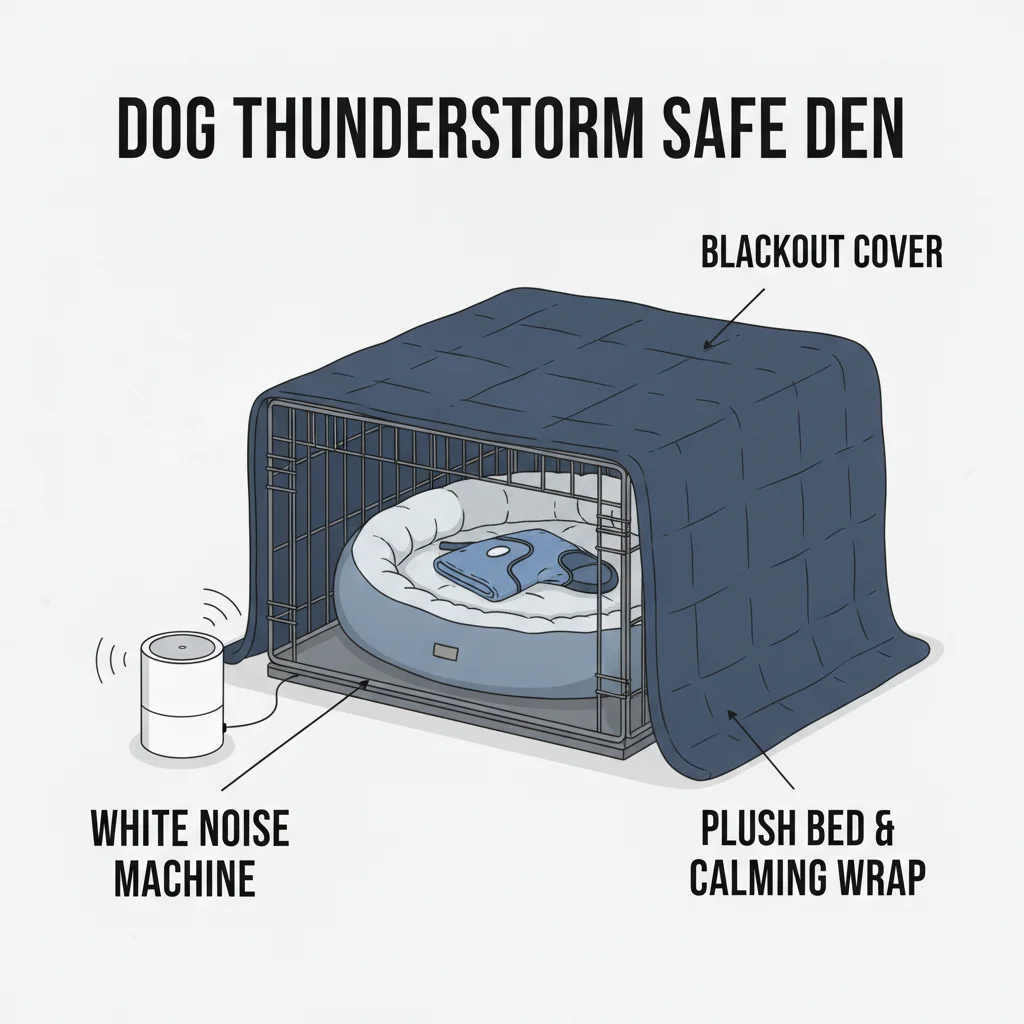
Environment changes often reduce storm panic before any supplement does. Open the calming-aid aisle after you have built a den, cut visual lightning cues, and lowered the acoustic shock of each boom. Many “failed” products were simply given in an open living room with blinds up and a TV at conversational volume.
Build a storm den in under ten minutes
Pick an interior room or closet-adjacent corner with fewer exterior windows. Close curtains or use blackout panels so lightning flashes do not reset the startle reflex. Soft bedding, a familiar bed, and a worn T-shirt with your scent help some dogs settle faster than a brand-new crate pad.
White noise, a fan, or a playlist of rain or brown noise can blunt distant rumbles. Volume should mask low thunder without startling the dog when you turn it on. Start the sound before the storm peaks so the audio change is not another novel cue.
- Interior room or hallway corner away from glass doors
- Blackout or closed curtains on storm-facing windows
- Continuous white noise or fan already running
- Water bowl nearby; skip forced food if nauseous from anxiety
- Leash and ID check if escape risk is high
Crate only if it is already a safe den
A crate helps when your dog voluntarily enters it for naps and treats. Forced crating during a panic episode can intensify fear and create new associations: crate equals trapped with thunder. If your dog has never loved the crate, free roam in a puppy-proofed interior room is usually safer during storms.
For multi-dog homes, separate only if one dog’s panic triggers the other. Sometimes a calm companion is a buffer; sometimes the frantic dog needs alone space. Watch body language for the first ten minutes and adjust.
Owner calm protocols that actually matter
Dogs read tension. Rapid reassurance chatter, hovering, and frantic “it’s okay” loops often raise arousal. Sit near the den, breathe slowly, and offer calm presence. Soft petting helps some dogs; others prefer space. Follow their lead instead of performing comfort.
Do not punish storm behavior. Yelling, leash corrections, or crate slamming teach that storms predict conflict. Redirect with a long-lasting lick mat, stuffed Kong, or sniffing game only if the dog can still take food. Loss of appetite is common in peak panic—do not force it.
Environment changes often reduce storm panic before any supplement does.
Product ladder by severity
Think of aids as a ladder, not a shopping list. Start with pressure and pheromones for mild to moderate cases, add timed OTC chews when forecast windows are clear, and reserve prescription options for dogs who still panic hard after a real multimodal trial. Skipping the bottom rungs wastes money and delays care.
| Severity | First-line tools | Add next | Escalate when |
|---|---|---|---|
| Mild | Den + white noise + wrap practice | Pheromone diffuser or collar | Anxiety spreads to weather cues alone |
| Moderate | Den + wrap + pheromone | Labeled calming chew timed to radar | Pacing/panting lasts whole storm |
| Severe | All of the above + vet consult | Discuss event meds (e.g. Sileo where appropriate) | Destruction, escape, or self-injury |
Wraps and gentle pressure
Anxiety wraps such as ThunderShirt-style garments apply steady torso pressure. Some dogs visibly soften within minutes; others ignore them. Fit snug but not restrictive—two fingers under the fabric is a common rule of thumb. Practice on calm days so the wrap is not a storm-only cue.
Non-responders are normal. If after two or three storms with correct fit you see no change, keep the wrap only if it does no harm, and move up the ladder. Do not buy a second brand of wrap expecting a miracle before you have fixed timing and environment.
Pheromone products
Dog-appeasing pheromone diffusers and collars (Adaptil and similar) are low-effort adjuncts. Plug a diffuser in the den room days before storm season peaks when possible. Collars help dogs who move between rooms. Expect subtlety: pheromones rarely stop full panic alone, but they can lower baseline arousal enough for white noise and wraps to work better.
OTC calming chews and supplements
Calming treats often combine L-theanine, tryptophan, melatonin, hemp-derived ingredients, or herbal blends. Evidence quality varies. Choose products with clear milligram amounts, a stated onset window, and a manufacturer that answers dosing questions for your dog’s weight.
Critical rule: dose on the forecast, not on the first boom. Most chews need 30–90 minutes. Giving a treat after your dog is already frantic is late theater. Read labels for age, pregnancy, and medication interactions, and ask your vet before stacking multiple supplements.
- Confirm onset time on the label and set a phone reminder when storms are likely
- Use the same product for several storms before declaring failure
- Stop and call your vet if you see vomiting, ataxia, or unusual sedation
Prescription options belong with a veterinarian
Event medications such as Sileo (dexmedetomidine oromucosal gel) and other short-acting anxiolytics are designed for predictable noise events. They are not DIY Amazon purchases. Your vet will weigh heart health, other drugs, and whether a situational med, a daily anxiety plan, or both make sense.
Never give human benzodiazepines or leftover pet meds from another animal. Wrong dose and wrong drug are common emergency-room stories after fireworks nights.
Timing to the forecast radar
Storm-aid timing to radar matters as much as which product you buy. A perfect wrap and chew still fail when they arrive after cortisol is already surging. Build a simple timeline keyed to your weather app’s radar and severe alerts.
Pre-storm window (T-minus 2 hours to 30 minutes)
- Check radar and set reminders for chew onset time.
- Start white noise and close curtains before sky darkens dramatically.
- Invite the dog to the den with a calm cue and a high-value chew toy.
- Put on the wrap while the dog is still willing to be handled.
- Give labeled OTC or prescribed event meds at the time your vet or label specifies.
If your dog begins pacing when clouds gather—before thunder—treat that weather cue as the start of the protocol. Waiting for audible thunder is a common owner delay that leaves products behind the curve.
During the storm
Maintain the den. Refresh water. Keep handling low-key. If the dog seeks contact, sit with them; if they hide, guard the exit routes instead of dragging them out for photos or “proof” they are fine. Reapply wraps only if the fit slipped. Do not stack extra OTC doses beyond label or vet instructions because the storm intensified.
For household logistics: put outdoor plans on hold, secure yard gates, and bring pets in early. Dogs that dig under fences during storms need management, not a pep talk.
Post-storm adrenaline dump
Many dogs look “fine” when thunder stops, then get a second wind of pacing, whining, or clinginess. That adrenaline dump can last 30–90 minutes. Keep the den available, continue quiet white noise, and offer a short leash walk only when the dog can take treats and walk without panic scanning.
Log recovery time. Shortening recovery across storms is a better success metric than expecting perfect stillness during peak thunder.
Storm-aid timing to radar matters as much as which product you buy.
When OTC fails — escalate without guilt
Affiliate pages often imply the next chew will fix everything. Honest storm care includes a clear exit ramp. Escalate to Rx when destruction or self-injury continues after multimodal OTC. Guilt does not protect your dog; a behavior-informed veterinary plan does.
Non-responder signs after a fair trial
- Three or more storms with den + wrap + pheromone + correctly timed chew, still severe panic
- Broken nails, bloody paws, or tooth damage from escape attempts
- Door or window destruction; repeated outdoor escapes
- Refusal to eat for the entire event plus prolonged recovery
- Anxiety that generalizes to rain apps, dark clouds, or fan sounds
Bring your storm log to the appointment. Videos of peak panic help more than vague “he gets upset.” Ask specifically about situational meds, whether a daily anxiety medication is warranted for storm season, and whether a veterinary behaviorist referral makes sense.
Training still belongs in the long game
Counterconditioning to recorded thunder at low volume can help mild cases between seasons. Never blast storm tracks at full volume at a panicked dog—that is flooding, not training. Work with a force-free trainer or veterinary behaviorist if fear is entrenched.
Desensitization is slow. It does not replace an acute storm protocol for this weekend’s front. Use both tracks: manage tonight, train in calm weeks.
Fireworks overlap kit
Summer stacks thunderstorms and fireworks. Keep the same den, wrap, pheromone, and med timeline ready for both. Fireworks are often less predictable on radar, so pre-dose on known holiday evenings rather than waiting for the first boom. Secure yards earlier; escape risk spikes when neighbors celebrate.
Stock styptic powder only if nail injuries are a known pattern—and prioritize preventing frantic digging over first-aid heroics. Update microchip and tags before storm season.
Escalate to Rx when destruction or self-injury continues after multimodal OTC.
Your next step is operational, not aspirational: set a radar alert, stage the den today, and pick one first-line aid you will actually use on the next watch. Reassess after two storms with notes in hand. That loop beats buying three new supplements every time the sky darkens.
Frequently Asked Questions
Should I crate my dog during a thunderstorm?
Only if the crate is already a trained safe den. Forced crating during panic can worsen fear. Prefer a quiet interior room with free exit if the crate is not a voluntary refuge.
How early should I give calming treats before a storm?
Most chews need 30–90 minutes; check the label and dose before the first boom, not after. Use radar timing so onset aligns with rising wind and distant thunder.
Do ThunderShirts work for every dog?
They help some dogs via gentle pressure; non-responders need pheromones, training, or vet meds. Practice the fit on calm days so the wrap is not a novel storm cue.
Is white noise enough for thunder anxiety?
It can blunt distant rumbles as part of a den setup, but rarely replaces a full multimodal plan. Pair sound masking with blackout curtains, a safe space, and severity-matched aids.
When should I ask a vet about storm medication?
If your dog injures themselves, destroys exits, or stays panicked after wraps, pheromones, and correctly timed OTC aids, ask about Sileo or other prescription options tailored to your dog’s health history.
Related reading on our sister sites: Best Orthopedic Dog Bed Under