Quick verdict by dog profile
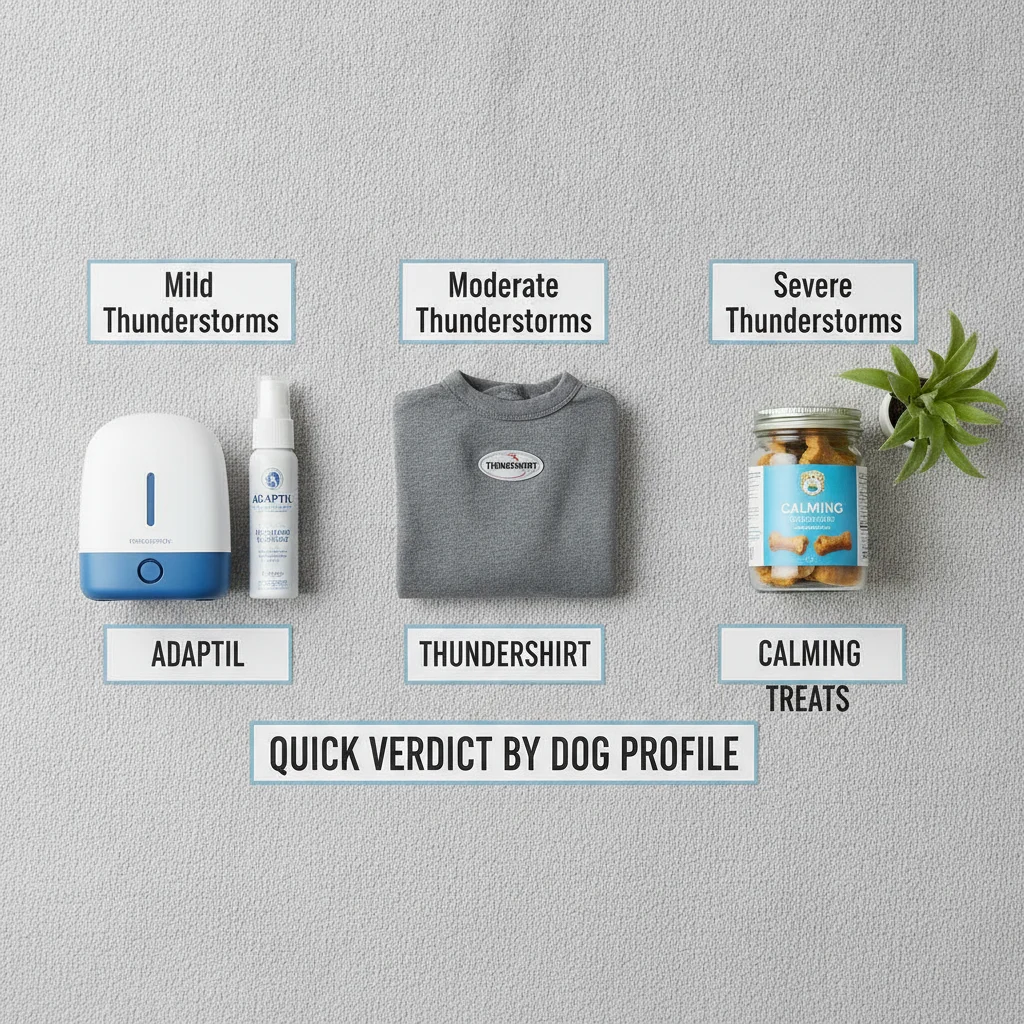
If you are weighing adaptil vs thundershirt for storm nights, you are really choosing between ambient pheromone coverage and on-demand pressure—not picking a single “winner” brand. Calming treats sit in a third lane: portable dosing that only helps when you time them to the forecast.
Pair this modality comparison with our vet-safe thunderstorm playbook and the best storm calming aids list so den setup and kit scoring sit beside the product shootout.
Adaptil and ThunderShirt solve different jobs—pheromone saturation vs immediate pressure. Use the severity rows below to pick a primary modality, then decide whether treats are a timed add-on or a travel spare.
| Dog profile | Primary pick | Strong add-on | Why |
|---|---|---|---|
| Mild sensitivity (restless, seeks closet, settles with you) | ThunderShirt or similar wrap | Adaptil diffuser in the den room | Pressure helps in the moment; pheromones lower baseline arousal across the cell |
| Moderate panic (trembling, pacing, drooling, hard to settle) | Wrap + Adaptil (diffuser or collar) | Calming chew dosed before radar hits | Stacking covers onset gaps; treats alone are usually too late once booms start |
| Severe / destructive (escape attempts, self-injury, house soiling) | Vet pathway first | Wrap + pheromone as support only | Severe storm panic is a veterinary problem, not a three-product affiliate shootout |
Mild sensitivity
These dogs still take treats, still come when called, and usually recover within minutes after the loudest clap. A correctly fitted pressure wrap is often enough if you also darken the room and start white noise early.
Add an Adaptil diffuser if storms cluster for days or the dog stays wired between cells. Skip multi-ingredient “storm mega chews” until you know the wrap and den are doing real work.
Track two or three storms before you buy the whole aisle. If pacing drops with wrap plus den alone, you have your answer. If the dog stays restless for hours after the front passes, pheromone coverage between cells usually beats another bag of chews.
Moderate panic
Moderate dogs need a plan that starts before the first boom. Fit the wrap when radar shows the cell two hours out, keep pheromones running in the den, and dose an evidence-leaning chew on the label’s pre-storm window.
If the dog still claws doors or refuses the wrap mid-storm, stop treating it as a shopping problem. Log intensity and talk to your vet about whether a short-acting prescription belongs in the kit.
Moderate cases are where dog pheromone vs wrap debates get messy online. In practice you often need both: pressure for the clap, pheromones for the long humid afternoon that never fully clears.
Severe or destructive panic
OTC modalities can support a medical plan; they should not replace one. Prioritize safety (escape risk, crate trauma, neighbor complaints) and veterinary behavior guidance. Keep the wrap and pheromone as comfort layers only after a clinician clears the pathway.
Owners sometimes delay that call because a diffuser “helped a little last month.” Partial help is useful data, not proof that another chew will close the gap. Document video, heart-rate cues you can see (panting spikes, pupils, escape routes), and every product timed to the radar.
Mechanism and onset differences
Understanding onset is how you stop blaming the “wrong” brand for a timing error. Each modality changes arousal through a different channel, so stacking can help—and so can failing when you reverse the order.
Pressure wraps (ThunderShirt-class)
Gentle, even torso pressure can dampen startle intensity for some noise-sensitive dogs, similar to a firm hug. Effect, when it works, shows up as soon as the garment is snug and the dog stops fighting the fit.
Fit matters more than brand lore. Too loose and you get a expensive T-shirt; too tight and you add panic. Practice calm dressing on sunny days so storm night is not the first time fabric goes over the shoulders.
- Onset: minutes after a correct fit
- Duration: as long as the wrap stays on and tolerated
- Best use: active storms, travel, or when you arrive home mid-cell
- Failure mode: dog freezes, rolls, or tries to escape the garment
Pheromones (Adaptil diffuser and collar)
Adaptil products release a synthetic analogue of the canine appeasing pheromone. Diffusers saturate a room over hours; collars move with the dog and help in multi-room homes. They are ambient tools, not rescue meds.
Plug the diffuser in the den before storm season peaks when you can. Mid-storm plug-ins still help future hours of a multi-day front, but they will not outrun a thunderclap that already started.
- Onset: typically hours of continuous exposure for full room effect
- Duration: refill cycles measured in weeks for diffusers; collar life varies by product
- Best use: baseline lowering across a storm week; multi-dog shared rooms
- Failure mode: expecting instant rescue after the first boom
Calming treats and chews
Chews usually rely on ingredients such as L-theanine, tryptophan, melatonin, or proprietary blends. Labels often ask for dosing 30–90 minutes before a stressful event. That window is the whole product.
Calming treats win on portability but lose if you dose after the first thunderclap. Keep them for forecast-driven nights, car rides to the boarding kennel, or fireworks schedules you can clock on a calendar.
- Onset: commonly 30–90 minutes when the formula works for that dog
- Duration: a few hours per dose, product-dependent
- Best use: advance dosing when radar is clear
- Failure mode: “treat panic” feeding after the dog is already flooding
| Modality | Typical onset | Needs advance setup? | Works mid-storm? |
|---|---|---|---|
| ThunderShirt / pressure wrap | Minutes after fit | Practice fit yes; chemical saturation no | Yes, if the dog tolerates dressing |
| Adaptil diffuser | Hours of room exposure | Yes | Partial for later hours; weak as first-line rescue |
| Adaptil collar | Ongoing while worn | Start before peak season when possible | Supportive; not a clap-by-clap fix |
| Calming treats | 30–90 minutes pre-dose | Yes | Usually no if you missed the window |
Cost and hassle over a storm season
Season math beats single-receipt sticker shock. A wrap is mostly a one-time buy. Pheromones and chews become refill lines. Multi-dog homes multiply everything except a shared diffuser room.
One-time vs refill
Budget a quality pressure wrap as a durable tool you wash and reuse for years. Factor replacement only if sizing changes or seams fail. Adaptil refill vials and monthly treat pouches are the quiet budget drain across a humid summer.
If your region sees weekly cells for three months, compare: one wrap plus two diffuser refills versus a treat bag every few storms. Many households land cheaper with wrap + pheromone and treats reserved for the worst forecast nights.
- Wrap: higher upfront, low per-storm cost
- Diffuser: moderate setup, predictable refill cadence
- Collar: mid cost, replacement when depleted or dirty
- Treats: low entry price, highest variable spend if you dose every rumble
Fit, wash, and daily friction
Wraps need laundry cycles after muddy yard dashes and drool-heavy nights. Keep a second lightweight layer if storms stack back-to-back and you hate putting a damp wrap on a stressed dog.
Diffusers need an outlet in the den, away from open windows that vent the pheromone outdoors. Collars need a neck check for rubbing. Treats need a dry pantry spot and a reminder system tied to weather alerts—not a frantic kitchen search at the first flash.
Multi-dog math
One diffuser can cover a shared interior room if both dogs den together. The reactive dog may still need a personal wrap or collar. Do not assume the calm dog’s “vibes” will teach the panic dog anything useful mid-storm.
Separate dens help when one dog’s pacing restarts the other’s arousal. In that layout, budget a second wrap before you double the treat aisle.
For boarding or vacation handoffs, write the stack in order: diffuser already running in the quiet room, collar on the reactive dog, wrap practiced with the sitter once on a clear day, treats only if the sitter can dose to a weather alert—not to the first startled bark.
Stacking rules that stay safe
Multimodal kits work when each layer has a job. They fail when you stack sedating actives, ignore label limits, or delay veterinary care because Amazon boxes keep arriving.
What combines well
Pressure + pheromone is the cleanest OTC stack for moderate cases: different mechanisms, little overlap risk when used as directed. Add a single calming chew only when you can dose on time and the formula does not duplicate heavy sedating ingredients already in play.
Environment still comes first. Blackout, white noise, and a practiced den multiply every product. Without that base, you will misread every modality as “useless.”
- Wrap + Adaptil diffuser: strong default for home storms
- Wrap + Adaptil collar: helpful for dogs that roam rooms
- Timed chew + wrap: good when radar gives you an hour-plus lead
- Diffuser + chew: useful if the dog refuses garments
What to avoid doubling
Do not run multiple sedating chews, human melatonin experiments, and leftover “calm” soft chews in the same evening. More bottles is not more science. Watch for ingredient overlap across brands (especially melatonin and herbal sedatives).
Skip alcohol-based calming sprays on a dog that is already panting heavily in a closed room. Skip forcing a wrap on a dog in active escape panic—redirect to safety and veterinary advice instead of a wrestling match.
When to stop and call a vet
Call your veterinarian or an emergency clinic if the dog injures itself, cannot be redirected for hours, shows collapse or extreme sedation after products, or if panic is escalating across successive storms despite a solid multimodal plan.
Bring notes: onset timing, products used, doses, and video of the worst five minutes. That record beats a vague “nothing works” story and speeds decisions about prescription options such as event meds used under clinical guidance.
Severe storm panic is a veterinary problem, not a three-product affiliate shootout.
Decision tree for tonight's storm
Use the clock and the radar, not brand loyalty. The same three products behave differently at T-minus two hours versus mid-cell.
If radar is about two hours out
- Start white noise and close storm-facing blinds.
- Confirm the Adaptil diffuser has been running in the den; plug it in now if you forgot earlier.
- Dose the calming chew per label if your dog responds to that formula.
- Practice a calm wrap fit; leave it on if the dog settles, or stage it beside the den.
- Offer a frozen lick mat or chew only if that reliably calms this dog—skip if food raises arousal.
This is the window where treats still earn their keep. Miss it and shift expectations toward wrap + environment.
If booms already started
Skip the “maybe the chew will still catch up” hope if you are past the onset window. Fit the wrap if tolerated. Move to the prepared den. Keep your own voice low and movements boring.
Check that the diffuser is on for the hours ahead. Do not spray novel scents, rearrange furniture, or film a loud video call next to the crate. Mid-storm novelty is gasoline.
- Priority 1: safety and containment without trauma
- Priority 2: wrap if the dog accepts it
- Priority 3: pheromone continuity for the rest of the front
- Deprioritize: new treats, new gadgets, new training theories
If nothing is working
End the product roulette for tonight. Protect the dog from glass, stairs, and open doors. If destruction or self-injury is underway, contact emergency veterinary care.
Tomorrow, rebuild the kit with honesty: keep what had any effect, drop what never did, and book a veterinary conversation before the next severe outlook. For broader scoring across wraps, pheromones, and chews, revisit the 2026 storm calming aids guide; for minute-by-minute room setup, stay with the thunderstorm calming playbook.
Fireworks weeks follow the same decision tree with one twist: you often get a fixed start time. That is when calming treats finally compete fairly with Adaptil collar vs diffuser storm setups, because you can dose on a clock instead of a chaotic radar blob.
Frequently Asked Questions
Is Adaptil better than a ThunderShirt?
Neither is universally better; wraps act immediately when fitted, while pheromones work best with advance setup. Choose by timing needs and severity, not by a single ranking chart.
Can calming treats replace Adaptil?
Not reliably—treats are intermittent dosing; pheromones provide ambient coverage between storms. Many households use both on forecast-heavy weeks rather than swapping one for the other.
Which option works fastest once thunder starts?
A correctly fitted pressure wrap usually acts sooner than a chew that needed pre-dosing. Pheromone diffusers are support tools in that moment, not rescue switches.
Should multi-dog homes prefer diffusers?
Diffusers can cover a shared room; individual wraps or collars still help the most reactive dog. Separate dens when one dog’s pacing restarts the other’s fear.
What if all three fail?
Document intensity and talk to your vet about prescription options and a behavior plan. OTC stacks have a ceiling; crossing it earlier is kinder than waiting through another destructive night.
Bottom line: pick a primary modality that matches tonight’s timing, stack only what fills a real gap, and escalate without guilt when panic outruns the aisle.
Related reading on our sister sites: Best Litter for Litter Robot