What 'works for storms' actually means
Shoppers hunting the best dog calming treats for thunderstorms are usually comparing soft chews by bag claims, not by whether onset time can beat the radar. Storm calming treats only help if onset time beats the first thunderclap. This guide ranks chew classes by labeled onset windows, ingredient realism, and when a treat is the wrong tool entirely.
Pair treat timing with our vet-safe thunderstorm playbook and the wider storm calming aids ranking so dens, wraps, and pheromones sit beside the chew decision. When you need modality stacking rules beyond chews, start with the aids list and the playbook rather than shopping three products at once.
This is educational content for dog owners, not a veterinary diagnosis or prescription. Cardiac disease, pain, cognitive decline, seizure history, and drug interactions change what is safe. When destruction, escape attempts, or self-injury show up, treat shopping is secondary to a clinician visit.
Onset vs duration
A treat that “calms for hours” still fails if you open the bag after the first boom. Onset is the clock that matters on storm night; duration only matters after you hit that window. Labels that say “supports calm” without a timing cue are marketing language, not a dosing plan.
Compare chews by labeled onset and duration, not bag claims of 'calming.' Write the onset minutes on the jar lid. When radar shows a cell two hours out, reverse-count from first expected thunder—not from when the sky looks interesting on the porch.
- Onset: minutes from swallow to usable effect for that dog
- Duration: how long mild support usually lasts per dose
- Failure mode: dosing after cortisol and adrenaline have already spiked
Mild vs panic expectations
Mild noise sensitivity looks like restlessness, closet seeking, or clinging. Moderate panic adds trembling, pacing, drooling, and refusal to settle. Severe cases include escape attempts, house soiling, or self-injury. OTC chews sit on the mild-to-moderate rung as adjuncts—not as sedatives for panic.
If your dog already destroyed a crate door last season, do not expect a soft chew to close that gap alone. Use treats as one timed layer inside a multimodal plan, then escalate with your vet when logs show no change after correct timing.
Owners often misread “worked once” as proof a chew is enough forever. One quiet front with distant thunder is not the same test as a cell that stalls overhead for two hours. Match expectations to intensity, not to the best night of the season.
YMYL honesty
Affiliate pages often imply miracle calm. Honest storm treat shopping means accepting partial responders, non-responders, and dogs that need prescription support. Track two or three storms with the same dose timing before you swap brands. Treats that fail after correct timing signal a need for wraps, training, or Rx.
Onset-time comparison of popular chews
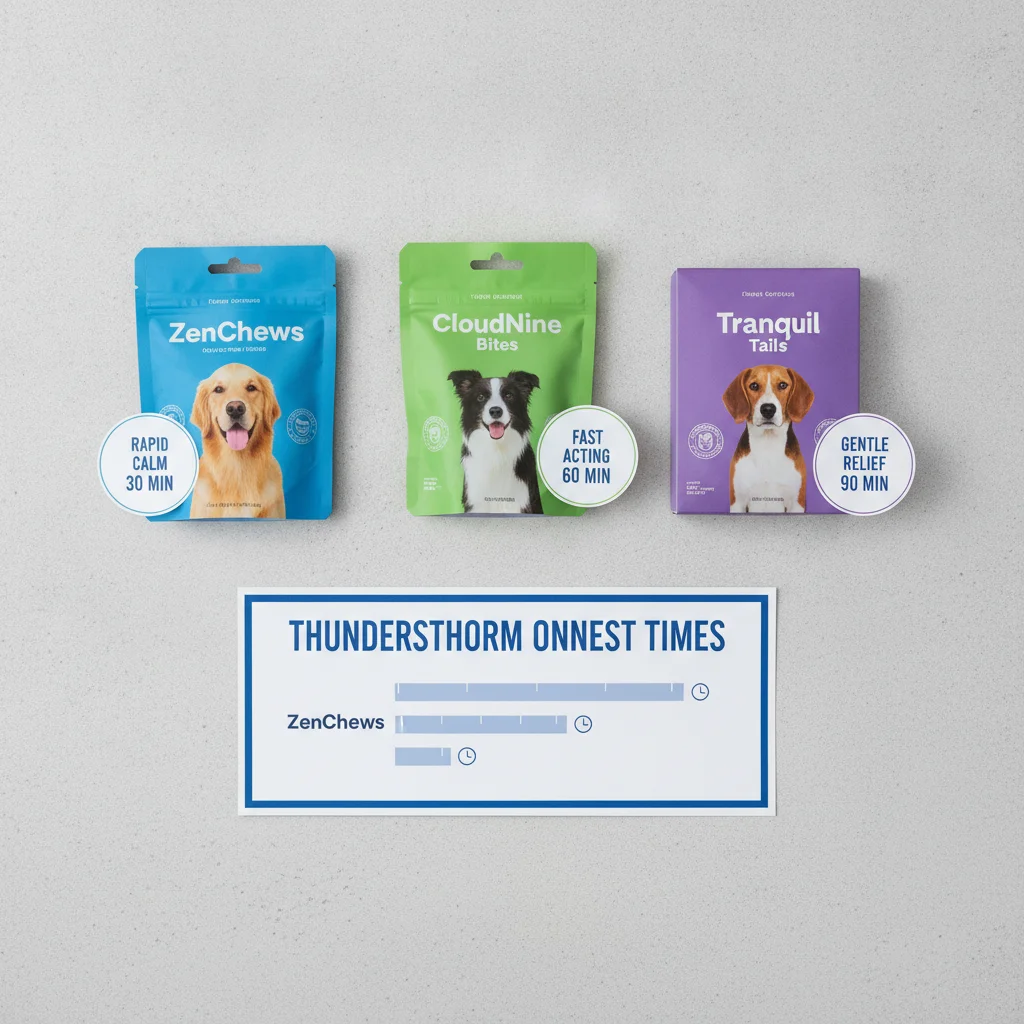
Think in three practical classes: fast situational chews (about 30–60 minutes), slower situational blends (about 60–120 minutes), and daily maintenance formulas that lower baseline arousal across a storm week. Exact minutes vary by brand and dog; use the label as your planning floor, then add a buffer.
| Chew class | Typical labeled onset | Best storm use | Watch-outs |
|---|---|---|---|
| Fast situational soft chews | 30–60 minutes | Forecastable afternoon cells you can clock on radar | Easy to dose late if you wait for thunder |
| Slower situational blends | 60–120 minutes | Long humid fronts with early darkening skies | Useless if the first clap already hit |
| Daily maintenance formulas | Days of consistent use | Storm weeks and fireworks seasons with clustered triggers | Weak as sole rescue mid-boom |
| Melatonin-forward pet chews | Often 30–90 minutes | Evening storms when bedtime overlap helps | Dose and xylitol risk if you improvise human products |
30–60 minute class
Fast soft chews are the workhorses for dog calming chews storms owners can actually schedule. They win when the weather app shows a clear lead time and you dose before barometric drops and distant rumbles stack. Keep them in the kitchen, car kit, and boarding bag so travel nights do not become improvisation.
Practice the routine on a quiet evening once: weigh or count the dose, note the clock, and watch for soft eyes and slower pacing—not sedation. If the dog still bolts at the first clap after on-time dosing across two storms, move up the ladder instead of doubling the bag.
- Dose when radar lead equals onset plus a 15–30 minute buffer
- Pair with den setup and white noise started early
- Skip a second dose unless the label and your vet allow it
60–120 minute class
Slower blends often pack multi-ingredient stacks. They can help on all-day fronts if you treat the morning forecast as the start gun. They punish last-minute shopping: if you only remember the jar when lightning is visible, you already lost the onset race.
Use this class when storms build slowly and you will be home to manage the den. For sudden pop-up cells, prefer a faster chew you already trust, a practiced wrap, or both—not a two-hour onset formula.
Daily maintenance formulas
Daily calming supplements before storm season try to lower baseline arousal so situational tools work better. They are not “take one when thunder starts” products. Start them on your vet’s timeline before peak storm months if your dog wires up for days between cells.
Keep a situational chew for discrete events even if daily support is running. Daily products smooth the week; situational products try to cover the cell. Confusing those jobs is how owners decide “nothing works.”
Budget matters across a long humid summer. A daily formula plus a situational bag can cost more than one “mega storm chew,” but the split usually tracks real use better: maintenance on clustered weeks, timed doses on discrete cells, and a wrap ready when handling is still possible.
Ingredients that matter (and marketing that doesn't)
Ingredient panels for best calming treats noise anxiety products repeat a short list of actives. What changes is dose honesty, combination logic, and whether the brand publishes anything beyond testimonials. Read milligrams per chew against your dog’s weight band, not the hero photo on the front.
Common actives
L-theanine and related amino-acid pathways show up in many soft chews aimed at situational stress. Tryptophan appears in blends marketed for relaxation. Melatonin dog thunderstorm formulas are popular for evening noise; keep dosing pet-specific and vet-cleared. Magnesium, chamomile, and botanical blends fill many “calm complex” bags with thinner evidence.
CBD dog calming chews storm searches are loud online. Quality, legality, and interaction risks vary widely. Treat CBD as a clinician conversation, not a default Amazon add-on—especially if your dog already takes seizure meds, steroids, or behavior drugs.
- L-theanine: common situational active; still dog-specific
- Melatonin (pet formulas): evening storms; never human gummy improvisation
- Botanical stacks: variable evidence; watch for filler-heavy labels
- CBD: vet-guided only; product quality matters as much as milligrams
Dose realism
A “calming complex” that hides per-ingredient milligrams is harder to evaluate than a simple label with clear weight bands. Prefer products that state dose by body-weight range and maximum daily amount. If your dog sits between bands, ask your vet rather than rounding up “just in case.”
Thunder anxiety soft chews that taste great still fail if the dog refuses food once panic starts. Train acceptance on sunny days. Keep a backup delivery method your vet approves if soft chews get spit out mid-storm.
Avoid overclaim labels
Skip language that sounds like veterinary sedation without a prescription. Phrases that promise “instant storm proofing” or “stops panic” are red flags. Prefer adjunct wording: supports calm, may reduce mild situational stress, use with environmental management.
Also watch xylitol and other toxic sweeteners if anyone in the house shares human melatonin or sleep gummies. Pet-specific products exist for a reason. Bag size and scent marketing do not predict storm performance.
Third-party testing and clear lot information beat influencer unboxings. If a brand cannot state actives per chew, weight-band dosing, and a maximum daily amount, keep shopping. Opaque blends make it harder for your vet to check interactions later.
Dosing calendar tied to weather apps
A storm treat dosing schedule is a reverse countdown from first expected thunder, not a vibe check of the sky. Open your preferred radar app, note lead time, subtract the labeled onset, then subtract a buffer for traffic, kids, and the dog who decides to hide the treat under the couch.
| Radar lead | Action | Notes |
|---|---|---|
| 3+ hours | Prep den, start white noise, confirm dose count | Good window for slower blends |
| Onset + 30–60 min | Give the situational chew | Do not wait for audible thunder |
| Under 30 min to first boom | Skip late chew hopes; deploy wrap and den | Log the miss for next cell |
| Multi-day front | Daily formula (if used) + situational doses per cell | Watch total daily maximums |
Watch radar leads
Set two phone alerts: one when a watch is issued, one when the cell is inside your personal lead time. How early to give calming treats is answered by the label, not by neighbor folklore. If your dog’s useful onset is closer to 90 minutes, treat a 45-minute warning as wrap-and-den time, not chew time.
Barometric drops and wind can cue some dogs before humans hear thunder. If your dog starts pacing early, move the dose earlier on the next similar front—still within label limits—and note the pattern in a simple storm log.
Night shifts and apartment living change the plan. If you will be asleep when a cell arrives, dose before bed only when the forecast and labeled duration make that honest—not as wishful overnight coverage. Otherwise prioritize a practiced wrap, closed blinds, and a safe den someone else can manage.
Travel and boarding
Boarding kennels and weekend cabins break home routines. Pack labeled chews with written onset instructions for staff. Confirm the facility allows the product and will dose on radar, not “when he looks nervous.” Nervous looks often arrive after the useful window.
Car travel during storm season needs the same reverse countdown. Dose before you leave if arrival time overlaps a forecast cell. A chewed-up backseat after late dosing is a timing failure, not proof the brand is useless.
Fireworks nights
July calendars and New Year’s schedules are more predictable than pop-up thunder. Use that predictability: dose on the posted show time minus onset, darken rooms, and run white noise early. Fireworks vs thunderstorm kits often share the same chew class with different clocks.
Neighborhood fireworks can stretch past the official show. Ask your vet whether a second dose is allowed if the night runs long, and never stack multiple calming brands in one evening without clinical guidance.
When treats aren't the right tool
Non-responders are common. A correctly timed chew that changes nothing across two or three comparable storms is data. Stop rotating bags forever and expand the plan: pressure wrap practice, pheromone coverage, den engineering, and veterinary behavior options.
Non-responders
Log date, dose time, radar lead, storm intensity, and behaviors (pacing minutes, trembling, destruction, recovery time). Video helps more than memory. If timing was correct and intensity stays high, treats alone are the wrong primary tool for this dog.
Multi-dog homes complicate the picture. The calm dog may steal chews; the panic dog may refuse food. Separate dosing, use supervised delivery, and do not assume one bag fits every temperament in the household.
Drug interactions
Dogs on behavior medications, seizure drugs, steroids, or other chronic therapies need vet clearance before new supplements. “Natural” does not mean interaction-free. Bring the full ingredient list to the appointment, including botanicals and melatonin amounts.
Never combine multiple sedating OTCs to chase calm. If a prescription situational med is recommended, ask exactly how it pairs with your existing chew—or whether the chew should stop.
Next steps with your vet
Ask for a severity assessment, medical rule-outs (pain, hearing changes, cognitive decline), and a written storm plan. Many successful kits use a chew for onset plus a wrap for during-storm pressure—exactly why treats should not replace a ThunderShirt-class garment when handling is tolerated.
If your vet refers a veterinary behaviorist, bring your storm logs. Escalation is not failure; it is how severe noise phobia gets real help. Keep environmental management running while medical plans are built.
Training still matters between seasons. Counterconditioning and desensitization work best when the dog is below threshold—not during an active supercell. Use calm weeks to practice den entry, wrap fitting, and treat acceptance so storm night is muscle memory instead of a first attempt.
Storm calming treats only help if onset time beats the first thunderclap. Compare chews by labeled onset and duration, not bag claims of 'calming.' Treats that fail after correct timing signal a need for wraps, training, or Rx.
Frequently Asked Questions
How long before a storm should I give calming treats?
Follow the product's onset window—often 30–90 minutes—and dose when the forecast shows an approaching cell. Add a buffer for busy households so the chew is swallowed before distant rumbles begin.
Can I give calming treats every storm season day?
Some formulas are daily; others are situational. Match the label and ask your vet if unsure. Daily vs situational calming chews solve different jobs—do not treat them as interchangeable.
Are human melatonin gummies OK for dogs?
Don't improvise human products—use vet-guided dosing and pet-specific formulations. Human gummies may contain xylitol or doses that do not match canine weight bands.
Why did treats work once but not tonight?
Late dosing, higher storm intensity, or adrenaline already peaked can wipe out mild OTC effects. Compare radar lead and dose clocks before you blame the brand.
Should treats replace a ThunderShirt?
No—many successful plans use a chew for onset plus a wrap for during-storm pressure. Treats are portable timing tools; wraps are during-storm tools when fit is practiced.
Related reading on our sister sites: Best Pet Camera for Multi-Dog