1. How we scored storm aids
Shoppers hunting the best calming aids for dogs thunderstorms usually already own a half-used bag of treats and a wrap that “sort of” helped once. This listicle ranks modalities the way storm season actually works: by onset versus radar, severity fit, mess and cost, and whether the claim survives an honest non-responder test.
We scored candidates on four practical axes. Onset speed asks whether you can dose or deploy before the first boom, not after cortisol spikes. Severity fit asks whether the tool belongs on mild, moderate, or panic rungs. Mess and cost covers reusability, diffuser plugs, chew waste, and whether a $70 garment earns its keep across a full season. Evidence honesty downgrades products that market like sedatives while publishing thin studies.
- Onset vs radar: usable in a 30–90 minute pre-storm window
- Severity fit: clear mild / moderate / escalate labels
- Mess and cost: reusable gear beats single-use hype
- Evidence honesty: adjunct claims over miracle claims
Score calming products by onset time relative to storm radar, not brand hype. A pheromone collar that needs days to settle into a routine loses points for sudden afternoon cells even if it helps seasonal baseline anxiety. A chew with a labeled 60-minute onset wins for forecastable fronts. A wrap that calms within minutes after practice days wins for dogs who tolerate handling when the sky darkens.
This is educational content for dog owners, not a veterinary diagnosis or prescription. Cardiac disease, pain, cognitive decline, and drug interactions change what is safe. When destruction, escape attempts, or self-injury show up, skip straight to the Rx section and call your vet—affiliate rankings do not override clinical judgment. For bolt-prone dogs, pair this kit with our best GPS dog trackers guide and secure overnight containment using our playpen vs crate comparison before the first thunder cell.
| Score axis | What “good” looks like | Red flag |
|---|---|---|
| Onset | Clear window you can map to radar | “Use anytime” with no timing guidance |
| Severity | Honest mild/moderate use case | Marketed for panic with no Rx path |
| Cost | Reusable or multi-storm value | One-storm gimmick pricing |
| Evidence | Adjunct language + known limits | Cure-all claims, mystery blends |
2. Best overall multimodal starter kit
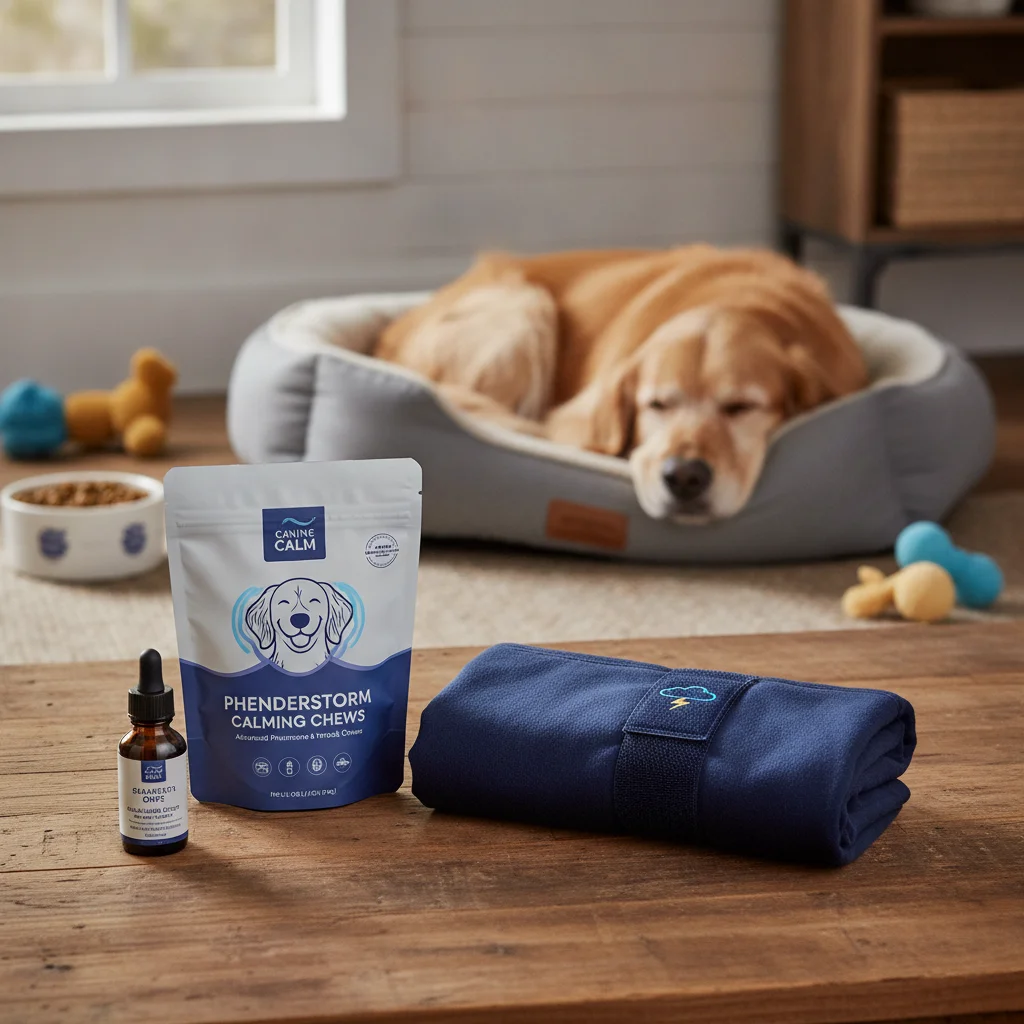
The best storm aid is usually a kit, not a single bottle of treats. For most households with mild-to-moderate thunderstorm anxiety, the winning stack is a practiced pressure wrap, a dog-appeasing pheromone in the den room, and one labeled calming chew dosed on the forecast—paired with blackout curtains and continuous white noise.
Think of the kit as layers that fail independently. If the chew is late, the wrap and den still blunt startle. If the wrap is rejected, pheromones and environment still lower baseline arousal. Single-product shopping is why so many Amazon reviews read “did nothing”: owners tested one layer after panic had already peaked.
What belongs in the starter kit
- Pressure wrap: ThunderShirt-style or equivalent snug torso garment, practiced on calm days
- Pheromone: Adaptil-type diffuser in the den, or a collar if the dog moves rooms
- Timed chew: one brand with milligram clarity and a stated onset window
- Den kit: interior room, closed curtains, fan or white noise already running
- Lick mat or stuffed Kong: only if the dog can still take food under stress
Who it fits: dogs who pace, pant, hide, or cling during storms but do not destroy doors or injure themselves. Multi-dog homes can share the den protocol; give the anxious dog the wrap and keep a calm companion nearby only if that companion stays settled.
What it will not fix: true panic with frantic escape behavior, crate demolition, or self-harm. Those cases need veterinary behavior guidance, not a second chew flavor. Budget for a practical OTC kit often lands around $40–120 before any prescription gel or tablet. Spend first on fit and timing, not on stacking five overlapping supplements.
The best storm aid is usually a kit, not a single bottle of treats.
Operational rule: assemble the kit before storm season peaks. Practice the wrap weekly. Plug the diffuser days ahead when you can. Put the chew onset time in your phone as a radar reminder. Kits fail when they live in a closet until lightning is already visible.
3. Best wrap and pressure option
Anxiety wraps remain the best first hardware buy for many storm-sensitive dogs. Gentle, steady torso pressure can reduce visible trembling within minutes for responders. Non-responders are common and expected—pressure is a tool, not a personality transplant.
Why wraps rank high for storms
Wraps score well on onset (immediate after correct fit), reusability (one purchase, whole season), and severity fit (mild to moderate). They also travel: the same garment helps in the car if thunder rolls during a drive home. Compared with chews, wraps avoid dosing math and stomach upset—useful when anxiety already kills appetite.
ThunderShirt-style products dominate for a reason: clear sizing charts, adjustable straps, and years of owner familiarity. Generic pressure vests can work if they stay snug without restricting shoulders or genitals. Soft, stretchy fabric beats stiff costumes that invite scratching and removal mid-storm.
Fit tips that decide success
- Measure girth behind the elbows; size up if between charts rather than cinching painfully.
- Aim for snug—about two fingers under the fabric—not corset-tight.
- Practice on sunny days with treats so the wrap predicts comfort, not thunder.
- Put the wrap on when weather cues start, not after full panic when handling feels threatening.
- Check for rubbing at armpits after long storms; add a thin undershirt if needed.
When pressure fails: after two or three correctly fitted storms with no change, stop buying alternate wrap brands hoping for magic. Keep the wrap only if the dog tolerates it neutrally, then lean harder on pheromones, environment, timed chews, and—if needed—vet meds. Some dogs find wraps aversive; forcing them during peak fear teaches a new bad association.
Best ThunderShirt alternatives (same job, different form)
If branding or fit is the issue, look for other anxiety wraps with the same torso-coverage idea, or a well-fitted soft calming coat. Avoid heavy “thunder costumes” with dangling parts that flap when the dog shakes. For dogs who hate garments, skip this rung entirely rather than creating a clothing battle every cell of the storm.
Pair wraps with den management. A correctly fitted wrap in a bright, noisy living room with blinds open underperforms the same wrap in a quiet interior corner. Hardware never replaces environment; it multiplies it.
4. Best pheromone and treat picks
Pheromones and calming chews are the soft layers that fill gaps wraps cannot. Rank them by how you live: stationary den dogs favor diffusers; roamers favor collars; forecastable storms favor chews with labeled onset. Stacking is allowed when directions are followed—many multimodal plans combine Adaptil-type products with a ThunderShirt safely.
Pheromones: diffuser vs collar
Dog-appeasing pheromone (DAP) products such as Adaptil aim to mimic nursing-related signals that can lower baseline arousal. Diffusers shine in a dedicated storm den: plug in early, keep airflow reasonable, and treat the room as the calm base. Collars help dogs who pace between rooms or who spend storm hours on the couch then the hallway.
- Diffuser: best for a fixed den; start days before heavy storm weeks when possible
- Collar: best for mobile dogs; check fit and skin under the band weekly
- Expectation: subtle adjunct, rarely a solo panic stopper
Pheromones lose points when owners expect sedation. They earn points as low-mess, reusable support that does not require the dog to eat during peak fear. If you travel for fireworks weekends, a collar often travels better than hunting for an outlet in a rental.
Calming treats: onset windows matter more than flavors
Storm-specific treat shopping should start with the label’s onset window and active amounts, not TikTok testimonials. Common ingredients include L-theanine, tryptophan, melatonin, magnesium, and various herbal or hemp-derived blends. Quality and dosing clarity vary wildly. Prefer products that state milligrams per chew and weight-band instructions.
| Aid type | Typical onset | Best storm use | Limit |
|---|---|---|---|
| Pressure wrap | Minutes after fit | Mild–moderate, handling-tolerant dogs | Non-responders; aversive for some |
| Pheromone diffuser | Hours–days for room baseline | Seasonal den setup | Weak for sudden cells if just plugged in |
| Pheromone collar | Ongoing while worn | Roaming dogs; travel | Skin fit issues; subtle effect |
| OTC calming chew | Often 30–90 minutes | Forecastable fronts | Late dosing; appetite loss; interactions |
Dose on the forecast, not the first boom. Set a reminder when your weather app shows approaching cells. Giving a chew after the dog is already frantic is late theater and unfairly “fails” a product that never got its onset window. Use the same product across several storms before declaring it useless—switching brands every cell confounds your own test.
Stacking rules without overdoing it
Safe stacking usually means wrap + pheromone + one chew pathway, not three overlapping sedating blends. Ask your vet before combining supplements with prescription anxiety meds, or if your dog is senior, pregnant, on thyroid or seizure drugs, or has liver disease. Stop and call a vet if you see vomiting, ataxia, extreme sedation, or paradoxical agitation.
CBD and hemp-marketed treats sit in the “optional, mixed evidence” bin. They are not a substitute for behavior work or veterinary care. If you try them, choose transparent brands, confirm legality and pet-specific labeling, and keep expectations modest.
5. Best path when OTC isn't enough
OTC lists should name the Rx escalation path for true panic cases. If your dog claws through doors, breaks teeth on crate bars, bolts into traffic risk, or injures themselves, you are past listicle territory. The “best aid” becomes a veterinary plan that may include event medication, daily anxiety management, and a behaviorist referral.
What escalation looks like (without DIY dosing)
Event medications such as Sileo (dexmedetomidine oromucosal gel) and other short-acting anxiolytics are designed for predictable noise events when a veterinarian deems them appropriate. They are not interchangeable with human pills from a medicine cabinet. Your vet will screen for heart health, drug interactions, and whether situational meds, longer-term meds, or both fit.
Bring a storm log: start of restlessness, first thunder, peak behaviors, products used and timing, recovery after the last rumble. Logs turn “he freaks out” into clinical detail that speeds better decisions.
- Destruction, escape, or self-injury during storms
- Panic that starts on dark skies alone and lasts the entire event
- No meaningful change after a real multimodal OTC trial with correct timing
- New sudden meltdowns in a senior dog (rule out medical contributors)
Training add-ons that multiply product value
Desensitization and counterconditioning to recorded storm sounds can help between seasons when done carefully at low volume with high-value rewards. Rushing volume or pairing thunder audio with flooding worsens fear. A certified trainer or veterinary behaviorist is worth more than another impulse Amazon order if OTC plateaued.
Management still matters on Rx days: den, white noise, wrap if tolerated, secured exits. Medication lowers the fear spike so learning and comfort strategies can land; it is not permission to leave a panicked dog unsupervised in an unsecured yard.
Budget tiers that stay honest
- Lean OTC ($40–80): wrap + pheromone + den upgrades (curtains, fan)
- Full OTC kit ($80–120+): add a quality timed chew and spare wrap sizing if needed
- Vet pathway (variable): exam + possible event meds; budget for follow-up, not one miracle tube
Fireworks overlap: the same noise-phobia toolkit applies to holiday shows, with the advantage of known calendars. Prep dens and dose windows the afternoon before scheduled displays. Calming aids that help with thunderstorms often help with fireworks when timing is equally disciplined.
OTC lists should name the Rx escalation path for true panic cases.
Your next step
Build the multimodal starter kit this week, practice the wrap twice on calm days, and map one chew’s onset to your weather app before the next front. If panic already includes destruction or escape, book the vet conversation now—before the holiday fireworks cluster doubles the load.
Re-test honestly across two or three storms with the same stack before you swap brands. Keep notes. The owners who win storm season treat aids like a timed protocol, not a last-second shopping cart.
Frequently Asked Questions
What's the single best calming aid for thunderstorms?
There isn't one—mild cases often start with a wrap plus den; severe panic usually needs veterinary guidance.
Are CBD calming treats proven for storms?
Evidence is mixed and quality varies; treat them as optional, not a substitute for behavior and vet care.
Can I combine Adaptil and a ThunderShirt?
Yes—many multimodal plans stack pheromones with pressure wraps safely when used as directed.
How much should a storm anxiety kit cost?
A practical OTC kit often lands in the $40–120 range before any prescription meds.
Do calming aids also help with fireworks?
Often yes—the same noise-phobia toolkit applies, with extra prep for scheduled holiday shows.
Related reading on our sister sites: Best Pet Camera for Multi-Dog