Most shoppers who type fi vs tractive already know they want live location after a scare. The harder question is which ecosystem still works on your routes—and what you will actually pay for three years of membership, not just the collar on day one.
For most US suburban owners comparing Fi vs Tractive, choose Fi Series 3 for polished domestic live tracking and Tractive DOG 6 when your dog regularly crosses borders. Garmin Alpha LTE wins the wilderness case in a Fi vs Tractive vs Garmin shortlist because radio/off-grid tracking still works when cellular maps go blank.
This comparison is a three-brand commercial shortlist with terrain-specific verdicts. We weigh coverage type, escape-alert behavior, battery under live track, and full 3-year TCO—not sticker price. If you are outfitting a new dog household, our best elevated dog bowls guide covers stable feeding setups for active escape artists; fast eaters should also read elevated bowl vs slow feeder before adding another monthly subscription.
At-a-glance comparison table
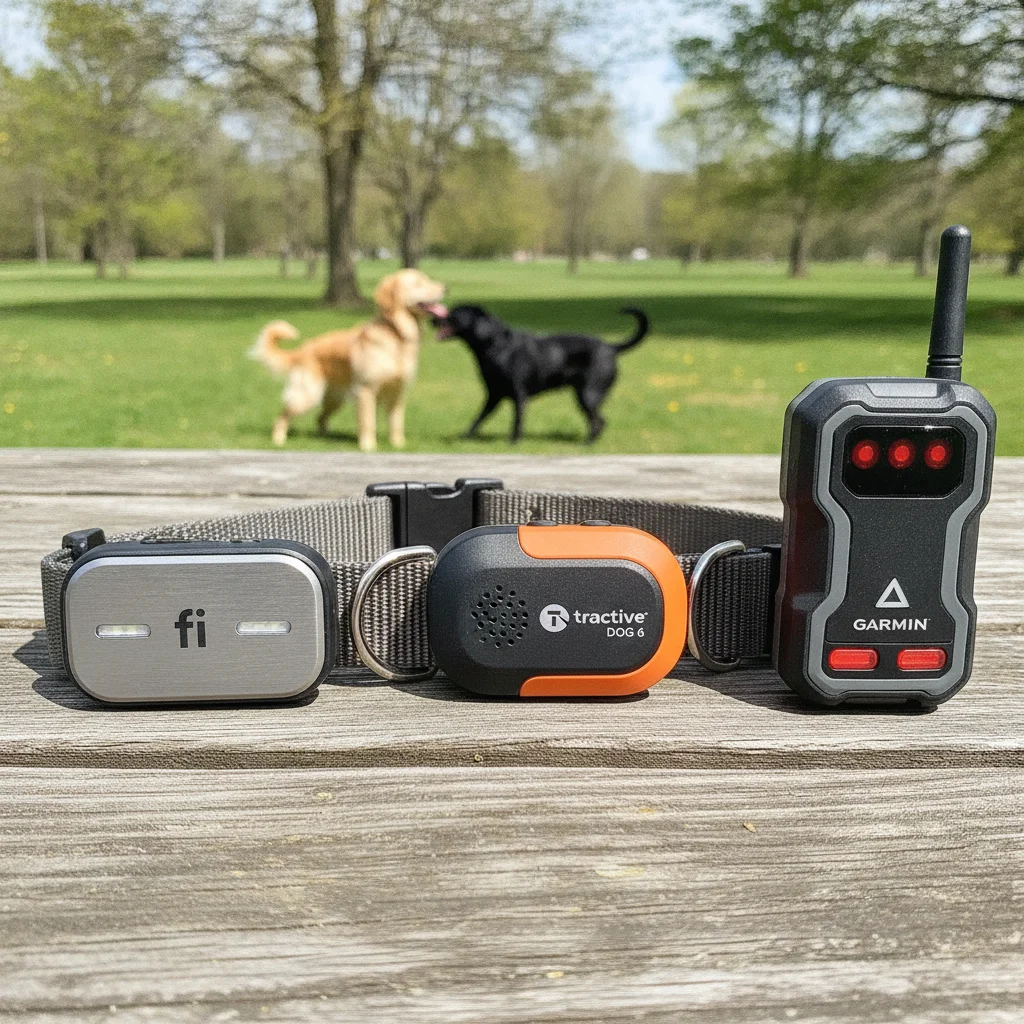
Use this matrix as a filter before you fall in love with app screenshots. Fi and Tractive are LTE collar ecosystems built around a phone map. Garmin Alpha LTE sits in a different product class: a more capable hunting/hiking kit that can keep working when towers disappear.
| Factor | Fi Series 3 | Tractive DOG 6 | Garmin Alpha LTE |
|---|---|---|---|
| Core tech | US-focused cellular LTE collar + app | Cellular LTE collar + app with broad roaming | Handheld + collar; LTE plus off-grid radio class capability |
| Best coverage fit | US suburbs/cities with solid cell | Travel and multi-country living | Forests, canyons, hunting grounds, no-bar trails |
| Daily UX | Phone-first live map | Phone-first live map | Handheld-first; more training curve |
| Hardware cost pattern | Mid | Mid | High |
| Ongoing cost pattern | Membership required for live tracking | Membership required for live tracking | Higher upfront; plan needs vary by features used |
| Escape alerts | Strong when LTE + geofence are set well | Strong when LTE + geofence are set well | Excellent for dead-zone chase; different workflow |
| Who it fits | US escape artists, couch-to-yard owners | Travelers, expats, road-trip households | Hikers, hunters, rural dead-zone owners |
| Who should skip | Frequent international travelers; no-cell hikers | Owners who never leave strong domestic LTE and want Fi’s ecosystem | Shoppers wanting a simple “open the phone app” collar only |
Exact dollar rows change with promos and plan tiers. Rebuild every quote with today’s annual rate before you buy. The useful question is not “which brand is best” but “which failure mode will I hit first: border, dead zone, or membership fatigue?”
Coverage: US LTE vs global roaming vs off-grid
Coverage is the real product. Battery marketing and sleek collar photos do not matter if the map freezes where your dog runs. Treat fi series 3 vs tractive as a geography decision first, then bring Garmin in when geography includes no cell at all.
Fi network reality
Fi Series 3 is a US-first live-tracking decision. In strong domestic coverage it shines: open the app, see movement, tighten a neighborhood search instead of guessing blocks. That is why many US owners still land on Fi after a gate-left-open scare.
It is also why Fi fails the travel test. If weekends, holidays, or remote work regularly put your dog outside the US cellular footprint Fi is built around, do not buy hoping roaming will behave like a phone brochure. That single constraint is the cleanest Fi vs Tractive fork in 2026.
Even inside the US, walk your real routes mentally. River bottoms, parking garages, metal barns, canyon pockets, and rural dead strips can drop updates. An LTE collar is a radio that needs a network—not a satellite miracle.
Tractive country list
Tractive DOG 6’s headline advantage is roaming breadth. Owners who need live tracking across many countries—or who move between homes—usually shortlist Tractive before Fi once international reality becomes non-negotiable.
Still verify the countries on your itinerary, not a marketing total. Coverage lists change, rural regions abroad have the same dead-zone physics as rural regions at home, and roaming breadth does not invent towers on a mountain ridge. Treat “175+ countries” as a starting claim to validate, not a guarantee for every trailhead.
For domestic-only US households that never leave strong coverage, Tractive can still work—but Fi often feels like the tighter everyday escape tool. Buy Tractive when travel is real, not when a packing list is imaginary.
Garmin no-cell strength
Garmin Alpha LTE belongs in this comparison because shoppers keep forcing a three-way when two products are LTE collars and one is a wilderness system. If your dog’s “GPS need” is a weekly forest run with no bars, Fi vs Tractive is the wrong primary debate.
Off-grid radio-class tracking keeps a chase alive when phone maps go blank. That is also why Garmin kits cost more up front and ask more of you: handheld habits, antenna awareness, and accepting that the best wilderness tool is not always the cutest phone widget.
If you want related everyday gear after this page, our best elevated dog bowls roundup covers height and stability for dogs that live hard between trail days. For this head-to-head, remember: Garmin wins dead zones; Fi/Tractive win convenient LTE neighborhoods.
Escape alerts and recovery scenarios
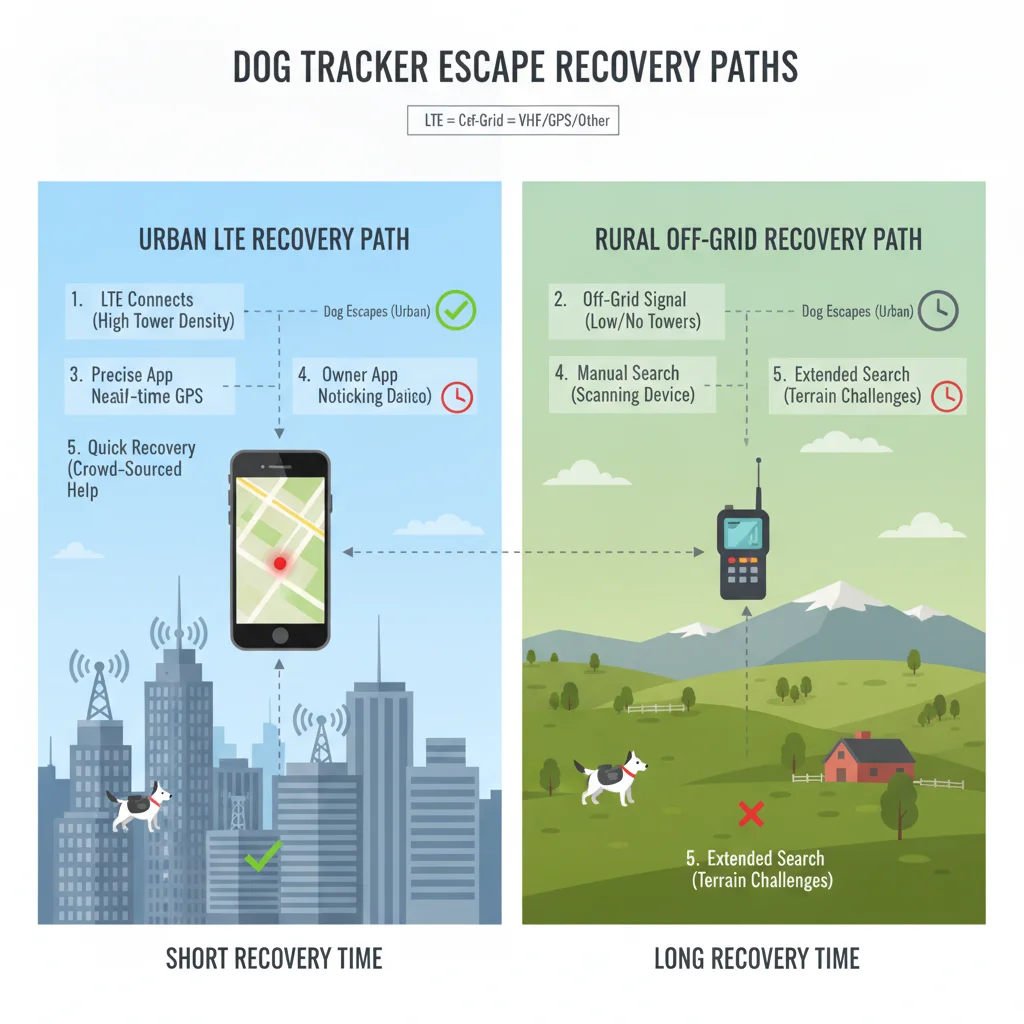
Escape recovery is where marketing adjectives die. Timed, reproducible scenarios matter more than “instant” claims. Below are the three situations that usually decide a fi vs tractive vs garmin purchase after the first scare.
Urban chase
Suburban and city bolts favor polished LTE apps. You need a fast geofence alert, a live map that updates while you run, and a collar that stays on a panicked dog. Fi Series 3 is typically the strongest everyday pick here for US owners who set fences carefully and keep notification permissions honest.
Tractive can match the chase workflow when coverage holds—especially useful if the “urban” home is abroad. The limiter is still cell quality between buildings, underground parking exits, and dense RF noise. Test a controlled leave-the-fence walk before you trust either brand on day one.
Garmin can work in town, but it is rarely the simplest urban daily driver. If your dog’s risk is the neighbor’s open gate, not a canyon, pay for the phone-first experience.
Rural dead zone
Rural dead zones flip the ranking. An LTE collar that looked brilliant on a city sidewalk can report a last-known point and then go quiet in a drainage ditch with no bars. That is the moment owners regret buying on app polish alone.
Garmin Alpha LTE is the shortlist winner when dead zones are normal, not rare. Hunters, ranch dogs, and trail dogs that leave coverage every weekend need a system that does not pretend towers exist. Fi and Tractive remain useful as secondary LTE tools near the truck or cabin—but they are not primary wilderness recoveries.
If your property is “mostly good LTE with one bad creek,” map that creek. Many households need an honest hybrid plan: LTE for the house, off-grid for the blind spot—not a single magical collar claim.
Alert false positives
False escape alerts train you to ignore the one that matters. Geofences drawn too tight scream on every squirrel sprint. Fences drawn too wide notify you after the dog is already two streets away. Battery saver modes and OS notification throttling can also delay the ping you thought was instant.
Before you crown a winner in any tractive dog 6 review or fi series 3 review tab you open, run this setup checklist:
- Draw a fence that matches how the dog actually uses the yard.
- Confirm alerts on the phone you carry, with battery optimization exceptions set.
- Walk out of the fence on purpose and time the notification.
- Repeat once with live tracking already open, and once from a locked screen.
Brand pages rarely publish that methodology. Your own ten-minute test beats a hundred affiliate adjectives.
Battery under live tracking
Idle-day battery numbers sell collars. Live-track drain decides whether the collar still works when you are sweating through a search. Treat every brochure “up to X days” claim as a standby figure until proven otherwise.
Idle vs live drain
Fi and Tractive both look generous in low-update modes and meaner once you hold a live map open. That is normal physics: frequent location fixes, radio wakeups, and app-side polling cost energy. Owners who leave live mode on for an hour-long neighborhood search learn the honest number the hard way.
Garmin wilderness sessions have their own pattern: long days afield, cold weather, and handheld screen use change the math. If your use case is all-day hunting or hiking, judge battery by a full outing with tracking active—not by a week of sleeping in a crate.
Charge habits
Charge habits beat brochure days. Pack the charger like a leash. A dead LTE collar is jewelry. For travel with Tractive, unfamiliar streets and jet-lagged attention often mean longer live sessions—budget power accordingly. For Fi at home, pick a charge night and stick to it; escape days are the worst time to discover 8% left.
Also inspect ports and seals after months of rain, sand, and collar fur sludge. Long-term durability gaps are common in this niche: charge-port wear and water ingress show up after 12–18 months more often than week-one unboxings admit.
Hunting/hiking all-day use
All-day wilderness use is where Garmin’s class advantage returns. If you need continuous awareness without cell towers, an LTE-only Fi vs Tractive debate wastes money. Pair or replace with an off-grid-capable kit, carry spare power if the brand supports it, and accept that “set and forget” phone collars are the wrong tool for eight silent ridge miles.
For mixed households—weekday suburb, weekend mountains—some owners keep an LTE collar for town and a Garmin-class setup for trips. That is not failure; it is matching technology to terrain.
3-year total cost of ownership
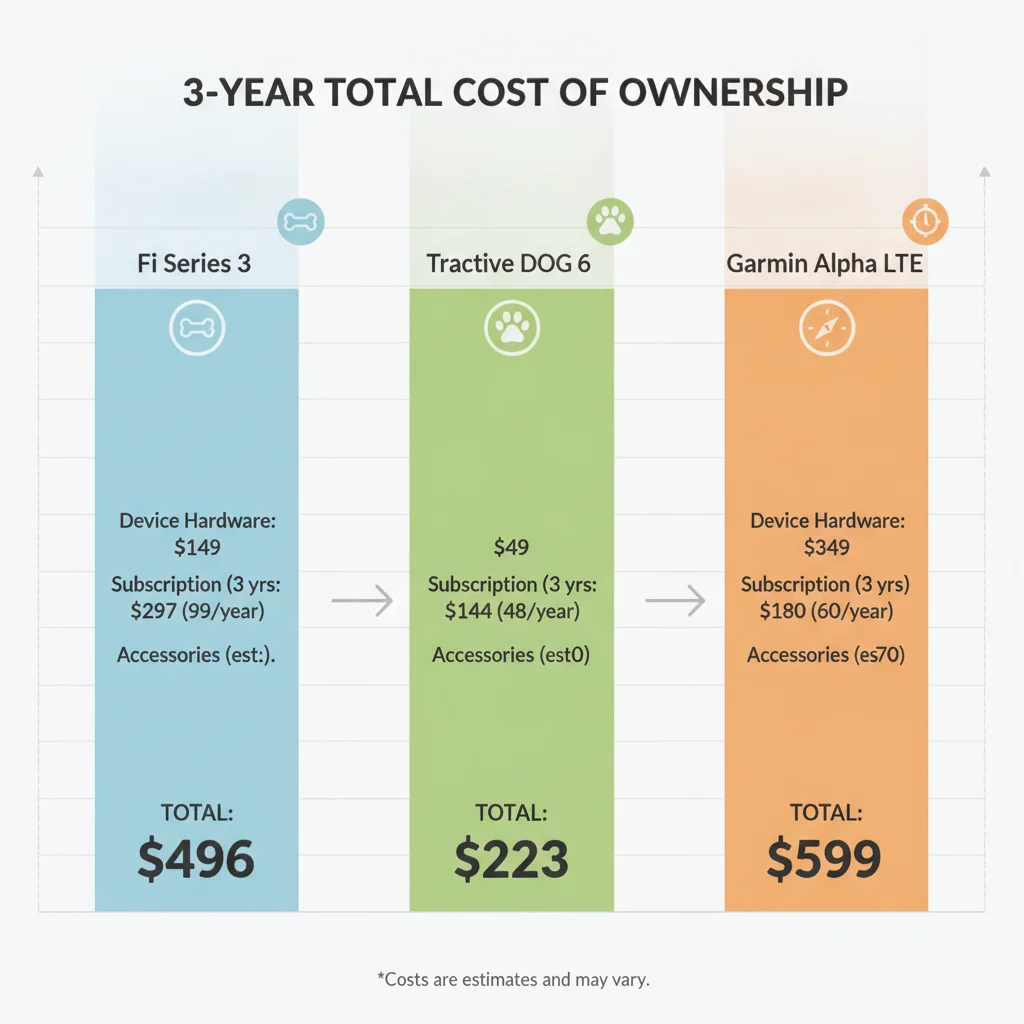
Price dog GPS systems on three-year total cost of ownership—membership tiers usually dwarf the collar sticker price for Fi and Tractive. This is the content gap most listicles skip, and it is why a “cheap” collar can lose to higher hardware that does not bleed monthly.
Hardware + membership math
Use a boring spreadsheet:
- Hardware today (collar + mounts + spare battery if needed).
- Membership for 36 months (or 3 × annual).
- Add expected accessories and replacements you already know you want.
- Subtract documented multi-dog discounts only if you will actually buy the second collar.
For Fi and Tractive, membership is the product. Live tracking, history depth, and sometimes core alerts sit behind a plan. Cancel-to-save strategies that brick the tracker’s job are not savings. For Garmin Alpha LTE, hardware dominates early; confirm which features still need a connected plan so you do not assume “no subscription” incorrectly.
| Cost lens | Fi Series 3 | Tractive DOG 6 | Garmin Alpha LTE |
|---|---|---|---|
| Day-1 sticker shock | Moderate | Moderate | High |
| Years 1–3 driver | Membership renewals | Membership renewals | Hardware (+ any plan features you enable) |
| Cancel impact | Core live tracking usually gone | Core live tracking usually gone | Depends on which features are plan-tied vs radio-native |
| TCO tip | Price the tier you will keep | Price roaming tier you will keep | Price the full kit you need, not a partial cart |
Rebuild numbers with current public pricing before checkout. Promos move. What should not move is the method: never compare collar-only Fi to collar-only Tractive while ignoring 36 months of dues.
Multi-dog discounts
Multi-dog homes should compare per-dog three-year cost, not a single hero collar. Fi and Tractive discounts help, but two collars and two memberships still dominate the spreadsheet. If only one dog is a flight risk, tracker that dog first and use cheaper ID backups on the homebody.
Garmin multi-dog radio setups change hardware needs again—extra collars, handheld capacity, training time. Budget the system you will actually carry, not the SKU that looked good in a sponsored video.
Hidden renewals
Hidden renewals are the quiet deal-breaker. Annual plans auto-renew. Feature tiers reshuffle. “Base” memberships sometimes exclude the live-track depth you assumed was included. Read renewal mail like a bill, not a newsletter.
Also watch for accessory lock-in: proprietary chargers, lost-collar replacements, and size swaps. None of these brands are disposable gadgets; treat lock-in as part of gps dog collar subscription cost reality.
Verdict by owner type
Here is the short decision tree after the tables and scenarios. If two rows fit you, prioritize the failure mode you fear more: border silence, dead-zone silence, or membership fatigue.
Suburban US
Pick Fi Series 3 as the default when you live in the US, rarely travel abroad with the dog, and want the cleanest phone-first escape workflow. Set geofences carefully, test alerts, and fund the membership for the life of the collar.
Choose Tractive instead only if travel is already on the calendar or you expect to move. Choose Garmin only if your “suburb” includes frequent no-bar trail systems or working-dog dead zones.
International travel
Pick Tractive DOG 6 when borders are normal life. Validate your country list, test alerts before the trip, and pack charging the way you pack food bowls. Fi is the wrong primary tracker for serial international travel; Garmin may still join the bag for wilderness segments abroad, but Tractive covers the roaming LTE job Fi refuses.
Wilderness hiking/hunting
Pick Garmin Alpha LTE (or a closely related off-grid Garmin-class kit) when cell maps cannot be trusted. This is the honest answer to shoppers forcing Fi vs Tractive to solve a no-tower problem. LTE collars remain useful near trailheads and trucks; they are not substitutes for radio-class recovery in deep cover.
Mixed-use owners can own both categories. That costs more up front and less in regret.
Frequently Asked Questions
Is Fi or Tractive better overall?
Neither wins universally. Fi Series 3 is usually better for US-centric live tracking and escape alerts where coverage is strong. Tractive DOG 6 is better when you travel internationally with your dog. If you leave cell coverage often, neither LTE-only workflow is enough—look at Garmin Alpha LTE or a true off-grid kit.
Does Garmin Alpha LTE replace Fi?
Only if you need off-grid reliability and accept higher hardware complexity and cost. Garmin replaces Fi for wilderness, hunting, and hiking dead zones. For a suburban US escape artist with solid LTE, Fi (or Tractive) is usually the simpler daily driver.
Which has the cheapest 3-year cost?
It depends on plan tier and dog count. LTE memberships for Fi and Tractive usually dominate long-term spend, while Garmin’s higher upfront hardware can look cheaper over three years if you avoid a heavy monthly plan. Rebuild the math with current annual rates before you buy.
Can I switch collars later?
Hardware is brand-locked to each ecosystem. A Fi collar does not join a Tractive plan, and Garmin handheld ecosystems do not absorb leftover LTE memberships. Treat lock-in as part of the buy decision, not a free later upgrade.
Which is best for multi-dog homes?
Compare per-dog membership discounts carefully. Fi and Tractive pricing diverges once you add a second collar; Garmin multi-dog radio setups also change hardware needs. Tracker the flight-risk dog first if budget is tight.
Final recommendation
There is no universal winner in Fi Series 3 vs Tractive DOG 6 vs Garmin Alpha LTE—only terrain-specific winners. Choose Fi for US phone-first escape recovery, Tractive for real international roaming, and Garmin when dead zones are part of the dog’s weekly life. Then price the plan you will keep for three years, because membership math—not the unboxing photo—decides whether the purchase still feels smart after the scare fades.
Related reading on our sister sites: Furbo 360