You want to stop guessing where your dog went after a gate opens. That calm comes from picking the right tracking technology—not the sleekest app screenshot.
This dog gps tracker buying guide settles the cellular vs bluetooth dog tracker debate first, then places off-grid Garmin-class kits in the same map. Choose cellular LTE when you need live maps after an escape; choose Bluetooth only for last-seen tips within crowd-find range—not continuous GPS.
We walk through what each tech does, where it fails, what three years really cost, and how to match gear to your walks. For related dog-gear guides on fit, feeding height, and calmer mealtimes, see our best elevated dog bowls guide and elevated bowl vs slow feeder comparison.
Three technologies, three jobs
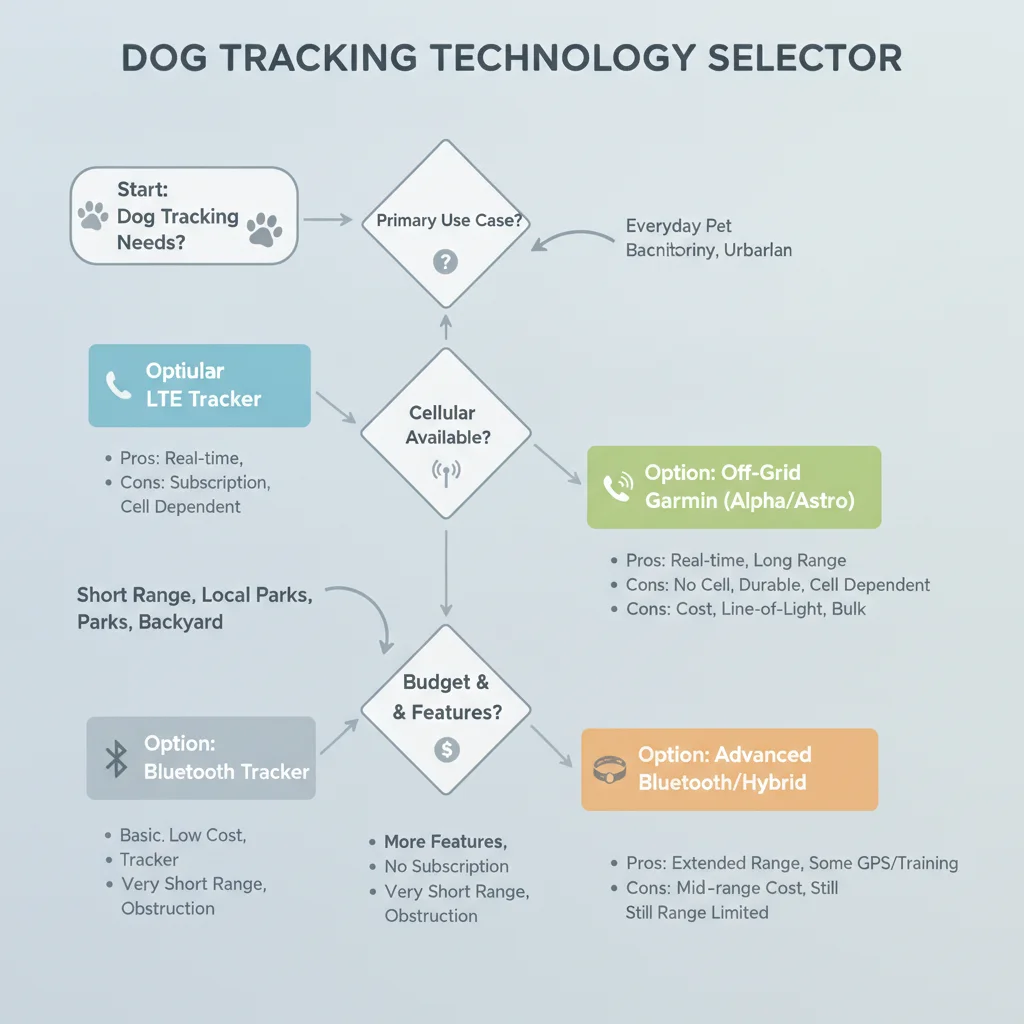
Shoppers lose money when listicles mix incompatible products. An AirTag, a Fi-style LTE collar, and a Garmin handheld kit are not three flavors of the same GPS. They are three jobs with different failure modes.
Start with the job you need on a bad day. Then shortlist brands inside that class. Mixing classes is how “cheap GPS” ads sell Bluetooth as live tracking.
| Tech class | What you get | Needs | Best job |
|---|---|---|---|
| Cellular LTE collar | Live phone map, geofence alerts, history | Cell coverage + membership | Neighborhood and travel escapes |
| Off-grid radio/GPS kit | Chase beyond towers; handheld workflow | Learning curve + higher hardware | Hiking, hunting, rural dead zones |
| Bluetooth / crowd-find tag | Last-seen tip when a phone passes nearby | Dense phone crowd or close range | Backup ID, not primary escape recovery |
LTE live maps
A cellular dog gps collar talks to cell towers and pushes location to your phone. When coverage holds, you see movement while you run. Geofences can ping you when the dog leaves a yard you drew carefully.
That live map is the transformation most escape-scare shoppers want. You stop canvassing random blocks. You tighten a search path with fresh pings.
LTE is also why membership exists. Live tracking, deep history, and sometimes core alerts sit behind a plan. Treat the plan as part of the product—not an optional extra you will cancel after week one.
- Strength: continuous updates where towers exist
- Strength: phone-first UX for suburban chases
- Limit: dead zones freeze you at a last-known point
Off-grid radio/GPS
An off grid dog tracker earns its keep when your routes leave cell coverage. LTE collars freeze to a last-known point in those dead zones. Garmin-class kits keep a chase alive with radio links and a handheld you learn to trust.
This is not a prettier Fi. It is a different product class for forests, canyons, hunting grounds, and ridge miles without bars. You trade app polish for reliability where maps go blank.
Expect higher upfront cost and a real learning curve. If you want only “open the phone and follow the blue dot,” off-grid gear will feel heavy until the first no-bar chase proves why you bought it.
- Strength: works when cellular maps fail
- Strength: serious hiking and hunting workflows
- Limit: more hardware, training, and day-one complexity
Crowd-find Bluetooth
Bluetooth tags (AirTag-style and similar) do not stream your dog’s path. They advertise to nearby phones. When a stranger’s phone passes close enough, you may get a crowd-find update—not a continuous trail.
That is why an lte vs bluetooth dog collar comparison is not fair if you pretend both are GPS. Bluetooth is a last-seen tip system with short direct range to your own phone and luck-dependent help farther away.
Use Bluetooth as cheap backup ID, luggage-style peace of mind, or a second chance if the primary collar dies. Do not buy it as your only plan for a known flight-risk dog in a quiet neighborhood at 2 a.m.
- Strength: low cost, light weight, no LTE membership
- Strength: useful as secondary layer
- Limit: not continuous live tracking; weak in empty areas
Where each tech fails
Buy against failure modes, not brochure peaks. The cellular vs bluetooth dog tracker question is really “which silence can I live with?” Tower silence, crowd silence, or handheld learning silence each cost different dogs different outcomes.
LTE dead zones
Cellular collars need towers. River bottoms, metal barns, parking garages, canyon pockets, and rural strips can drop updates. The app may look fine at home and fail on the one creek your dog loves.
Map your real walks before you buy. If weekly life includes no-bar trails, an LTE-only plan is a last-known-point plan. Pair or replace with off-grid gear for those segments.
Even “good” suburbs have micro dead zones. Test a controlled leave-the-fence walk. Time the alert. Note where pings stall. That ten-minute test beats a hundred affiliate adjectives.
- Walk the actual escape routes you fear
- Check alerts from a locked phone screen
- Do not trust idle-day battery as live-track battery
Bluetooth range myths
“Hundreds of feet” Bluetooth marketing confuses direct phone-to-tag range with crowd-find miracles. Direct range shrinks with pockets, cars, walls, and body blocking. Crowd-find needs other phones to pass nearby.
Quiet rural roads at night are the worst Bluetooth recovery story. Few phones mean few tips. An urban dog park at noon can look magical and still teach the wrong lesson for your 11 p.m. bolt.
If your primary fear is a fast neighborhood escape, Bluetooth alone is the wrong primary tool. Keep it as airtag vs gps dog tracker backup thinking—not as a substitute for live LTE.
- Myth: Bluetooth equals GPS
- Myth: one range number works in every setting
- Reality: empty areas starve crowd-find networks
Garmin learning curve
Off-grid kits fail socially before they fail technically. Owners who never practice with the handheld panic when the first real chase starts. Buttons, map screens, antenna habits, and multi-dog setups need rehearsal on calm days.
Weight and collar bulk also matter for small dogs. A wilderness system that saves a hound on a ridge may overwhelm a toy breed on a sidewalk. Match form factor to the dog, then to the terrain.
Skip Garmin-class gear only if you never leave reliable LTE. If you do leave coverage, accept the learning curve as part of the purchase—same as learning a new leash cue.
- Practice before you need it
- Budget collar comfort for the actual dog size
- Expect more day-one setup than a phone-only collar
Cost model beyond hardware
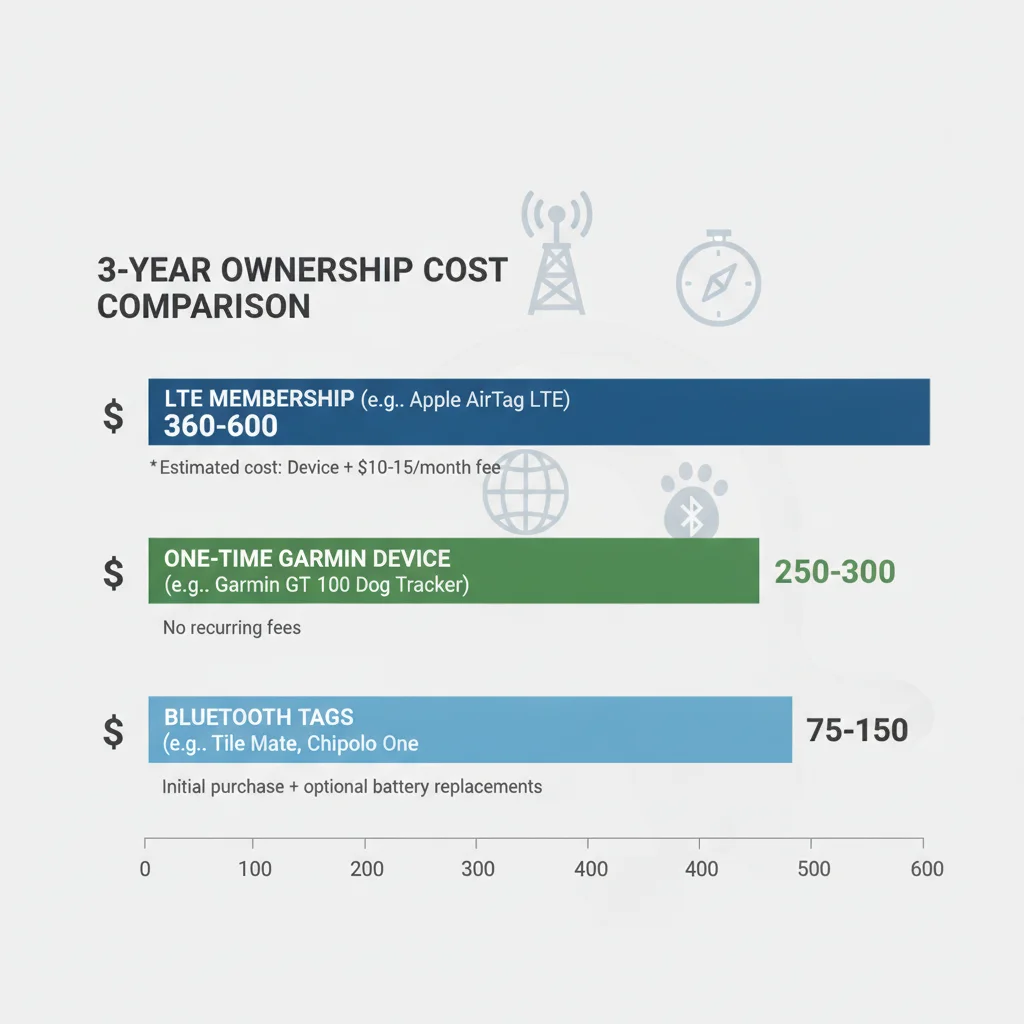
Price a cellular vs bluetooth dog tracker decision on three-year cost: LTE memberships usually dwarf tag hardware, while Garmin-class kits shift spend upfront. Sticker price alone is how shoppers “save” into the wrong recovery tool.
Membership tiers
For Fi, Tractive, and similar LTE collars, membership is the product. Live maps and rich history sit behind renewals. Cancel-to-save strategies that brick the tracker’s job are not savings.
Compare annual tiers you will actually keep—not the cheapest teaser month. Feature reshuffles happen. Read what “base” includes before you assume escape alerts and live track depth are free forever.
Multi-dog discounts help only if you will buy the second collar. Price per dog over 36 months when two flight risks share a household.
- Hardware today
- 36 months of the tier you will keep
- Chargers, holders, and likely replacements
No-subscription options
Bluetooth tags look like a dog gps tracker no subscription win because there is no LTE plan. That is true—and incomplete. You also get no continuous live map. “No subscription” is not “same job for free.”
Some off-grid workflows lean harder on hardware you own. Confirm which Garmin-class features still need a connected plan so you do not assume zero ongoing cost incorrectly. Rebuild quotes with current public pricing before checkout.
Cheap hardware with the wrong job still costs a lost dog afternoon. Pay for the recovery mode you need, then optimize dues inside that class.
3-year examples
Use a boring spreadsheet, not vibes. Example patterns (rebuild with today’s rates):
| Class | Day-1 pattern | Years 1–3 driver | Cancel impact |
|---|---|---|---|
| LTE collar | Moderate hardware | Membership renewals | Live tracking usually gone |
| Off-grid kit | High hardware | Kit completeness (+ any plan features) | Depends on radio-native vs plan-tied features |
| Bluetooth tag | Low hardware | Batteries / replacements | You never had live LTE tracking to lose |
A “cheap” Bluetooth primary can lose to a higher LTE TCO if your dog needs live recovery. A high Garmin sticker can look saner over three years than stacking memberships you resent. Gps dog collar subscription cost math is the real comparison layer.
Match tech to your walks
Terrain-first beats brand-first. After you know your routes, brand pages make sense. Until then, every review is noise.
Neighborhood escapes
Open-gate suburban bolts favor cellular LTE. You need a fast geofence, a live map, and a collar that stays on a panicked dog. Bluetooth can ride along as backup; it should not be the only line.
Pick US-centric or roaming LTE based on whether borders are real life. That is the clean Fi vs Tractive fork once you already know you need cellular—not Bluetooth.
Test alerts on the phone you carry. Battery saver modes that delay the one ping that matters train you to ignore the system.
- Primary: LTE collar with honest membership
- Secondary: Bluetooth tag on a harness or second ring
- Skip as primary: wilderness handhelds you will never practice with
Travel
Travel changes the cellular shortlist more than the tech-class shortlist. You still want LTE live maps in cities and rest stops. You also need roaming that matches your itineraries.
Validate country lists for your trips. “175+ countries” is a claim to check, not a guarantee for every rural road abroad. Pack charging like you pack food bowls—live sessions run longer in unfamiliar streets.
Bluetooth still helps as luggage-style backup in airports and hotels. It does not replace roaming LTE when the dog slips a balcony gate in a new city.
Backcountry hiking
Backcountry is where off-grid gear stops being optional. If your dog’s “GPS need” is a weekly forest run with no bars, an LTE-vs-Bluetooth debate is the wrong primary fight.
Carry a Garmin-class or true off-grid plan for ridge miles. Keep LTE useful near the truck or trailhead if you want phone maps in coverage. If your dog bolts when camp or trailhead routines change, our elevated bowl height guide helps stabilize feeding setups on the road.
Mixed households—weekday suburb, weekend mountains—often own both classes. That costs more up front and less in regret when the map goes blank.
- No bars weekly → off-grid primary
- Strong LTE daily → cellular primary
- Both lifestyles → hybrid kit, not one magical collar claim
Buyer checklist before you order
Before checkout, run this checklist once. It catches the regrets that show up after the membership renews or the first dead-zone hike.
Collar weight
Weigh comfort against escape security. Tiny dogs hate bulky LTE bricks; flight-risk athletes need a fit that survives panic pulling. Try size charts, read small-dog notes, and prefer a secure harness mount when neck bulk is the blocker.
Chewing and water wear show up after months, not unboxing day. Plan for charge-port seals and replacement holders as normal ownership—not rare bad luck.
Charge access
A dead tracker is jewelry. Pick a charge night. Pack the cable on trips. Live-track drain is meaner than idle-day brochure numbers, especially during a long search.
If you cannot charge reliably for your lifestyle, do not buy the collar that needs daily top-ups you will skip. Honesty here prevents false confidence.
Second-dog plans
Multi-dog homes should compare per-dog three-year cost. Tracker the flight-risk dog first if budget is tight. Use cheaper ID backups on the homebody until you can fund a second live system.
Confirm multi-dog discounts apply to the tier you need. A discount on a feature-poor plan is not a win if live track depth is what you buy for.
Trial/return windows
Use return windows to run a real escape drill. Draw a fence. Walk out on purpose. Time the notification. Repeat once with live tracking open and once from a locked screen.
If the brand cannot survive your ten-minute drill, send it back. Marketing adjectives do not get a vote after a failed alert test.
- Confirm coverage class matches your routes
- Confirm membership math for 36 months
- Confirm fit, charge habit, and alert drill before the window closes
Frequently Asked Questions
Is Bluetooth the same as GPS?
No. Bluetooth tags rely on nearby phones in a crowd-find network; they are not continuous satellite or LTE live tracking. A cellular vs bluetooth dog tracker comparison is really live map vs last-seen tip.
Do I need cellular for a backyard dog?
Often yes if you want true escape recovery beyond Wi-Fi or Bluetooth range. A backyard bolt can still put a dog two blocks away in minutes—beyond most Bluetooth comfort zones.
When is Garmin worth it?
When you regularly hike, hunt, or run trails beyond reliable LTE and can learn the handheld workflow. If your dog’s risk is only the open gate on a suburban street, start with a cellular collar instead.
Can I combine an AirTag with an LTE collar?
Yes—many owners use Bluetooth as a cheap backup, not a replacement. Keep the LTE collar as the primary live-track tool and the tag as a second chance if the primary battery dies.
What's the biggest shopping mistake?
Buying on hardware price alone while ignoring membership cost and coverage where you actually walk. The wrong tech class fails before brand polish matters.
Final recommendation
Settle technology before branding. For most neighborhood escape artists, a cellular LTE collar is the primary answer in any honest cellular vs bluetooth dog tracker decision; Bluetooth stays a backup layer. Move to an off-grid kit when dead zones are weekly life, not rare surprises.
Then price the three-year plan you will keep, run one alert drill inside the return window, and only after that open brand shortlists. Pick the recovery mode that matches your walks—and you become the owner who finds the dog faster instead of hoping a crowd-find ping arrives in time.
Related reading on our sister sites: Best Orthopedic Dog Bed Under