Shoppers searching elevated bowl vs slow feeder often buy the wrong tool because Amazon grids treat them as interchangeable “better bowls.” They are not. Elevation changes posture and reach. Slow feeders change pace and access. Mixing those jobs without a plan wastes money and leaves the real mealtime problem untouched.
This comparison maps symptoms to product type, then covers when a hybrid elevated slow feeder dog bowl is worth the extra cleaning. We stay practical: height fit, gulp control, tip risk, and dishwasher survival—not chiropractic hype or miracle bloat claims.
Separate posture vs gulping problems before buying. If you only remember one rule from this page, make it that.
What problem are you actually solving?
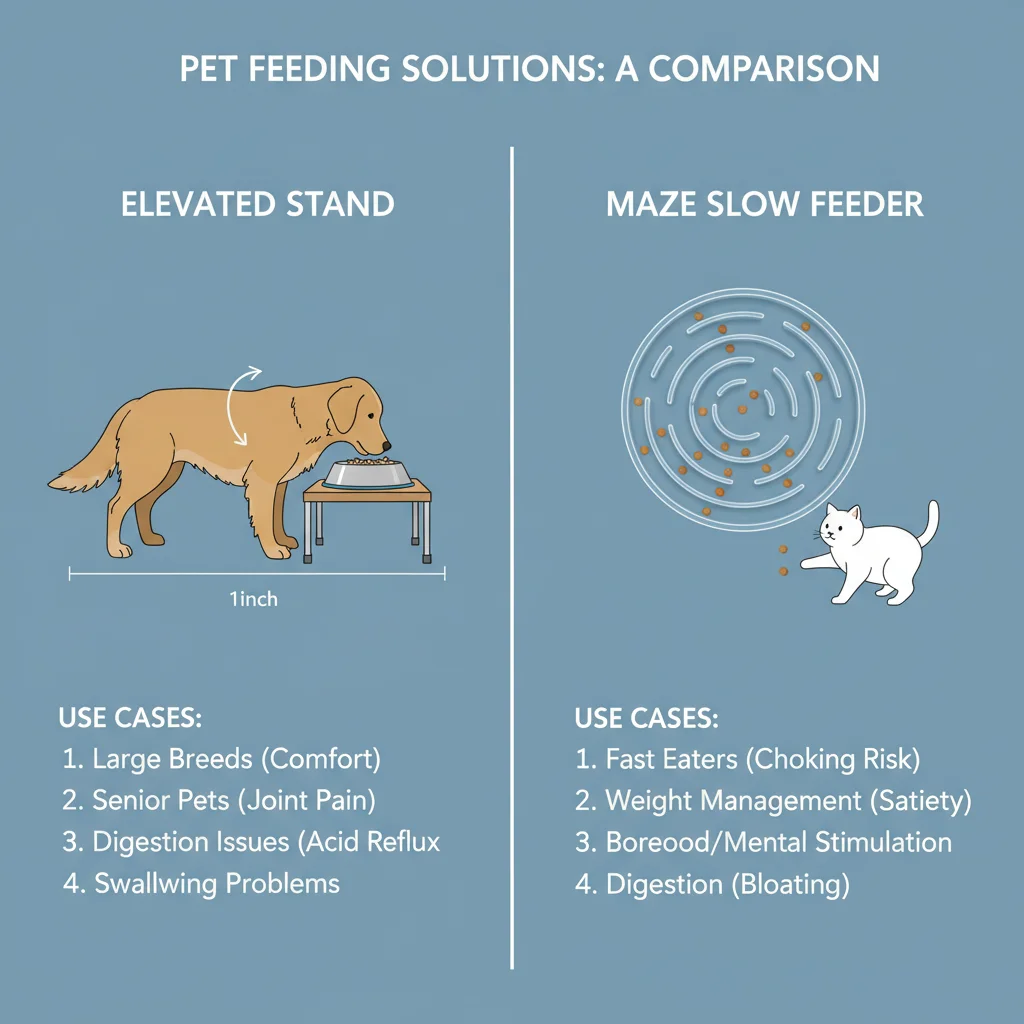
Start with the failure mode you see at mealtime. Most homes have one dominant issue; some have two. Buying for the wrong axis is why return rates stay high on raised diners and plastic mazes alike.
Use this symptom map before you open a shopping tab:
- Hard bending, stiff rise after meals, senior arthritis discomfort: prioritize elevation and a stable stand.
- Gulp-and-vomit, inhaling kibble in under a minute, aerophagia after meals: prioritize a slow feed dog bowl for gulping.
- Tall fast eater who also struggles to bend: plan for a hybrid or two separate tools.
- Multi-dog chaos: size and pace per dog—do not force one shared stand.
Match each dog's height and pace—shared one-size stands often fail. That line matters more in multi-dog kitchens than brand logos on the packaging.
| Symptom | Primary tool | Secondary check |
|---|---|---|
| Neck/back strain when eating low | Elevated bowl | Measure withers; tip-test the stand |
| Finishes food in <60 seconds | Slow feeder / maze | Maze depth + cleanability |
| Both strain and gulping | Hybrid elevated slow feeder | Cleaning time and tip risk |
| Different dogs, different needs | Separate stations | Heights per dog, not “family size” |
Joint and posture issues are about geometry: rim height relative to the dog’s standing posture. Gulp-and-vomit is about access restriction: ridges, channels, or puzzle lids that force smaller mouthfuls. Orthopedic elevated dog bowls do not magically create those ridges. Floor mazes do not magically raise the neck.
If a listing claims one product “prevents bloat, stops gulping, and fixes posture,” treat that as marketing density, not evidence. Elevation may support comfort for some dogs; slow feeding may reduce frantic intake. Neither replaces veterinary advice for GDV risk breeds. Use products as tools, not medical devices.
Multi-dog households need two decisions, not one SKU
In multi-dog homes, the loudest eater often dictates the purchase. That is backwards. A 90 lb gulper and a 25 lb senior sharing a double diner usually leave one dog leaning awkwardly and the other finishing first.
Better pattern:
- Assign each dog a station (even if stations sit two feet apart).
- Choose height for the dog who bends poorly.
- Choose maze depth for the dog who inhales food.
- Only combine height + maze for the dog who truly needs both.
Raised dog bowl vs slow feeder is not a brand rivalry. It is a job description. Write the job first.
Elevated bowls: strengths and limits
An elevated feeder raises the bowl rim so the dog eats with less extreme neck flexion. Done well, it feels like a desk at the right height: neutral, steady, easy to return to every meal. Done poorly, it is a tippy pedestal that skates across tile.
Where elevation wins
- Height comfort for medium-to-giant and senior dogs who struggle to drop into a floor-bowl crouch.
- Cleaner floors under drinkers when a raised water bowl reduces chin drip onto mats (not always, but often).
- Simple cleaning when bowls are removable stainless inserts without maze channels.
- Adjustable frames that let you retune height as a puppy grows or a senior’s comfort changes.
For large dogs, look past “large breed” labels and measure. Rim height near the lower chest / withers line is a practical starting zone. Extreme chin-high setups look dramatic in photos and encourage leaning on the rim—which is how tip accidents happen.
Where elevation fails
Elevation has no inherent slow-down. A raised open bowl can still be vacuumed empty in seconds. If your only complaint is speed, an elevated bowl alone is usually the wrong buy.
Stand stability is the other failure point—see our 2026 elevated dog bowl height and stability picks for frames that survive tip tests. Narrow feet on slick tile, hollow tubing that flexes under a leaning 70 lb dog, and decorative wood bases that swell after spills all show up after the honeymoon week. Tip-test with a half-full water bowl before you trust the stand unsupervised.
| Elevated bowl trait | Good signal | Red flag |
|---|---|---|
| Height | Adjustable or size-specific; measured to dog | “Fits all breeds” fixed height |
| Base | Wide footprint, rubberized feet | Skinny legs, glossy plastic pads |
| Bowls | Removable stainless, dishwasher-safe | Glued-in plastic, sealed wood wells |
| Pace control | Optional insert available | Claims to stop gulping with open bowl |
Materials matter for daily life. Stainless inserts survive dishwasher cycles better than most ceramics. Ceramic shells look premium but chip; if you want the look, prefer a shell with a liftable liner. Powder-coated frames that chip at joints become rust traps near wet mopping.
Elevation is posture geometry. It is not a paced-feeding system. Keep that sentence taped to the fridge when ads blur the categories.
Slow feeders: strengths and limits
A slow feeder restricts how quickly a dog can scoop food. Mazes, ridges, flower patterns, and puzzle lids all trade ease for time. The right design stretches a meal without turning dinner into a 40-minute frustration event.
Where slow feeders win
- Gulp reduction for dogs that inhale kibble and then regurgitate or get gassy.
- Mental engagement for bored high-drive eaters who treat mealtime like a race.
- Lower cost of entry than a full elevated hybrid when height is not the issue.
- Flexible placement on mats, crates, or travel—many mazes are single bowls, not stands.
Look for maze depth that matches mouth size. Tiny ridges barely slow a Labrador. Ultra-deep plastic labyrinths can trap grease and defeat dishwashers. The sweet spot is channels that force smaller scoops while still allowing a rinse cycle to finish the job.
Where slow feeders fail
Floor-level bending remains. A senior Great Dane with stiff hips may slow down and still pay for every meal with awkward posture. If bending is the complaint, a floor maze alone is incomplete.
Maze cleaning is the daily tax listicles skip. Deep plastic grooves collect biofilm. Soft silicone ridges can stain. Narrow flower petals need a bottle brush, not a lazy rinse. If you will not scrub, buy a shallower stainless maze or a paced feeder with removable parts—not the deepest Amazon maze with the highest star count.
| Slow feeder trait | Good signal | Red flag |
|---|---|---|
| Pace effect | Meal takes 2–3× longer without rage quitting | Dog gives up or flips the bowl |
| Cleaning | Dishwasher-safe; brush reaches all channels | Sealed deep wells that smell after a week |
| Stability | Weighted base or non-slip rim | Lightweight plastic that slides while eating |
| Height | Optional stand or hybrid available | Assumes floor posture is fine forever |
Some owners try “holding the bowl” or hand-feeding as a slow-down. That can work as training, but it is not a product substitute for households that need a set-and-forget meal. A good slow feeder is a tool you can leave on the floor while you make coffee—not a second job.
Also watch portion geometry. Wet food and kibble behave differently in mazes. Sticky wet food in deep plastic often becomes a cleaning nightmare. If you feed wet, prefer wider channels or stainless inserts you can soak.
When a hybrid elevated slow feeder wins
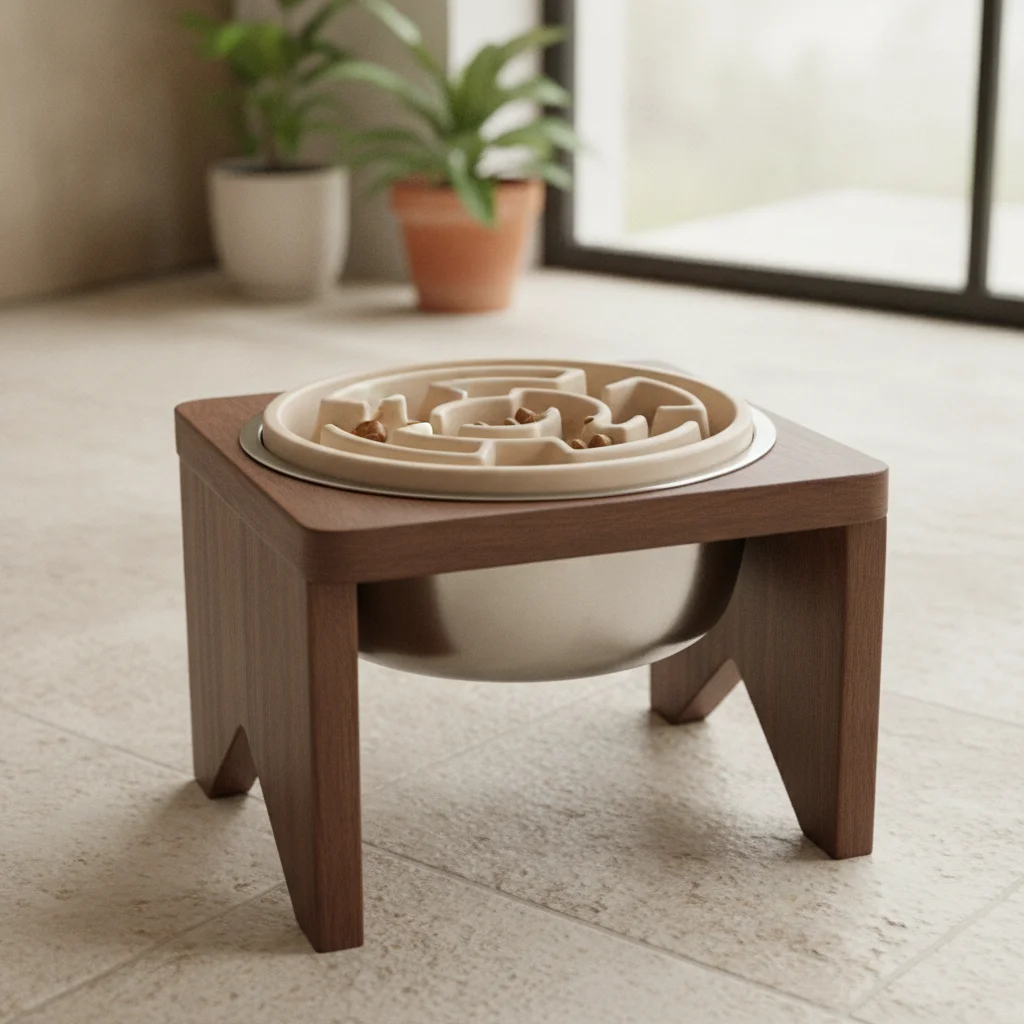
Hybrids exist because some dogs need both jobs: correct height and paced access. A large dog that eats too fast is the classic case. So is a senior who still gulps but cannot comfortably bend.
A slow feeder elevated bowl (or elevated slow feeder dog bowl insert on a raised stand) can be the right answer—if you accept the cleaning and tip tradeoffs. Hybrid cleaning reality most listicles skip is the deciding factor for many households after week two.
Who should buy a hybrid
- Fast eaters who also need height for comfort.
- Large-breed households tired of managing a floor maze plus a separate raised water bowl.
- Owners willing to scrub maze channels or run dishwasher-safe inserts several times a week.
What to inspect before you commit
- Insert vs sealed maze: Removable slow-feed inserts beat sealed plastic trays for hygiene.
- Stand footprint: Adding maze height and lean force increases tip risk; wide bases matter more than on open bowls.
- Dishwasher path: Confirm the maze actually fits your rack and survives heat without warping.
- Replacement parts: Inserts crack; stands last. Buy systems where bowls are replaceable.
| Setup | Best for | Main cost | Main risk |
|---|---|---|---|
| Elevated open bowl | Posture / bending issues | Buying correct height | No gulp control |
| Floor slow feeder | Gulping only | Maze scrubbing | Floor bending remains |
| Hybrid elevated + maze | Height + gulping together | Cleaning time + price | Tip + biofilm if sealed plastic |
| Two tools (raised water + floor maze food) | Split needs / picky cleaners | Floor space | Inconsistent heights |
Budget reality: a decent adjustable stainless stand plus a separate stainless slow-feed insert often beats a sealed plastic hybrid that looks clever in photos. Modularity wins when parts fail. Sealed all-in-ones win only when the design is truly dishwasher-friendly and tip-stable.
If you already own a good elevated frame, check whether a slow-feed insert fits the bowl cutout before buying a whole new station. Many “hybrid” purchases are really insert upgrades.
Quick decision checklist
Use this as a buy filter. Stop at the first clear match; do not over-buy features you will not maintain.
- Does the dog struggle to bend or rise? Yes → elevate. Measure withers; tip-test.
- Does the dog gulp or vomit after racing meals? Yes → slow feed. Prioritize cleanable mazes.
- Both yes? Hybrid or elevated stand + slow-feed insert. Plan scrub time.
- Multi-dog home? Separate stations. Match height and pace per dog.
- Will you run a dishwasher weekly? Prefer stainless inserts. Avoid deep sealed plastic if you hate scrubbing.
- Tile floors? Demand wide, grippy bases. Skip skinny decorative stands.
Symptoms → product type is the whole game. Budget is secondary once the job is clear. A $25 correct tool beats a $80 hybrid that solves neither problem well.
For shopping next steps, compare stand stability and height ranges against a measured withers check, then judge maze cleaning before you chase star ratings. If you need height guidance by size, measure first—breed charts are hints, not purchase orders. A sibling buying guide on best elevated dog bowls for height and stability is the right place for model shortlists; this page stays focused on elevated bowl vs slow feeder job fit.
Travel and daycare add one more wrinkle. Portable silicone mazes help gulpers on the road, but they rarely replace a stable home elevated station for seniors. Keep the home setup for daily posture needs and pack a light slow feeder only when pace is the travel problem.
Affiliate note: product links on Pawsome Guides may earn a commission. We still score tools by problem fit, tip resistance, and cleaning survival—not by who pays for placement.
Frequently Asked Questions
Is an elevated bowl the same as a slow feeder?
No. Elevation changes eating height; slow feeders change how fast food is accessed.
Can elevation alone stop gulping?
Usually not—gulping needs maze inserts, puzzles, or paced feeding.
Do I need both for a large dog that eats fast?
Often yes: correct height plus a slow-feed bowl or insert.
Which is easier to clean?
Simple elevated stainless bowls clean easiest; deep mazes trap biofilm and need more scrubbing.
What should multi-dog homes buy?
Match each dog's height and pace—shared one-size stands often fail.
Your Next Step
Write the mealtime problem in one sentence—posture, gulping, or both—then choose elevation, a slow feeder, or a hybrid with eyes open about cleaning. Separate posture vs gulping problems before buying, and you will skip half the returns that come from treating every raised maze as a universal fix.
Related reading on our sister sites: Furbo 360