Most shoppers open an elevated dog bowl height guide looking for a breed chart and a single “correct” inch number. That is how returns happen. Labs, shepherds, and Great Danes vary more within a breed than marketing tables admit, and seniors often need a different rim height than a healthy adult of the same weight.
This page is a measurement-first protocol: withers check, size-class ranges as starting zones, then breed examples without one-size myths. We treat elevation as posture comfort for medium-to-giant and senior dogs—not a GDV cure or a chiropractic device.
Use a measurement table and photo protocol instead of breed-only charts when sizing elevated bowls. If you keep only one rule, keep that one.
Measure once: withers-based height method
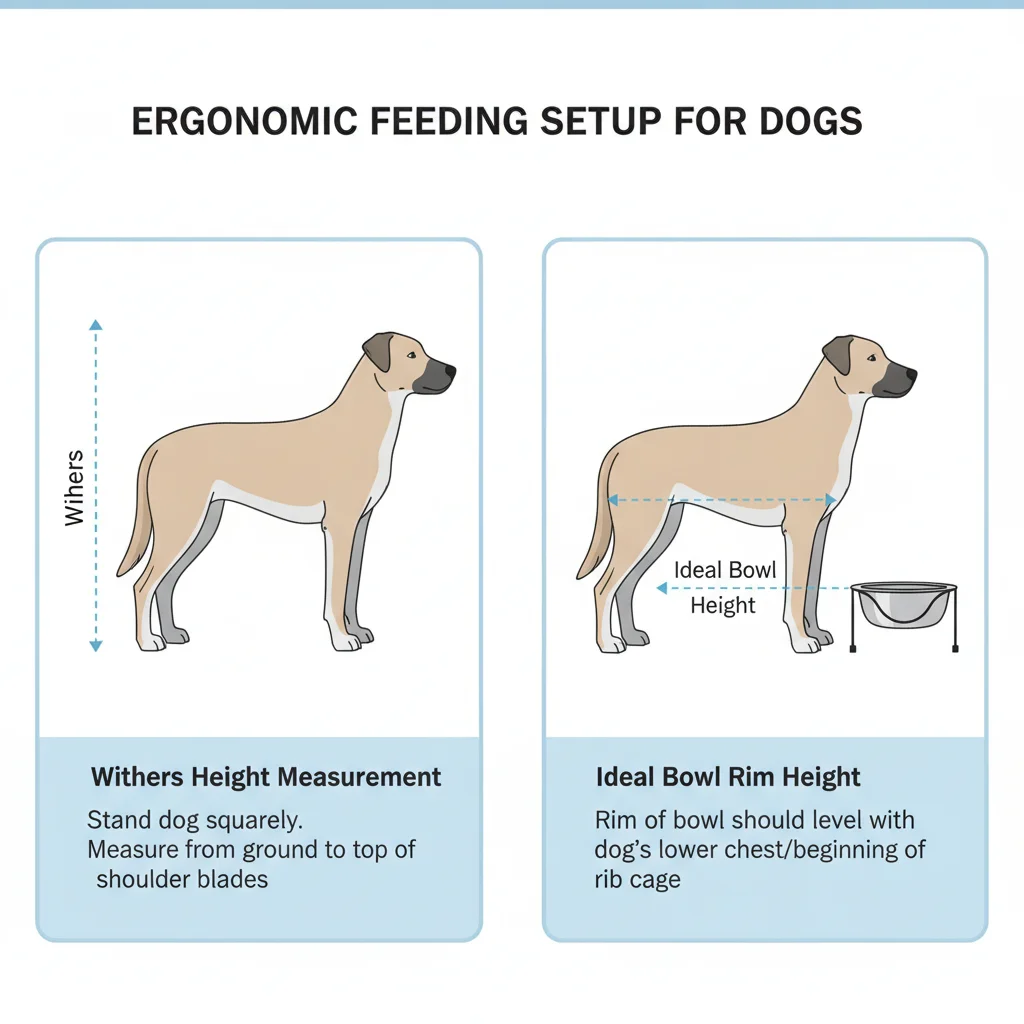
The withers are the ridge between the shoulder blades—the top of the shoulder where a collar sits when the dog stands square. Measuring there beats guessing by breed label or Amazon “large” badges.
Rim height near the lower chest or withers line is a starting zone, not a chiropractic prescription. You are aiming for a neutral neck: not a deep crouch, not a chin-high stretch that invites leaning on the bowl.
Where to measure
- Have the dog stand on a hard floor with weight evenly on all four feet.
- Find the withers (top of the shoulders) and mark the height from floor to withers with a measuring stick or phone level app against a wall.
- Note lower chest height as a second reference—roughly where the brisket sits when standing comfortably.
- Set the empty bowl rim so it sits near that lower-chest / withers zone, then watch one meal and adjust ±1–2 inches.
For most medium and large dogs, the useful starting band is roughly at or slightly below withers height for the rim—not the top of the stand legs. Always measure to the bowl rim, because frame height and insert depth change the real eating plane.
Write the number down. Owners who “eyeball it later” usually drift toward whatever stand is on sale, then wonder why the dog still crouches. A sticky note on the fridge with withers height and chosen rim height saves the next shopping trip.
Standing posture photos (do this once)
Take two quick photos before you buy or lock a height:
- Side view at mealtime height: neck should look relaxed, not kinked down or stretched up.
- Front view: elbows should not splay hard as the dog braces against a tippy rim.
Those photos catch mistakes that feel “fine” for one rushed meal. Orthopedic elevated dog bowls only help if the geometry matches the dog you have this year—not the dog the product photo used.
Common measuring mistakes
- Measuring while sitting or lying down — understates height and pushes you toward stands that are too short.
- Using breed charts alone — ignores weight, age, and coat bulk under the withers.
- Setting rim at chin height — looks “elevated” in photos and encourages leaning, tipping, and shoulder bracing.
- Ignoring water vs food — some dogs prefer water slightly lower; measure food height first, then decide if water matches.
- Forgetting paw pads and mats — thick mats raise the dog relative to the bowl; remeasure if you add cushioning.
If your dog already owns a floor bowl, put it on books or a stable box and test heights for two days before ordering a permanent stand. Cheap experiments beat expensive wrong SKUs.
Height ranges by size class
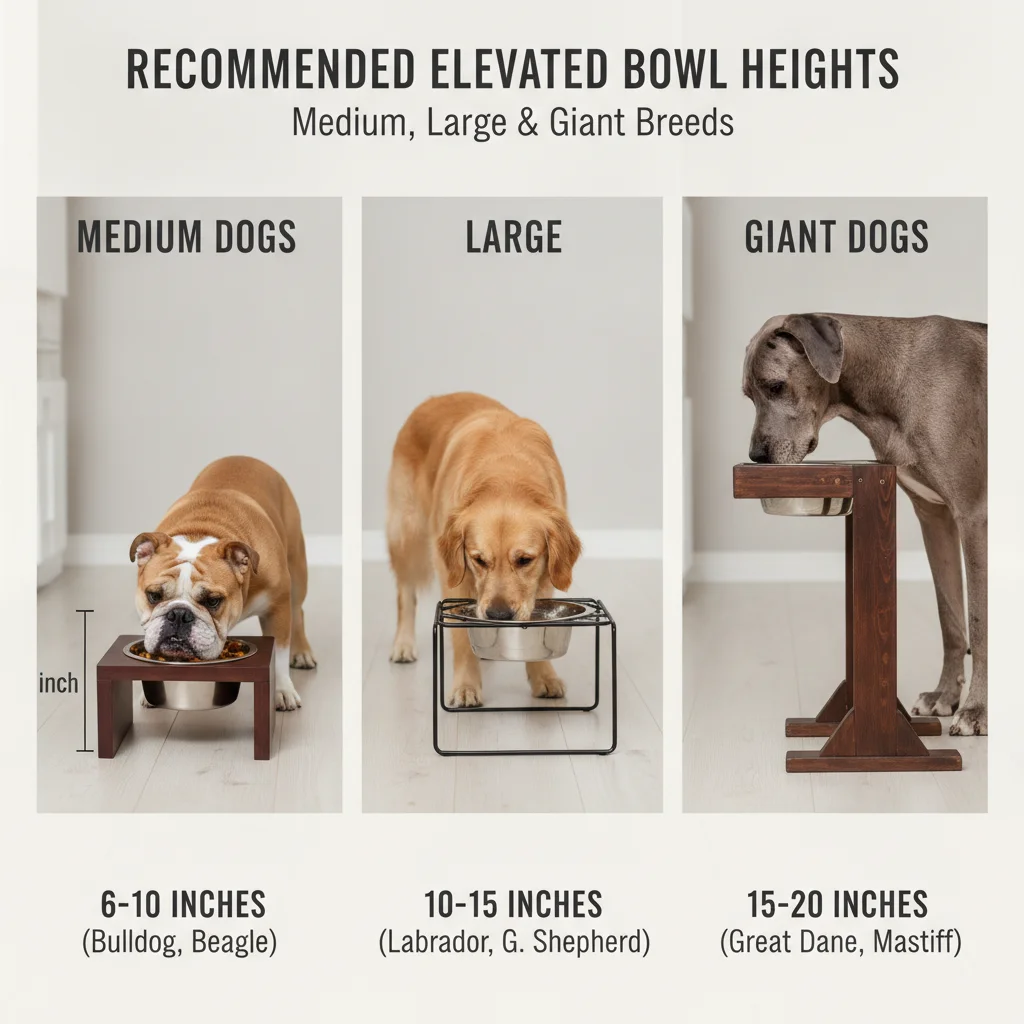
Use these ranges as starting zones after a withers check—not as purchase orders. Dogs at the edges of a size class (stocky vs lanky, senior vs athletic) will diverge.
| Size class | Typical weight band | Starting rim height zone | Notes |
|---|---|---|---|
| Medium | ~25–50 lb | ~8–12 in | Confirm withers; many “medium” stands run short for tall collie-types |
| Large | ~50–90 lb | ~12–18 in | Labs/Goldens often land mid-band; measure individuals |
| Giant | ~90 lb+ | ~18–28 in+ | Never auto-buy the tallest listing; overshoot is common |
| Seniors (any class) | Varies | Often mid-band of class, then fine-tune | Prioritize stability and easy rise after meals |
A raised dog bowl for large dogs should be sized to the dog’s measured height, not the word “large” on the carton. The best elevated dog bowls for large dogs still fail when the stand is four inches too tall and the dog braces on the rim.
How to use the table: measure first, land in the matching band, buy adjustable if you are within two inches of a band edge, then confirm with mealtime photos. Skip any listing that only says “fits all large breeds” with no height range in inches.
Medium dogs
Medium dogs are where one-size stands fail most quietly. A compact bulldog-type and a lanky herding mix can share a weight class and need different rims. Start mid-band after measuring, then watch whether the dog still drops into a crouch or reaches up.
If you feed wet food in a deep bowl, remember that food depth changes the effective eating plane. A tall rim with a half-empty deep bowl can feel lower than the label height. Remeasure with a typical portion in the bowl if meals look awkward after day one.
Large dogs
This is the commercial sweet spot for elevated stands. Expect most Labs, Goldens, and similar-bodied dogs to land between roughly 12 and 16 inches at the rim once measured—but treat that as a hypothesis. Coat thickness, chest depth, and senior stiffness move the answer.
When comparing two stands in the same inch range, pick the wider footprint and removable stainless inserts. Height is necessary; tip resistance and cleaning are what keep the stand in daily use past week two.
Giant breeds
Giant dogs need height and footprint. Tall, skinny stands tip when a Dane leans. Prefer wide bases and adjustable frames so you can retune without buying a second unit. Do giant breeds always need the tallest stand? No—measure first.
Also check bowl diameter. A correctly tall stand with a tiny bowl forces giant breeds to scrape and shove, which increases tip risk. Match bowl volume to meal size so the dog is not fighting the hardware.
Seniors with mobility limits
Seniors often benefit from less bending, but “higher is better” is false. Over-elevating forces them to reach and lean, which is worse than a slightly lower, stable rim. Fine-tune for a soft neck angle and a stand that does not skate on tile when they press the bowl.
If arthritis or post-surgery instructions exist, follow your veterinarian’s guidance on feeding posture. Elevation here is comfort tooling, not treatment.
Reassess every few months. Seniors who lose muscle or gain weight can outgrow last year’s “perfect” height. An adjustable elevated dog feeder earns its keep when comfort needs drift.
Adjustable stands vs fixed diners
Once you know the target zone, choose hardware that can hit it without drama.
| Stand type | Best for | Watch-outs |
|---|---|---|
| Adjustable elevated dog feeder | Growing dogs, seniors, multi-dog rotations | Locking pins must stay tight; wobble at tall settings |
| Fixed-height diner | One measured adult dog, stable daily use | Wrong height = full repurchase |
| Double diner (shared) | Two dogs with near-identical heights | Different ideal heights → one dog always loses |
Growing dogs
Puppies change fast. An adjustable frame lets you raise the rim as legs lengthen without guessing a adult height on day one. Still: many young dogs do better on the floor until growth slows—see the “when lower is better” section.
Multi-dog homes
Multi-dog homes almost always need different ideal heights—shared one-size stands leave someone straining. If heights differ by more than about two inches at the rim, separate stations beat a compromise double diner.
Practical patterns that work:
- One adjustable stand + staggered meal times for similar-sized dogs.
- Two fixed stands sized independently for a senior and a younger adult.
- Elevated food for the stiff dog; floor or lower water for the other if that matches preference.
If resource guarding is in play, separate rooms beat clever double diners. Height fit cannot fix mealtime conflict; spacing and management still come first.
Stability tradeoffs
Adjustable columns often flex more at maximum height. Tip-test with a half-full water bowl on your actual floor. Wide rubberized feet beat glossy plastic pads on tile. Hollow decorative wood that swells after spills becomes a tip hazard months later.
Removable stainless bowls keep cleaning easy. Sealed plastic wells look tidy until biofilm builds at the water line. Height fit means nothing if you stop using the stand because it stinks or wobbles.
On hardwood and tile, do a deliberate tip test: press the far rim the way a leaning dog would. If the stand skates or lifts a foot, go wider or add a gripper mat rated for wet use—not a decorative runner that bunches.
Breed examples without one-size myths
Breed examples are illustrations, not prescriptions. Always override with a withers measurement.
Labs and Goldens
Labrador elevated bowl height and Golden sizing often land in the large-dog mid-band, but field-bred vs show-bred frames differ. A lean working Lab may need a different rim than a heavier pet Golden of the same age. Measure; then shop adjustable or size-specific stands—not “Labrador feeder” marketing.
Watch for gulping. Elevation alone does not slow a vacuum eater. If pace is the problem, pair correct height with a slow-feed insert rather than buying a taller open bowl.
Shepherds and similar upright builds
German Shepherds and related breeds often have deeper chests and more upright neck carriage. Charts that only use weight undershoot lanky individuals. Side-view mealtime photos matter here: you want a soft neck line without forcing the dog to brace elbows wide against a narrow base.
Great Danes, Mastiffs, and other giants
Great Dane elevated bowl height is a frequent search because floor bowls look punishing—and because Amazon tall stands look impressive. Measure anyway. An overshot rim trains the dog to eat while leaning, which is how tip accidents and shoulder strain show up.
For Mastiffs and other heavy giants, prioritize base width and bowl diameter as much as height. A correct rim on a tippy pedestal is still a bad buy.
Affiliate note: product links on Pawsome Guides may earn a commission. We still score stands by measured fit, tip resistance, and cleanable bowls—not by breed hashtags in the title.
When lower is better
Elevation is optional. Some dogs should stay low—or go lower than the chart suggests.
Brachycephalic caution
Short-nosed breeds already manage airway and eating mechanics carefully. Do not assume “raised = better.” If you elevate at all, keep changes modest and watch breathing and ease of scooping. Ask your vet before chasing orthopedic marketing aimed at giant breeds.
Puppies
Growing joints and changing proportions make fixed tall stands a poor default. Floor feeding or a very slight raise is usually enough until growth slows. Should puppies use elevated bowls? Usually wait; confirm with your vet if a mobility issue exists.
Vet-directed exceptions
Post-operative instructions, megaesophagus protocols, and other medical feeding plans override DIY height charts. Follow the clinician’s setup even if it conflicts with a blog table. This guide is for general comfort sizing in healthy medium-to-giant and senior dogs, not for treating disease.
Also reconsider elevation if your dog tips every stand you try, or if mealtime becomes a wrestling match with the frame. A stable floor bowl beats an unstable “orthopedic” pedestal.
Frequently Asked Questions
Should the bowl be at shoulder height?
Close to the withers or lower chest line is a practical starting point; fine-tune so the neck stays neutral and the dog is not reaching up or crouching hard.
Do giant breeds always need the tallest stand?
Not always—measure the individual dog. Over-tall stands can force awkward upward reaching and increase tip risk when they lean on the rim.
Can one stand work for two dogs?
Only if their measured heights are similar. Otherwise use an adjustable frame with separate meal times, or buy separate stations.
Are breed charts accurate?
They are rough guides. Withers measurement beats breed averages, especially across Labs, shepherds, and giant breeds with wide size spreads.
Should puppies use elevated bowls?
Usually wait until growth slows and posture is stable; confirm with your vet if mobility issues or orthopedic concerns exist.
Your Next Step
Measure withers once, pick a size-class starting zone, then tip-test the stand on your floor before you trust it unsupervised. Use a measurement table and photo protocol instead of breed-only charts when sizing elevated bowls, and size each dog separately when heights differ.
Write three numbers before you shop: withers height, target rim height, and the stand’s listed range in inches. If a product page will not publish a height range, skip it. For model shortlists and stability tests, start with our best elevated dog bowls 2026 buying guide; keep this page as your height protocol. If you are torn between elevation and maze pacing, read elevated bowl vs slow feeder before you buy a hybrid.
Related reading on our sister sites: Best Orthopedic Dog Bed for