Quick verdict: who should pick which tool
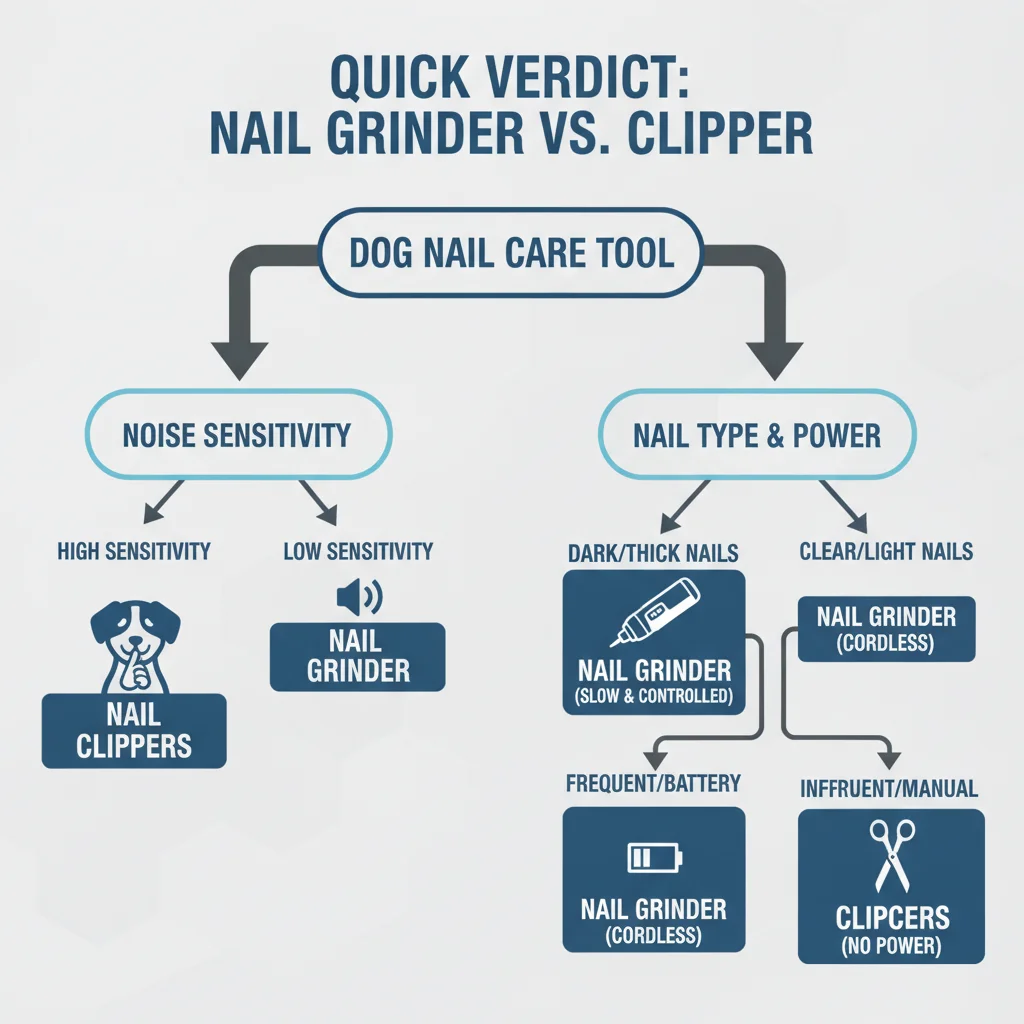
Most owners stall on nail day for the same reasons: fear of hitting the quick, a dog that bolts at motor noise, and tools that die mid-session. If you are weighing a dog nail grinder vs clipper purchase in 2026, start with your dog’s noise tolerance and nail color—not marketing “pro salon” claims.
Clippers win when you need a near-silent cut, short sessions, and a low entry price. Grinders win when nails are dark or thick, you prefer removing tiny layers, and you can invest a few weeks in desensitization.
- Anxious or noise-sensitive dogs: begin with quality scissor-style clippers; add a quiet grinder only after power-off practice sticks.
- Dark or black nails: favor a pet grinder with low RPM and frequent visual checks—one aggressive clip is how quicks bleed.
- Budget under $20 and light-colored nails: a guarded clipper set plus styptic powder covers most homes.
- Multi-dog or thick dewclaws: cordless grinder runtime and spare tips matter more than unboxing speed.
- Puppies under six months: prioritize short, positive sessions with whichever tool stays quietest—habit beats hardware.
For noise-sensitive dogs, a quieter clipper session often beats a louder grinder until desensitization sticks. That single sentence should drive your first buy—and your training plan.
Skip the shallow pros/cons lists that treat every dog the same. A calm adult Beagle with translucent nails is a different buyer problem than a noise-phobic doodle with opaque black nails and a history of quick hits at the salon.
Noise, vibration, and desensitization reality
Affiliate listicles rarely publish usable noise numbers. Owners and groomers report typical cordless pet grinders in the mid-60s to low-80s dB at arm’s length, with spikes when the tip loads on thick nail. Clippers are effectively silent except for the click of the blades.
Vibration matters as much as volume. A “quiet” motor that buzzes hard into the paw pad can still trigger freeze-or-flee responses. Test by holding a running tool near—not on—the nail while rewarding calm.
Session length before fear spirals
Most fear spirals start after 20–40 seconds of continuous grinding on one paw. Cap live grinding at 2–3 seconds per nail at first, then treat. End the session while the dog is still willing to offer a paw.
- Day 1–3: power-off tip on nail, treat.
- Day 4–7: 1–2 second spin in air near paw, treat.
- Week 2: brief contact on one nail tip only.
- Week 3+: shape full nails across short daily sessions.
If your dog already panics at the sound, do not “push through.” Reset to power-off work. For puppies still building grooming tolerance, a calm confinement setup helps—see our puppy playpen buying guide for short desensitization sessions between nail attempts.
Failure modes to expect: the dog snatches the paw after one long grind, the tip catches fur and jerks, or a previous quick hit returns as anticipatory shaking when the charger LED lights up. Treat those as training data, not proof that grinders “don’t work.”
When clippers win on silence
Apartment dogs, seniors with noise phobias, and households that share thin walls often stay happier with clippers. You can always smooth a clipped edge later with a few careful grinder passes once trust returns.
Clippers also win on travel days and hotel stays when you need a 90-second tidy without charging a motor. Keep a small pair in the go-bag even if your home tool is a grinder.
Noise-sensitive dogs often need a quiet retreat between grooming attempts—our puppy playpen vs crate guide compares calm containment options that pair well with gradual nail training.
Safety: quick avoidance on light vs dark nails
The quick is the blood vessel and nerve inside the nail. On light nails you can often see the pink line and stop a few millimeters short. On dark nails that landmark disappears—so tool choice and technique change.
Dark-nail safety favors grinders when you remove tiny layers and check the quick often—not one aggressive clip. That is the core safety argument for grinders, not a claim that grinders are automatically “safer” in every hand.
| Criterion | Clippers | Grinders |
|---|---|---|
| Noise at ear height | Near silent | Moderate–loud; tip contact adds rasp |
| Dark-nail control | Harder; over-clip risk | Better with thin passes and pauses |
| Heat risk | None | Real if you dwell on one spot |
| Learning curve | Faster for visible quicks | Slower; needs desensitization |
| Typical home price | $8–$25 | $25–$70 cordless pet units |
| Session speed (trained dog) | Faster bulk shortening | Slower; smoother finish |
Clipper angle and stop lines
Hold the paw steady and cut perpendicular to the nail tip—angled bites crush and split. On light nails, leave a pale buffer in front of the pink quick. On dark nails, take paper-thin slices and look for a chalky center that starts to look moist or gray—that is your stop signal.
Guillotine clippers can pinch soft tissue if the nail is not seated correctly. Scissor-style and plier-style blades with a safety guard are usually easier for first-timers. For sizing tools and gear by breed and weight—the same logic you use for bowls—see our elevated dog bowl height guide by size and breed before choosing clipper guards.
Grinder grit, RPM, and heat checks
Start on the lowest RPM that still cuts. Coarse grit removes material fast but heats faster; fine grit is safer for finishing. Touch the nail tip with your finger every few seconds—if it feels warm, pause and cool.
Never freehand a high-speed tool Dremel on a struggling dog. Pet grinders with guards and lower max RPM reduce the chance of grinding into the quick or the pad fur.
Bleed kits and recovery
Keep styptic powder or a styptic pencil within reach before the first cut. If you nick the quick, apply pressure with powder for 30–60 seconds, then stop the session. Do not “finish the other nails” on a dog already in pain—that encodes lifelong fear.
Are nail grinders safer than clippers for dogs? Grinders can be safer on dark nails because you remove less per pass, but heat, noise, and poor technique still injure. Clippers are fine when you can see the quick and stop early.
Battery runtime and tip wear after months
Battery runtime and tip wear after six months matter more than unboxing speed claims on affiliate listicles. A grinder that looks powerful in a 30-second demo can fade before you finish a Labrador’s dewclaws.
Claimed vs real multi-dog sessions
Marketing often cites 2–3 hours of runtime. Real nail work loads the motor harder than free-spin demos. Expect closer to 20–45 minutes of cutting time on mid-tier cordless units, less if you stay on high RPM. Charge fully before multi-dog nights, and keep a spare charged battery if your household has three or more dogs.
- One small dog, monthly trims: most cordless pet grinders are fine.
- Two large dogs every 2–3 weeks: prioritize runtime reviews and USB-C fast charge.
- Thick working-breed nails: budget for tip replacements and cooling pauses.
Replacement tip costs
Sanding bands and diamond bits wear shiny and stop cutting cleanly. Dull tips force longer contact time, which raises heat and noise. Plan on periodic tip spend—often a few dollars per set—when comparing total cost of ownership against cheap clippers that only need occasional sharpening or replacement.
Corded Dremel tradeoffs
A corded rotary tool never dies mid-nail, but cables tangle, RPM ranges run hotter, and one startled yank can pull the tool into soft tissue. Experienced owners who already understand heat and restraint can make a pet-guarded Dremel setup work. Most first-timers are better served by a pet-specific cordless grinder with clear low/high modes.
If you already own a rotary tool, budget for a pet nail guard, coarser and finer bands, and a dedicated low-speed habit—not the same setting you use on wood or metal. Label the nail kit separately so a housemate cannot accidentally hand you a high-grit metal bit.
Track real ownership costs for six months: tips, styptic, treats used as reinforcers, and any salon rescue visits after a bad at-home session. That ledger usually clarifies whether upgrading the tool or upgrading the training is the cheaper fix.
Named matchups and final pick matrix
Use this matrix to choose a tool type first, then a model family. Exact SKUs rotate each year; the scoring criteria stay stable.
| Household profile | Primary tool | Backup / hybrid | Why |
|---|---|---|---|
| Noise-phobic apartment dog, light nails | Scissor clippers with guard | Optional quiet grinder later | Silence first; train before motors |
| Dark nails, calm dog | Low-RPM pet grinder | Clippers for bulk tip only | Layered removal beats guessing |
| Anxious dog, past quick hits | Clippers + long desensitization | Quiet grinder after week 3–4 | Rebuild trust before vibration |
| Multi-dog, thick nails | Higher-runtime cordless grinder | Heavy-duty clippers | Runtime and tip stock matter |
| Experienced groomer at home | Either, often hybrid | Corded rotary optional | Speed + finish control |
Quiet grinder shortlist criteria
Prefer units with a true low speed, stable battery under load, and a guard that keeps fur out of the tip. Ignore “silent” claims without real-room context. Cross-check shortlists in our quiet-grinder and anxious-dog guides linked above.
Safety-guard clipper shortlist criteria
Look for sharp stainless blades, a comfortable grip for one-handed paw holds, and a guard opening sized to your dog—not a one-size toy-breed slot on a Mastiff nail. Replace blades when they crush instead of shear.
Hybrid toolkit setups
Many careful owners clip the bulk tip when they can see a safe stop line, then grind edges smooth for 5–10 seconds total per paw. That hybrid cuts continuous motor noise and leaves fewer sharp corners on hardwood floors.
Hybrid also helps dewclaws: clip the obvious hook carefully, then grind the underside so the dewclaw does not catch on carpets. Keep sessions under five minutes until the dog offers paws voluntarily.
Whatever you choose, pair the tool with high-value treats, a non-slip mat, and permission to stop early. Nail care is a training skill, not a single Saturday ordeal.
Revisit your choice after three successful home sessions. If the dog still freezes at motor sound, stay on clippers longer. If you keep over-clipping dark nails, shift weight toward the grinder even if it is slower.
Frequently Asked Questions
Are nail grinders safer than clippers for dogs?
Grinders can be safer on dark nails because you remove less per pass, but heat, noise, and poor technique still injure. Clippers are fine when you can see the quick and stop early.
Why is my dog terrified of the nail grinder?
Most fear comes from sudden noise/vibration and past quick hits. Restart with power-off touching, short 2–3 second spins, and food rewards before real grinding.
Do quiet dog nail grinders actually stay quiet?
Quieter models help, but contact on the nail still creates sound. Measure real-room noise and prioritize low RPM modes plus gradual desensitization.
Should I use a Dremel or a pet-specific grinder?
Pet grinders usually have safer RPM ranges and guards. Tool Dremels can work for experienced owners who control heat and never freehand at high speed.
Can I use both grinders and clippers?
Yes—many owners clip the bulk tip carefully, then grind edges smooth. That hybrid cuts session time and reduces continuous noise.
Your next step
Pick the quieter path your dog can tolerate this week, not the tool that looks strongest in a product photo. If noise is the blocker, start with clippers and a desensitization calendar; if dark nails and over-clip fear dominate, choose a low-RPM pet grinder and practice thin passes.
Then match a specific model using the quiet-grinder, anxious-dog, and clipper safety guides linked in this article—so your second purchase is based on criteria, not another shallow pros/cons list.
Related reading on our sister sites: Best Pet Camera for Multi-Dog