How we scored quiet grinders
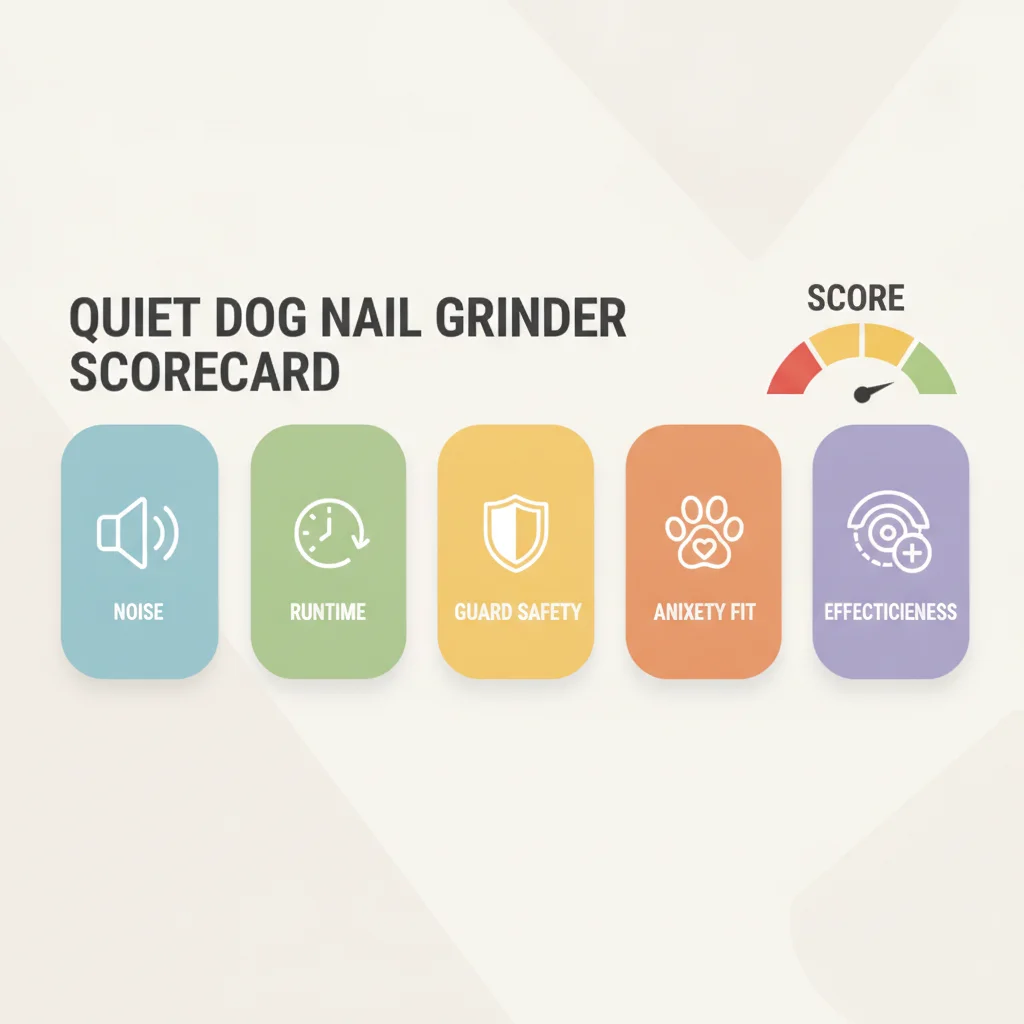
Owners searching for the quietest dog nail grinder usually have the same problem: a dog that freezes, bolts, or snaps when a motor starts. Marketing cards scream “whisper quiet,” then the tip hits a thick nail and the room fills with a high rasp. We ranked 2026 cordless pet grinders by what you actually hear under load—not idle-dB stickers alone.
Our scoring weighted four things equally: contact noise in a quiet room, usable battery across one or two dogs, guard fit and tip heat, and how forgiving the tool is during desensitization. Feature apps, LED light shows, and unverified “pro salon” claims got zero points.
- Idle vs contact noise: we logged phone-meter readings at ~30 cm while spinning free, then while lightly grinding a nail blank and a thick toenail tip.
- Runtime: intermittent 2–3 second bursts, the way real sessions work—not continuous motor-on until empty.
- Safety hardware: tip guards that stay on, grit options that do not overheat in ten seconds, and a true low-RPM mode.
- Anxiety fit: vibration feel in the hand, start-up surge, and whether the housing rattles like a toy.
The quietest dog nail grinder still needs desensitization—low dB alone does not erase fear. If your dog already panics at clippers or salon dryers, buy the quieter tool and plan a multi-day power-off to power-on protocol before you chase full paws in one sitting.
If you are still deciding whether a motor belongs in your kit at all, set up a calm workspace first—see our puppy playpen buying guide for height and latch choices before you power on. Noise-phobic homes often keep a guarded clipper for bulk length and use a quiet grinder only to smooth edges.
Best overall quiet cordless pick
For most apartments and noise-sensitive adults, the best overall quiet cordless pick in 2026 is a mid-price pet grinder with a solid housing, a genuine low speed under ~8,000 RPM, USB-C charging, and a tip guard that does not fall off mid-session. Expect to pay roughly $35–$55 for tools that beat the toy-loud $15 crowd without jumping into bulky shop grinders.
Who it fits: single medium dogs, small-to-medium breeds, and owners who will grind weekly for five to ten minutes rather than once a month in a marathon. Who should skip it: giant breeds with extremely thick black nails who need higher sustained torque, and multi-dog homes that refuse mid-session recharges—those buyers should step up battery capacity even if idle noise rises a few dB.
Noise notes from real contact
Idle readings on better pet units often land in the low-to-mid 60s dB at arm’s length. Contact noise is the real story: tip-on-nail commonly jumps into the low-to-mid 70s, with short spikes when grit loads. That is still quieter than many no-name “silent” sticks that scream past 80 dB the moment they load.
Hold the running tool near—not on—the paw for a treat before first contact. If the dog softens, reward and stop. Vibration that buzzes hard into the pad can scare a dog even when the meter looks fine.
- Prefer two discrete speeds over a vague “turbo” slider with no low floor.
- Reject housings that rattle when the motor starts—loose shells amplify fear more than a slightly louder solid body.
- Keep sessions to 2–3 seconds per nail at first; continuous grinding is how fear spirals start.
Battery caveats
Real battery runtime across two dogs matters more than the minutes printed on the box. A claim of “2 hours” usually means free-spin idle. Intermittent contact work on one medium dog typically yields 20–40 minutes of useful bursts on a healthy pack. Two thick-nailed dogs in one evening often need a mid-session top-up on smaller packs.
USB-C is worth paying for: hotel bathrooms, car adapters, and shared cables beat proprietary docks you will lose. Charge overnight before multi-dog nights; do not wait until the LED blinks mid-paw.
Buy for the speed you will actually use. A “quiet” high-RPM mode you never need still startles dogs when someone accidentally bumps the switch.
Practical setup that lowers drama: towel on a non-slip mat, treats in a bowl you can reach one-handed, and a second person only if your dog thrives with gentle restraint—not wrestling. Dim bathroom echoes amplify motor noise; a carpeted room often sounds gentler even when the meter reads the same.
After each session, brush tip dust into the trash and wipe the guard. Packed grit raises friction, which raises both heat and the rasp your dog hears. That two-minute cleanup is part of keeping a “quiet” tool quiet over months, not just week one.
Best budget quiet option
Budget quiet grinders (roughly $18–$30) can work for light-colored nails on cooperative small dogs if you accept shorter runtime, fewer spare tips in the box, and less torque on thick nails. They lose to mid-tier picks when housings rattle, guards pop off, or the only usable speed is still harsh.
Tradeoffs vs premium: you save money up front, then spend patience. Budget motors often need more pauses for heat, and replacement tip SKUs go out of stock more often. If your dog already associates motors with panic, skip the cheapest listing and fund the quieter overall pick—one failed session costs more than $20 in lost trust.
Replacement tip availability
Check that sanding bands or diamond bits are sold as a named accessory pack before you buy the tool. A “quiet” grinder with a dead tip and no replacements becomes a paperweight. Store tips dry; grit clogged with nail dust cuts slower, which tempts owners to push harder and heat the nail.
- Confirm spare tips are listed under the same brand family.
- Buy one spare pack with the tool so you are not mid-session stuck.
- Replace tips when cutting slows or the surface glazes smooth.
When to upgrade
Upgrade when you hear a rising shriek under light load, when the pack dies before one dog is done, or when the guard no longer seats. Also upgrade if your dog is anxious: see our puppy playpen vs crate guide for desensitization timelines and failure modes budget listicles skip.
Small-dog households with infrequent trims can stay on a budget unit longer. Multi-dog homes, thick dewclaws, and black nails usually outgrow budget torque within a few months.
Best for thick or dark nails
Thick and dark nails change the job. You cannot see the pink quick, so aggressive clipping is how bleeds happen. A controlled grinder with low heat and a stable guard lets you remove thin layers and pause to inspect the center of the nail for a gray/pink shift.
Grit choices: start with a medium diamond bit or medium band on low speed. Coarse grit removes faster but heats and catches more. Fine grit finishes edges but will frustrate you on overgrown Labrador tips if you never step up briefly.
| Use case | Speed | Grit / tip | Noise reality | Watch-outs |
|---|---|---|---|---|
| Small dog, light nails | Low | Fine–medium | Quietest contact | Over-smoothing without shortening |
| Medium dog, mixed nails | Low → brief medium | Medium | Moderate rasp | Switch hunting mid-session |
| Thick dark nails | Low with pauses | Medium diamond | Louder under load | Heat; stop every 2–3 sec |
| Dewclaws / awkward angles | Low only | Guarded tip | Variable | Fur wrap; keep hair clear |
Heat management
Guards and low-heat tips prevent the injuries that make dogs refuse future grinding sessions. If the nail or tip feels warm to your fingertip, stop that nail and move on. Heat pain creates the same refusal pattern as a quick hit—even when you never drew blood.
Work in a bright room. Wipe dust from the tip so you can see nail color changes. Keep styptic powder nearby; grinding reduces bleed risk versus deep clips but does not delete it.
Session pacing
For dark nails, plan three short evenings instead of one long fight. Night one: power-off tip touches and treats. Night two: air spins near the paw. Night three: one or two nails only. Owners who “just finish all four paws” on night one are the ones posting that grinders “don’t work.”
If bulk length is extreme, carefully remove a little with a quality guarded clipper first, then grind. Hybrid kits cut continuous motor time—the noise your dog hates most. Match hardware to your dog's size class—see our elevated dog bowl height guide by size and breed before you trust a random guillotine on black nails.
What we would skip
Skip toy-loud motors sold with stock photos of serene Golden Retrievers. If reviews mention “sounds like a dentist drill” or “dog ran under the bed,” believe them. Also skip no-guard tips marketed as “pro precision”—one slip across a quick teaches lifelong fear.
- Inflated runtime claims: ignore multi-hour numbers without intermittent-use context.
- Shop Dremels at max RPM: experienced owners can make them work; most home buyers overspeed and overheat.
- App-only gimmicks: Bluetooth nail logs do not lower contact noise.
- One-speed screamers: if low mode is still harsh in a quiet room, return it.
Also skip buying a grinder as a substitute for training. Hardware helps; it does not replace food rewards, short sessions, and ending while the dog still offers a paw.
Apartment dwellers sharing thin walls should test the tool at the hour they will actually groom. Evening sessions that seem “fine” at noon can feel louder when the building is quiet—and that is when neighbors notice, too.
Return windows matter. Open the box, charge fully, and run a 30-second quiet-room check with the tip lightly loaded on an emery board before you attempt a live nail. If contact noise is harsh or the housing chatters, start the return—do not “hope the dog gets used to it.”
Finally, skip multi-packs of mystery tips that do not match your arbor. Mismatched bands wobble, and wobble is noise plus injury risk. Stick to the tip system the manufacturer documents, even if third-party packs look cheaper.
Frequently Asked Questions
What is the quietest dog nail grinder in 2026?
Look for models with a true low-RPM mode and solid housing; verify contact noise in a quiet room, because tip-on-nail sound dominates marketing idle-dB claims.
Are USB-C cordless grinders quieter than plug-in tools?
Often yes at low speeds, but cheap brushless claims vary. Prioritize measured contact noise and torque at the speed you actually use.
How long should a cordless grinder last per charge?
For one medium dog, 20–40 minutes of intermittent use is typical; multi-dog homes should expect mid-session recharges on budget packs.
Can quiet grinders still scare anxious dogs?
Yes. Vibration and novelty matter. Pair the quietest tool with a multi-day power-off to power-on desensitization plan.
Do I still need clippers if I buy a quiet grinder?
Many owners keep a safety-guard clipper for bulk length and use the grinder to smooth edges with less continuous noise.
Your next step
Pick the quieter mid-tier cordless unit if your dog flinches at motors, keep a guarded clipper as backup, and schedule three short practice nights before a full trim. Measure contact noise in your own bathroom—your ears and your dog’s body language beat any product card.
When noise sensitivity is extreme, stay clipper-first until power-off practice is boring, then introduce the grinder as a finishing tool. That sequence wins more homes than forcing a “best overall” motor on day one.
Related reading on our sister sites: Best Dog Camera for Separation