Most cat fountain shopping guides rank pumps, LED lights, and “smart” alerts. Owners return units for quieter reasons: slime on the bowl after week two, a plastic tang cats refuse, and a ceramic dish that chips on the first sink knock.
This ceramic vs stainless cat fountain guide puts material first. Feature lists do not tell you which bowl stays drinkable after months of hard water, multi-cat traffic, and imperfect cleaning. Material-first buying guides outperform feature lists because biofilm and cleaning interval decide whether cats keep drinking.
If you still need a model shortlist after you pick a material family, use our best cat water fountains 2026 roundup (noise, cleaning, and filter cost). For brand-level tradeoffs once stainless is on the table, see Petlibro vs PetSafe vs Petcube.
Why material beats feature lists
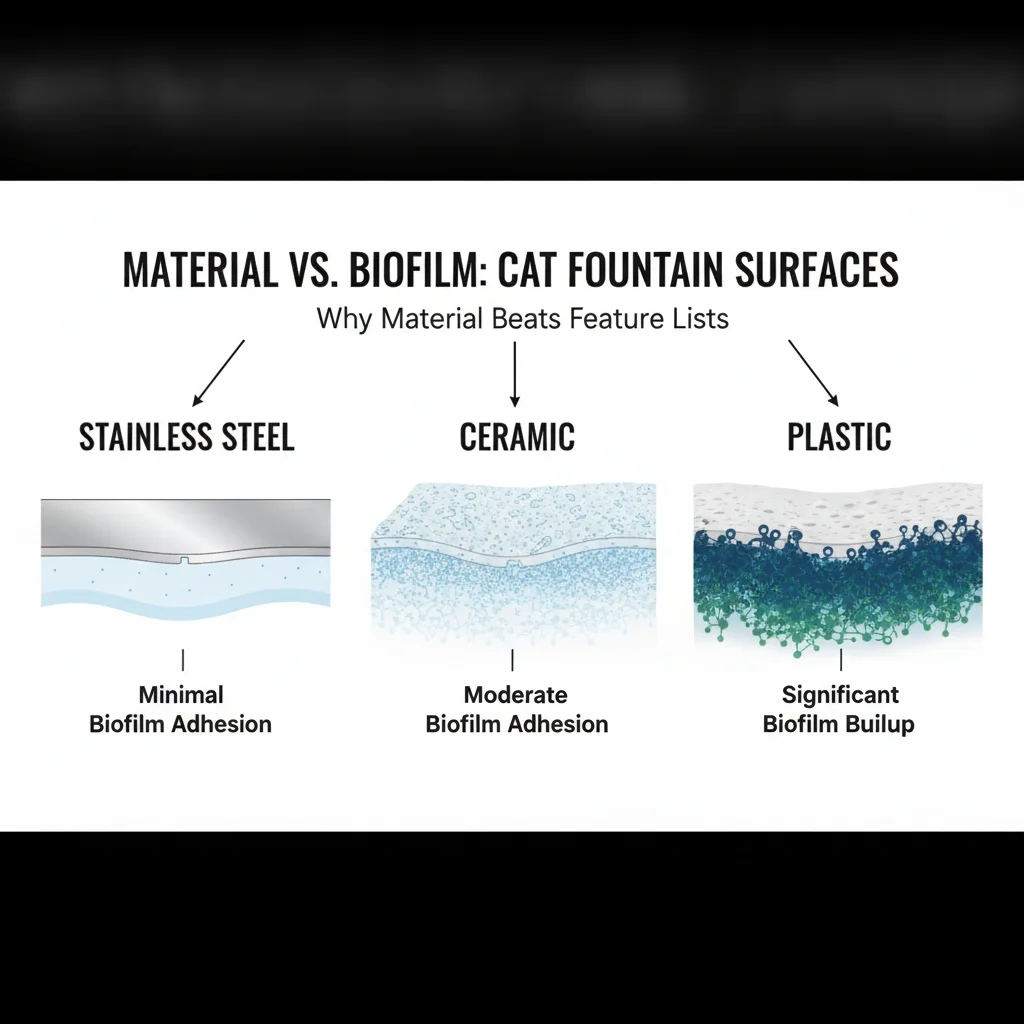
Biofilm is a thin living film of bacteria that sticks to wet surfaces. In a fountain it thrives wherever water sits and air touches: bowl walls, spout lips, and the dark underside of lids. Marketing photos show clear water on day one. They do not show the slick gray film owners wipe off on day ten.
Odor follows biofilm and absorbed oils from food-adjacent paws. Plastic is especially good at locking those smells into micro-scratches. Ceramic can look pristine until a hairline glaze crack becomes a mold pocket. Stainless resists absorption, which is why many households that “hate fountains” actually hate plastic bowls.
- Returns cluster around smell and slime, not missing Wi-Fi.
- Cleaning interval reality is 2–4 full teardowns per week for multi-cat homes—not “rinse when low.”
- Listicles skip surface porosity, finish texture, and how pumps (almost always plastic) still need weekly attention.
Cleaning-interval evidence beats marketing claims: plastic usually smells first, stainless descales easiest, ceramic needs careful handling. Capacity and flow style matter, but only after the wet surfaces are something you can keep clean without dreading the sink.
Use this quick matrix before you compare brands:
| Factor | Stainless | Ceramic | Plastic |
|---|---|---|---|
| Odor resistance | High | Medium (cracks hurt) | Low after scratches |
| Chip / crack risk | Very low | High if dropped | Low (scratches instead) |
| Hard-water scale cleanup | Easiest vinegar wipe | Good if glaze intact | Scale + scratches compound |
| Weight / sink hassle | Medium | Heaviest | Lightest |
| Best fit | Daily drivers, multi-cat | Style-first, careful owners | Budget, travel, temporary |
Stainless steel: strengths and limits
A stainless steel cat water fountain bowl is the default long-term hygiene pick for most homes. Food-grade 304 stainless does not absorb oils the way scratched plastic does. When biofilm starts, you usually see it as a film you can scrub off—not a smell baked into the wall.
Odor resistance is the practical win. Cats that abandoned a plastic unit often return to drinking once the reservoir is stainless and cleaned on a real schedule. That does not mean stainless is “maintenance free.” Standing water still grows biofilm; you still empty, scrub, and rinse.
Descaling without killing the pump
Hard water leaves white mineral rings. On stainless, white vinegar or a citric acid soak usually lifts scale without grinding the surface. Pull the pump first. Never soak the motor housing beyond what the maker allows. Soft brushes beat metal scouring pads that leave grooves—grooves that later hold slime.
- Daily: top off with fresh water; wipe the spout lip.
- Every 2–3 days (busy homes): empty bowl, scrub wet surfaces, rinse filters per brand rules.
- Weekly: full teardown, descale if your tap is mineral-heavy, clean impeller blades.
When brushed finishes trap gunk
Not all stainless is equal. Deep brushed or textured finishes look premium and hide fingerprints, but the micro-valleys hold biofilm longer than a smoother polish. If you hate scrubbing, prefer smoother interior surfaces even if the exterior is brushed.
Welds, seams, and silicone gaskets still need attention. A stainless bowl with a grimy silicone ring will smell like a plastic bowl. Material upgrades fail when owners only wipe the shiny bits and ignore seals.
Noise and pump quality are separate from metal grade. A chattering impeller ruins sleep whether the bowl is steel or ceramic. Material choice does not fix a dying pump—it only makes the water path easier to keep palatable between pump replacements.
Ceramic: aesthetics vs chip risk
Ceramic cat fountains win on looks and cool-to-the-touch perception. Many cats prefer a heavy, stable dish that does not skate across tile. Glazed ceramic can feel premium on a counter the way plastic never will.
The hygiene story is conditional. Intact glaze is relatively non-porous and cleans well. Once the glaze chips or craze-cracks, ceramic cat fountain mold risk jumps: microscopic channels hold moisture and pigmented gunk that a quick rinse never reaches.
Cool water and weight tradeoffs
Ceramic mass keeps water cooler longer in warm rooms—useful if your cat rejects lukewarm bowls. That same mass makes full teardowns exhausting. Owners who skip deep cleans because the fountain is “too heavy to haul to the sink” lose the material advantage immediately.
- Pros: stable, quiet when cats bump it, stylish, cool surface feel.
- Cons: chip risk, sink weight, glaze cracks as mold traps, higher replacement cost after drops.
- Care: soft sponges only; inspect glaze monthly under bright light.
For ceramic vs stainless cat fountain hygiene, stainless resists odor longer; ceramic can trap mold in glaze cracks after chips. If you love ceramic, treat it like glassware: no stacking under pans, no dishwasher roulette unless the maker explicitly rates it, and retire a piece the moment you see a crack in a wet zone.
Glaze cracks and mold traps
Hairline cracks often appear first at the waterline or rim. Dark staining that will not scrub out is a red flag. At that point, bleaching may lighten color without removing the pocket. Replacement is safer than hoping filters hide a contaminated dish.
Some ceramic designs hide plastic reservoirs underneath a ceramic shell. Market photos sell “ceramic fountain” while the water-contact parts you actually scrub are still plastic. Read the exploded parts diagram before you pay a ceramic premium.
Plastic: when it still makes sense
Plastic cat fountain smell is the most common complaint in reviews after a few months. The pump may still run. Cats still walk past the bowl. Micro-scratches from scrubbing, claws, and abrasive cleaners become a permanent biofilm sponge.
That does not make plastic useless. It makes plastic a deliberate short-horizon choice.
- Budget trial: prove your cat will use flowing water before spending on stainless.
- Travel / boarding / foster: light, cheap, acceptable to replace rather than perfect.
- Backup during deep-clean day: temporary dish while the main fountain dries.
Scratch and smell timeline
Many households notice odor between weeks six and twelve with daily use—sooner with hard water film and multi-cat saliva load. Clear plastics show biofilm earlier; opaque plastics hide it until smell arrives. Either way, once the surface feels rough, expect shorter clean intervals that still fail to reset odor fully.
Replacement cadence expectations should be honest: treat cheap plastic bowls as consumables. If you are replacing filters monthly and still fighting smell, you are paying a hidden subscription to keep a poor surface in service. At that point a mid-tier stainless steel cat water fountain often costs less over a year.
Cleaning plastic without making it worse
Avoid harsh scouring powders and metal pads. Use soft brushes, enzyme cleaners safe for pets, and frequent full empties. Dishwasher cycles help some BPA-free bowls—and warp others. Follow the brand chart; warped lids create new gaps where slime hides.
Plastic still surrounds almost every pump. Even “all stainless” marketing usually means stainless wet bowl plus plastic impeller housing. Buying plastic only for the visible bowl stacks the worst surface with the inevitable pump plastic. Prefer stainless or ceramic for the large water-contact area whenever you can.
Hybrid designs and pump plastics
Most modern units are hybrids: stainless or ceramic bowl, plastic pump, plastic lids, silicone seals, and carbon/foam filters. That is fine—if you scrub the plastics on the same schedule as the bowl.
What still needs weekly scrubbing:
- Pump intake screens and impeller cavities
- Underside of lids and splash guards
- Filter trays and any “hidden” reservoir corners
- Silicone rings and gasket grooves
Parts that fail first are rarely the stainless dish. Pumps seize from mineral grit. Cheap plastic clips crack. USB power bricks die. Filters clog and starve flow until cats ignore a quiet trickle. Budget for a spare pump if your model sells them separately—material upgrades do not extend impeller life.
Smart sensors add more plastic housings and cable ports. They can warn you about low water; they cannot scrub biofilm. If you want fewer objects near the bowl, a simple stainless design with a reliable pump often beats an app-connected plastic tower for hygiene.
Cat fountain mold prevention is mostly mechanical: dry parts fully after washing, keep the unit out of direct sun, and never top off dirty water for a week “to save a filter.”
When comparing hybrids, ask three questions: Which surfaces actually touch standing water? Can you open every wet cavity without tools? Are replacement pumps and seals still sold? Pretty ceramic skins that trap inaccessible plastic cups fail those checks.
Decision tree by home and water
Pick material from your household constraints, not from a viral product photo.
Hard-water apartments
Choose stainless first. Scale wipes off cleaner, and you will descale often enough that chip-prone ceramic becomes a liability. Plastic under constant mineral film scratches faster during scrubbing. Keep white vinegar on hand; rinse thoroughly so cats do not taste acid residue.
Multi-cat high use
Higher traffic means faster biofilm. Stainless bowls with smooth interiors plus a real capacity buffer reduce “empty and slimy” cycles. Ceramic works only if someone will lift it for frequent teardowns. Plastic is a false economy when three cats turn a $35 unit into a weekly smell battle.
Placement still matters: one fountain in a noisy laundry room will lose to a faucet regardless of material. Put the cleanest bowl on a quiet traffic path away from litter and food dust.
Picky faucet drinkers
Flow style and freshness cues matter as much as metal. Still, a plastic tang will undo a perfect waterfall spout. Start with stainless or intact ceramic. Refresh water daily. If your cat only trusts moving faucet water, match a gentle stream and keep the spout lip spotless—material supports the habit; it does not create it alone.
Budget ladder that usually works:
- Confirm interest with any clean temporary fountain.
- Upgrade the wet bowl to stainless (or careful ceramic) as soon as the habit sticks.
- Spend remaining budget on quiet pump reliability and filter TCO—not RGB lights.
Skip “eco” plastic claims that ignore replacement frequency. A bowl you throw away every four months is not automatically greener than a stainless dish you keep for years with vinegar and a brush.
Frequently Asked Questions
Is stainless always better than ceramic?
Stainless resists odor and chips well; ceramic can look nicer and stay cool but chips and is heavier to wash. For most multi-cat or hard-water homes, stainless wins on long-term hygiene.
Why do plastic fountains smell?
Biofilm and absorbed oils cling to scratched plastic. Short clean intervals help, but material choice matters more than filter brand once micro-scratches form.
Does material affect how much cats drink?
Taste and smell do. Cats often reject plastic after it holds odor—even if the pump still works—so a cleaner bowl material can restore intake without a new brand.
Can I put fountain parts in the dishwasher?
Only if the maker says so—and never the pump motor. Check seals and lids that warp in heat; ceramic can chip against other dishes.
What's the best material for hard water?
Stainless is usually easiest to descale; ceramic works if you accept careful handling; plastic scales and scratches fastest under mineral film.
Your next step
Default to a stainless wet bowl unless you have a strong aesthetic reason—and the discipline—to protect ceramic glaze. Treat plastic as a trial or travel tool, not a five-year hygiene plan. Then choose a specific model with honest noise and filter costs from the best cat water fountains 2026 shortlist, and compare stainless-leaning brands in Petlibro vs PetSafe vs Petcube.
Clean on a calendar, not a vibe. Material only wins if you still open the pump housing every week.
Related reading on our sister sites: Best Orthopedic Dog Bed Under